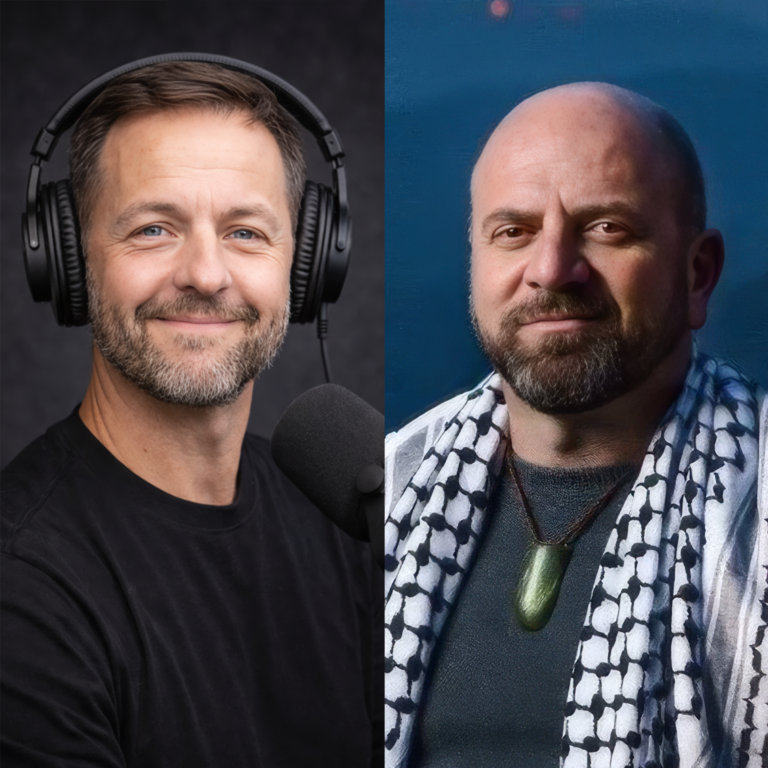
Lindsay McGregor: Blame the System, Not the Person
In this episode, Eric talks with Lindsay McGregor, co-founder of Factor.AI, about why most performance problems are not caused by individuals, but by the systems surrounding them. Lindsay has spent years studying motivation, culture,…

Get the next conversation via email
Fresh conversations to help you see the world more clearly
In this episode, Eric talks with Lindsay McGregor, co-founder of Factor.AI, about why most performance problems are not caused by individuals, but by the systems surrounding them.
Lindsay has spent years studying motivation, culture, and performance inside organizations ranging from startups to global enterprises. Her work challenges a deeply ingrained instinct in leadership: the tendency to attribute failure to character rather than context. When something goes wrong, we look for someone to blame. Yet time and again, the evidence points somewhere else.
The conversation explores how human beings naturally default to blaming individuals, even when the real issue is design. They discuss the hidden biases that shape workplace judgments, the danger of assuming we understand complex systems when we do not, and why meaningful performance improvement almost always requires changing the environment rather than pushing people harder.
They also examine the role of artificial intelligence in accountability and coaching. Instead of replacing leaders, AI may function more like a scoreboard or personal trainer: a neutral mirror that helps people follow through on what they say matters.
At its core, this is a conversation about humility. About curiosity. And about the discipline of looking past the obvious explanation to find the real cause.
Topics Covered
- Why humans instinctively blame individuals instead of systems
- The concept of “blame bias” and the fundamental attribution error
- How the same person can succeed or fail depending on the environment
- The illusion of explanatory depth and why confidence can mask ignorance
- Why motivation often depends on having an interesting problem to solve
- The role of leadership in designing systems rather than managing behavior
- How AI can function as a coach rather than a replacement
- The difference between forcing effort and unlocking engagement
- Why repeated interaction builds understanding better than assumptions
- The danger of believing you understand complex work from a distance
- How collaboration and structure shape performance in remote teams
- The shift from managing people to designing environments
Go deeper: Read Eric Pratum’s essay, “Blame Is What Organizations Use Instead of Learning”, which develops Lindsay’s argument into an examination of blame bias, systems thinking, accountability, and why organizations often stop learning when they find someone to fault.
Episode Links
- Check out Lindsay’s company, Factor.AI: Visit Factor.AI
- Learn more about the Illusion of Explanatory Depth: Visit en.wikipedia.org
Key takeaways
- Performance often depends more on the surrounding system than on an individual’s character or effort.
- Blame bias and the fundamental attribution error keep leaders from seeing design problems.
- AI can function as a neutral coach or scoreboard that helps people follow through rather than replacing leadership.
Questions this conversation answers
- Why do leaders blame people for problems created by systems?
- How can the same person fail in one environment and thrive in another?
- What is blame bias, and how does it distort performance management?
- How should leaders design environments that unlock motivation?
- When can AI serve as a coach rather than a replacement?
Continue listening
If this conversation was useful, continue with Is AI Slop at Work Inevitable? with Neel Doshi.
For more episodes: Browse all episodes
Questions or guest ideas? Contact Eric
Read the episode transcript
Lightly edited automated transcript. Speaker labels are omitted where the source did not distinguish speakers.
00:00:00
Coming up.
00:00:02
If you look at somebody try to use AI, they need to give that AI tons of context in order to do a good job. So for example, if I'm writing a sales deck, I need to give the AI context on this customer. I need to make sure they have context on how we just explain our products and services.
00:00:20
And so you'll see leaders give all this context to the AI that they never gave to the human being on their team. So If they'd asked a human on their team to write the sales deck, then they'd get it back and they'd be really disappointed with the quality because the human is missing all of this context about the customer. So interestingly, some of the same things that you need to do to use AI effectively, you also need to do to be a great team leader.
00:00:49
Lindsay, thank you for joining me. Where does today's recording find you? Thank you, Eric. I'm in New York City with my two cats, two kids, husband. It's freezing and cozy. Would you mind telling me about yourself, Lindsay?
00:01:02
I'm the founder and CEO of Factor.AI and the author of Primed to Perform. And my journey started in a big management consulting firm where you get to see hundreds of companies. you know Every three months, you get to be a tourist and look into a new company. yeah I I love going into open houses when they open up in the not neighborhood just to poke around. And being a consultant in your early years is a bit like that. And you know one thing at one month, you'd be in a huge football-sized call center and football field size. And the next, you'd be in the global headquarters of the bank. And the next, you'd be at a scrappy startup.
00:01:42
And it was an amazing place to begin your career. But what I saw is that place after place after place was filled with really talented people who, when it came to work, just felt kind of meh.
00:01:57
It's like everybody started their careers with big dreams and wanted to accomplish amazing things. Why do so many of us feel so demotivated?
00:02:08
And that's when I began this journey where my co-author and I conducted what we believe is the largest body of research in the world into what motivates people at work.
00:02:19
And how do you build systems in workplaces and organizations and, you know, even clubs that you belong to just for fun? How do we build these systems that accidentally destroy our love of what we're doing?
00:02:33
And that's what we do now is we work with organizations to help them build companies and systems that people love working in. And that enable organizations to really adapt and grow and thrive.
00:02:48
And we do that through training leaders, through building technology that helps organizations run their processes, and through consulting to help them design all of their systems. So, know, work doesn't have to be miserable, but for too many of us it is. And that's what we focus on.
00:03:05
You got your BA at Princeton. I think you got your MBA at Harvard. Was there time between those two degrees? And then where does that line up with going into consulting?
00:03:17
So at Princeton, then I went into consulting, and I had always thought that I was wanted to be a teacher. The moment that I loved the most was when you explain something to somebody and their mind lights up, and then they go do something with it that you never even imagined.
00:03:41
And so that's what I wanted to do. And then when I was at university, I would work. I loved working in the journalism room. One, because you could pick up the phone and talk to anyone and ask them any question you had. But two, because I loved figuring out how to make the way everybody was working more efficient.
00:04:00
was like, oh, this is inefficient and that is inefficient. And we all hate this meeting. And I just loved cleaning up all of this waste. And when I started to look at jobs, I had a lot of friends who were working in consulting and said, oh, if you like making all of these things more efficient and work better and unlocking people's potential, you should think about going to work in consulting where you can get, you know, work with a school system on how do they do it. And then you learn the best practice from, you know, a for-profit and you can bring Bridget across industries.
00:04:30
So got to do that and then went to business school. And, And the after working in consulting, realized that there was so much from psychology that researchers had been studying for 50 years that had just not made its way into the business world.
Integrating Psychology into Business Leadership
00:04:52
And that's what really lit me up is how do I take all of this research and best practice and bring it so that the thousands of talented leaders out there can use that to create the change that they want create in their organizations.
00:05:07
When you went into consulting, did you have a particular focus or was it pretty broad? It was about half financial services organizations. So large, it was during the mortgage crisis. So large mortgage companies that were absolutely in crisis. Then, so lots of financial services. And then the other half was educational organizations. So I got to work with school districts, nonprofits, foundations,
00:05:39
And it was amazing to be able to see the differences between all of these different organizations and what holds true about human nature, no matter where you work, versus what's truly unique to a culture or an industry.
00:05:54
And so then what motivated you to go get your MBA? Yeah. I've just always loved learning. And so I wanted to make sure that I had the complete toolkit of how do you run an organization?
00:06:09
Because so many organizations felt so broken. They felt, beer I mean, we've all been in that. 30-person Zoom meeting where everybody's multitasking and it feels like a status update.
00:06:23
And we're looking at the metrics, but, you know, it's like, okay, you know, revenue went up on the East Coast 1% and it went down on the West Coast 1%. Why?
00:06:35
I don't Shrunk shoulders. Like, move on. Next topic. You know, or the budgeting meeting or the strategic planning meeting or the decision-making meeting. And I just thought, So much of what we're doing feels so broken and so bureaucratic that I need to go and learn what is out, what's the best of the thinking out there, because the way we're living right now, this is not it.
00:06:57
You did this research. Was the research part of your MBA studies? Did that come later? And how did you get started, I guess, with whatever it was you were doing after you finished your MBA?
00:07:10
Yeah.
00:07:10
Yeah, it was before, during, and after. It began at McKinsey, and my husband Neil was also at McKinsey at the time. And you would design strategies for organizations, and they would say, love the strategy.
00:07:28
and you can't you you know Sometimes you come back months later, and very little has been done. And you ask why, and people will say, well, we just we didn't... that We didn't mobilize around it. We didn't. It was hard to activate or the world changed so fast that we had to change and pivot.
00:07:46
And but often it was people saying, you know, it's just really hard to get things done here. And I would like to be further along than I am. And.
00:07:58
At that point, we wanted to say, okay, why is that so true in some organizations and not others? Why is it so hard to get things done? And that's when every time we were doing, we started to work with a new organization. We started to test and diagnose. How can we diagnose their culture?
00:08:19
And really what we found is that when people loved their cultures, It was typically because their culture was really able to adapt.
00:08:31
Like they they could learn, they could innovate, they could experiment, they could grow, they could change things. The best cultures enabled real growth and innovation while also being very tied to the values that that person believed in.
00:08:48
right So this organization operates in a way that's in court in accordance with my values. The mission of the organization aligns with the kind my values of the kind of impact that I want to have in the world.
00:09:01
And so we were able to start to measure, you know and we tested. hundreds of different theories from psychology and from business best practice with hundreds of survey questions on, you know, hundreds of different organizations.
00:09:18
We had had huge data sets. And after all of this testing, what we found was that there was actually only a few that predicted the performance of a company or a person.
00:09:30
And it was these questions that were derived from a theory of psychology called self-determination theory, which is about 50 years old. And it really looks at how when people are motivated by the things that they love, a sense of play, and when they're motivated by the purpose and by potential, they are much more adaptive than when they feel like they're doing things just because of sticks and carrots, when you feel forced to do it.
00:10:01
And so we're like, okay, we can throw away these hundred is these surveys with hundreds of questions and we can actually even just ask six, like about the intrinsic motivators and the extrinsic motivators.
00:10:14
And from that, we can see amazing things like in one you know in one department store, everybody who works with customers has has more of the good motives.
00:10:28
Whereas in their competitive department store, The people who don't work with customers have higher motives. And you start to unpack that and you can see that it's because of the policies these two different stores have where one lets the people interacting with customers experiment and live their values and go above and beyond. And the policies of this other store don't let people easily go above and beyond.
00:10:52
like One of my favorite examples is one of the top banks in the country has a policy where any store associate can have a small budget to buy their customer flowers or help them out when they're having a bad day in some special way. And we're like, okay, so this is actually not You know, so much so much of what I thought at that moment was it's about if you're a good person or not, and you just have to hire the right person or find the right person.
00:11:21
But then you start to realize that actually there's lots of good people in the world. And some of them are in environments where they can they can do their best work and some just aren't.
00:11:36
So I want to call out here because I don't know if we said it that then at some point you and your husband wrote Primed to Perform which is how I became aware of you and I think what you're describing is then described in the book because there are it's six pillars or six I think you just said six questions or something like that yeah Yes. And so so there may be some things to come back to and talk about explicitly around that book. I'm also very curious about how your thinking has evolved since that book was published. I think it was 11 years ago now, give or take. Given some of what you just said,
00:12:22
How much of a feeling of motivation do you think is generally something where there's an unconscious alignment with an organization or process or with you know the the environment you know versus someone having in edgar shine's terminology he would say espoused values I've chris argyris called them I think it's theories and use and but then I I forget what his underlying his version of underlying basic assumptions is you know is his theories essentially which are a lot of these things are unconscious and I'm guessing you have some familiarity with some of the things I'm talking about if not I can explain but I'm curious
00:13:09
You said the word values at one or more points. And often when people say values, I think that it's almost as if, Lindsay, your company has the value of, let's say, truth on its website.
00:13:29
And you say, you you espouse that value, you say, we stand for truth. And I say, I stand for truth too. We must be aligned. But yeah it's in practice when we find out that in Edgar Schein's terminology that our underlying basic assumptions drive a different meaning ultimately of that espoused value. So Hopefully I haven't lost to you too much there, but I'm curious when you talk about motivation and some sort of feeling that that someone is motivated to do that right thing within that bank or whatever else, in your experience, how much of that how much of that motivation is motivated by something unconscious versus some of those things that we can actually state like values?
00:14:18
Are you a car fan? Do you like cars or anything like that? I'm familiar with them. Okay. you' You've driven one before? Good. All right. So back in the 1980s, there were the big three car companies in the U.S., right? and And Toyota and a lot of Japanese companies were trying to enter the U.S. market.
00:14:41
And GM had this challenge where Toyota's cars were cheaper and higher quality than their own. And so... you know, the car companies, they lobbied the government to put in place a tariff to make it harder to import Japanese cars. That was their first go-to.
00:15:00
yeah Maybe your go-to would have been, maybe I should learn from my competitor, but that was not the first the first action. And so Toyota approached him and said, we...
00:15:11
we start a joint venture together like let's own a factory together and we toyota will learn if we can make our cheap high quality cars in the u.s and you gm will learn how we make such great cars and so gm said yes and I was telling the story the I tell the story a lot and I've met a couple of different people that worked at this factory my My co-author, Neil, he was sharing the story in Detroit, and one of the guys in the audience stood up and said he was one of the managers of this factory at the time and said that GM purposely gave Toyota this factory in Northern California called NUMI.
00:15:56
because it was basically a wasteland. He said that the bars were the fullest in this town at 7 a.m. with people getting drunk before work, that sometimes so few people showed up to work that they couldn't even start the line.
00:16:12
and People would bring, like, screwdrivers the drink, not the tool, to work with them. It was just a disaster. Now, Toyota took that same, took that factory and it kept the same workers who were known to be incredibly, it was an incredibly toxic culture and an incredibly demotivated culture. And they flew everybody to Japan for two weeks and they taught them their methodology of how to make a car.
00:16:39
And the GM methodology was stand in one place and, you know, turn a screw or do the same thing you're supposed to do. It was entirely tactical. Just follow this tactical recipe.
00:16:51
But the Toyota methodology was really designed for individuals to come up with ideas and to spot issues and to make improvements. So Toyota's famous, right, for its Andon chord that hangs above every station. And if you spotted a quality issue, you could pull that chord.
00:17:10
And music that you had chosen would play throughout the factory to celebrate that you've spotted something that you want to bring up. And maybe you pull the cord because you have an idea that if this tool was shaped differently, this thing would work better.
00:17:26
Your manager would come over, take your idea. They'd mock it up in the back. They'd bring it back. You could test it. If it worked, that's great. If it doesn't, don't worry. So there were all of these things built into their way of working that was about every individual coming up with ideas, spotting quality issues, finding ways to improve things.
00:17:47
And, you know, when there there's video of these, of the the people leaving the training two after two weeks in tears, saying, this was the first time that I've ever been treated like a human being.
00:18:05
Like I'm not here just to turn a screw. I'm here to think. And within just a few months, that factory started producing cars in half the time it had before.
00:18:18
Like it went from something like 40 hours to make a car to 20 hours to make a car. And their quality at the same time improved 30%, which is incredibly hard to improve efficiency and quality at the same time.
00:18:32
And the motivation of the factory was dramatically different. And, you know, GM basically sent their leaders to come and take photos of the stuff.
00:18:43
Like, go figure out how they've set up the factory. Like, paint that thing yellow. Put that cord there. And people just laughed because they said it wasn't about the stuff. It was about the culture that we built around the stuff.
00:18:55
So I love this story because it was the same people, right? The same people had dramatically different feelings about their work and dramatically different performance outcomes doing the same thing, just in a different
Systemic Issues vs. Individual Blame
00:19:10
system. Right.
00:19:11
And are there bad actors? Of course there's bad actors. You know, right now in a world of remote work, you know, you you'll see the the, you know, incredible frustration of a leader finding out that they have an engineer who's double-having, right, working two jobs at the same time.
00:19:30
Like, that's infuriating to them, right? That lives rent-free in their brain. But as a result, they start to design the system as if everybody was a bad actor. And they put in so much tactical control and they kill all of the adaptability and energy and ability to experiment.
00:19:51
That is the source of motivation and the source of their growth as a company. So does your your systems matter? One, your systems matter hugely.
00:20:02
Two, your values do matter. But values tend to be, the values that show up at the workplace tend to, there tends to be a lot in common in terms of what people want out of the workplace in terms of their values.
00:20:16
And then the third thing that we look at is what does each individual find play in? And we find that there there are really real differences in what people love.
00:20:26
Like some people love exploring ideas. Other people find that slow and painful and they love right getting things done and making their system more and more efficient and executing faster and faster.
00:20:39
So we do look at, we find there's four different play, what we call play profiles of what people love to do. So you need to make sure the systems are set up well. You need to make sure your values are aligned with your organization. But even more importantly than the values, because we find those are quite common across people, is making sure that the job that you do aligns with what you enjoy doing. And, you know, that's why somebody who is a quality engineer is probably not the same person who has the same play profile as the person who's a customer trainer, right? You love different things.
00:21:15
Have you explored where those lay profiles come from? So, so I don't know where they come from. We haven't explored it deeply, but because we really, but by the time you're at work, they're, you're pretty, you know, you've got one or two that you really care about.
00:21:31
But yeah what we find is that you, I, there's tends to be, we ask two quite people, two questions to get at it. The first is, do you like, would you prefer creative work?
00:21:43
Even though there's a lot of waste, like the creative work, the the fun parts of it are obvious, right? you You're creating ideas, you're generating new things. But you also remind people of the downsides of that is in creative work, there tends to be waste, there tends to be lots of iteration, lots of experimentation.
00:21:59
Or do you prefer execution, like getting things done, moving things forward? And people tend to to have a preference on those too. And then the second question that we ask is, do you prefer doing things together in groups or individually?
00:22:18
And together in groups, people will often think at first of the fun parts of it. Like, yeah, it's got lots of energy from all people in the room. But a lot of the work of group work is actually navigating disagreement, getting people to align on something, working through how do you get people with discipline who disagree to be in the same place. So that's the group work. Or do you prefer working individually, which is you you we you know just quite clear. And so if you look at the workplace, when you...
00:22:56
have to, you know, you first have to be very creative and get your whole group to align on your vision. Like, where do we want to go? What do we want to be different about? And that sort of visionary work tends to be people who love working in groups on creative things.
00:23:09
And then you've got to go and explore how to get your vision done. Like, how are we going to achieve that? And those explorers tend to love individual work. That's very creative.
00:23:20
And once you've explored how to get that vision done, then you need to galvanize. you need to figure out how do you get set up your systems, your processes, your people to bring this all to life. That's group work and...
00:23:32
and quite execution-oriented. And then there's achieving of, let's figure out how do we go and execute this? How do we solve those day-to-day problems? How do we continuously do the micro-adaptability that makes it happen? And that's people who like it working individually in a very execution-oriented way.
00:23:49
And so often people will have a place where they love that they they naturally love if you think about what's the work that you don't procrastinate on, right? What's the work that you can do in your free time? How do your hobbies align with that?
00:24:05
For example... A colleague I worked with in her, in her, in university, she organized her hundred person club to go on a trip together with color-conded binders, right? Like she clearly is very different and loves that more achiever work than another colleague who in college spent hours and hours in the psychology labs and computer science labs trying to figure out how to change people's habits.
00:24:34
That's much more of an explorer profile. And so thinking about what do you do for fun and then how do you align your work with that makes a big difference. How much do you categorize people or get to this understanding of people from asking them versus observing them?
00:24:57
When we design any program, we want people to feel agency over everything. their lives and how they're perceived and what they do. And so we ask, we get people, we ask people, which do you prefer? They get to choose. Then they talk, you know, we'll do sessions with organizations. People will share what's, where do they find play? Where do they find purpose? Where find potential?
00:25:20
And quite often, I find people are are self-aware most of the time. Most of the time they do choose. So their colleagues will look at them and say, yeah, totally.
00:25:32
Like that's a hundred percent you. I would also hope that if an organization is investing in bringing you in and an individual answers, maybe not in in, maybe even they're just not aware, let's say. Maybe they're not being disingenuous, purposefully disingenuous. Maybe somebody just, they really don't think about the questions and they they give some sort of idealized answers. Yeah.
00:26:04
My hope would be that that organization that's making this investment would also then invest in helping find alignment and later on when you find that the answers that this person gave put them into a play profile or whatever else that it turns out is really not right for them. yeah And, you know, we could talk about management, we could talk about coaching, being a good leader, whatever, we can categorize this.
00:26:36
But if an organization does not make that kind of investment in progressive alignment or follow-up alignment, then I suspect that you would run into problems where it would be difficult. You might have 80% of your organization that this work has helped and then you have 20% that it's not an issue with your work, Lindsay.
00:27:01
It's an issue with the follow-up or something of that nature. But I'm going to guess you don't run into that too often. Most of us have worked on two projects in the same company where we absolutely loved one and we hated the other.
00:27:16
And sometimes the one we hate is because we have a leader or a colleague that we really struggle with. But a lot of the times you're like, oh, my manager was decent, but I just didn't feel lit up in this work.
00:27:29
You know, I did my assignment. I turned it in. It was good. But I didn't walk home from work and have a cool new idea pop into my head when I was on that team. Whereas I did on this other thing.
00:27:42
And it's, you know, you pay attention to that. for For me, you know, the I could come up with lots of ideas about how to teach a concept differently.
00:27:54
While I was, you know, washing dishes, an idea would pop into my head. right Whereas if you're asking me to spend days mining data and and coming up with the next analyses to run, I'll do a competent job. But then when it's done, I will be very happy. you know when you're forcing yourself to do something through willpower it's a pretty good signal that you know there's you'll you'll unlock so much more if you find what you enjoy
00:28:25
How much of this, when we talk about a play profile, or when you say, you know, we've worked on two projects in the same company and had a different experience, how much of this definition or categorization or finding alignment is, I don't know if in your terminology alignment would necessarily be the right way to categorize things, but how much of this occurs at the individual level versus something like a team or a project versus then something bigger, like talking about the culture of the organization or how an entire organization should be managed.
00:29:05
The leadership expert, Edward Deming, his assessment is it's 94% the system. And if you look at at stories like this Toyota example, same people, dramatically different outcome with the system.
00:29:23
And so the fact, and we, human beings are wired to blame individuals for things. So there's this concept of the fundamental attribution error.
00:29:37
We call it the blame bias for short, which is human beings, if you ask them what went wrong, they will blame the individual. They're like, it's his fault. And the further you are from being in that person's shoes, the more you think it's their fault.
00:29:52
and Like if you ask an executive why a factory worker had an accident, it was the factory worker was sloppy. But if you ask somebody who's actually spent time on the floor and next to that same machine, they'll say, well, of course, like this machine, you know, the way we've set this up is an accident waiting to happen. Of course, somebody had an accident. It was the setup, not the person.
00:30:18
And that is human nature to blame the individual until we've really put ourselves in their shoes. So we all are going to say this.
00:30:30
We all have this bias at work to say this person is lazy or this person is sloppy or this person doesn't care or this person isn't committed or this isn't. We come up with a million personality reasons why it's that person's fault.
00:30:43
And then you see that person move teams or move projects or move companies, and suddenly they're knocking it out of the park? yeah We see this all the time. like so the Working with an innovation team at a large company where For years, their innovations didn't go very far. And then they had somebody leave, and within six months, they had a blockbuster product on the shelves of many companies, around the shelves of stores around the country. They're like, how did that person accomplish in six months what he couldn't in six years? They're like, what's the system?
00:31:19
When you talk about the fundamental attribution error, I will often talk about another logical bias or fallacy called the illusion of explanatory depth. Have you heard of this one? No, I haven't. What's this one?
00:31:35
If you look it up, I really like the illustrations that you'll find for some of the research that's been done. But the illusion of explanatory depth essentially shows that just because you know, sorry, people will think that just because they know that something works, they know how it works.
00:31:56
And you can, we can pick overlapping things here. Like if we, if we bring in Dunning-Kruger, you know, and just to state it, though, I know you know it, we often know so little that one of the things that we don't even realize is how little we know.
00:32:14
And so somebody gets injured in a factory. If I come back to the illusion of explanatory depth, I know that something occurred.
00:32:25
I know that somebody was using a machine and they're the kind of person that would get injured is basically where I end up because you got injured. I'm going to explain that, you know, I have some depth of understanding so that the world makes sense or so that I can feel some confidence or whatever else. And So, and yet with Dunn and Kruger, you know, I know so little, I don't even realize how little I know about the situation. And I'll talk about this very often when I talk about teams or culture, because we we know that the people over in accounting are people.
00:33:04
We get emails from them. they do their jobs and we fill in gaps in our knowledge about them and their work with assumptions. And I think, I believe you mentioned remote work at one point.
00:33:19
I think with remote work, this becomes a problem, but it could be a problem as well in a factory or wherever else, because If someone gets injured, I just kind of tell myself a story about what kind of person they must be. If they're not doing well in a project, I tell myself, well, you know, they're the kind of person that would fail at projects.
00:33:43
And if I don't have repeated deep interactions on something that's meaningful and or shared with that person, then it's very often that I've kind of set in stone what I think about them.
00:33:58
And which maybe comes back a little bit to what I was thinking about at the very least when I was saying that somebody could give some idealized answers, you know, some idealized in their own mind, but it's the repeated interaction or behavior that really demonstrates what I can learn about that person and what play profile they have or whatever else.
00:34:24
Absolutely. I want to ask you something about the Toyota story real quick before we move on. The, it seems to me like, or the thing that occurred to me, Lindsay, when you were talking about that is that Some of the thinking behind Toyota's approach, I think, was it total quality management? Am I remembering that term correctly?
00:34:50
Okay.
00:34:50
Yeah. It seems like at least some of what you were talking about, whether it goes along with TQM exactly or not, runs counter to the ethos of scientific management.
00:35:05
You know, there's all these quotes about how, you know, more or less that the worker is not meant to think. And, you know, the manager does all the thinking and so on. And so is it fair of me to put these sort of opposed to one another scientific management and the the thinking behind the Toyota approach?
00:35:26
I think so. Or at least the popular way that they're interpreted is opposed. yeah the the I was speaking with a a biotech company in California, and one of the people in the audience, you know, this is a a second person now,
00:35:49
raised his hand and said he he ran that factory. He ran Numi after Toyota took it over. And so, you know, I invited him up on stage and said, OK, here you know, you tell this story. You tell us all what happened.
00:36:03
And he said that he flew to Japan for his performance review one year and he was expecting to get a huge pat on the back because he his metrics, his efficiency was just off the charts. Like they had produced more cars than ever before, faster than ever before.
00:36:24
Which, you know, under Taylorism, that'd be great. Like, you know, that's that's that's exactly what you want. But he walked in and his manager said, we have a problem.
00:36:37
He said, what? he's said, your and on cord pulls are down. The number of times people are pulling that cord is going down. And so what that's telling me is that you got short-term results at the expense of our medium and long-term results.
00:36:53
It means that the quality probably isn't as high because people are feeling pressured not to pull that cord in order to not destroy your efficiency metrics. And it tells me that you're not coming up with ideas of how to do this better in the future.
00:37:07
So... You know, an absolutely shocking meeting compared to what he was expecting. And, you know, I think we all wish that sometimes that the world was just mechanical and coin operated.
00:37:23
But even on an assembly line, there is so much volatility that it's not just press a button. That, you know, this piece isn't fitting right, or that one is broken, or this part isn't in the order it's supposed to be. Even on an assembly line, you have to adapt. You have to spot quality issues. You have to come up with better ideas.
00:37:43
Even when they had fancy pants engineers sitting in headquarters designing this line, still hundreds of things are going wrong. And that's in an assembly line. Now think about all the other work in the world, which right is not as easy to predict as an assembly line.
00:38:01
And so have... do have we We all like things that are easy to measure, right? It is way very easy to measure how many units you produced or how much money did you make. If you can put it in a spreadsheet, that's wonderful.
00:38:19
And I think what's so impressive about the Toyota system is that they found a way to start to measure the adaptive performance. The and on cord pulls is a way to start to measure quality and ideation.
00:38:32
And they manage that with, you know, those old saying that what gets man measured gets managed. Most of us don't measure the adaptive side of work.
00:38:45
And they found a way to do that. And, you know, for example, 3M, they will measure what percentage of their revenue is coming from new products and new ideas. Or what we do in organizations that where it's harder to manage things is we'll have people will automatically track the number of ideas that teams are coming up with and the experiments that they're running every week.
00:39:09
so that you can track that. And of course you could track that in a demotivating way, like how dare you not have more ideas, but it's actually quite easy to and do that in a fun way of, you know, every week we're going to come up with, you know for example, in bank that we worked with, you know, where you go and you, you know, open up a credit card or deposit money.
00:39:32
It was every, every week they would decide what they're going to run experiments around. And sometimes it was, How are we going to make people feel welcome when they come in the door? How are we going to close up shop faster? How are we going to entertain people when they're in line so they don't get so grumpy?
00:39:48
how are we going to talk to people about using our online portal instead in a way that doesn't feel like a really annoying solicitation? And that just turned work that into that makes work a little bit more interesting. And it celebrates where we do it is okay to be a little creative or try something new or try to help customers in a unique way.
00:40:10
When you look at why... People love companies like Trader Joe's. Or back in the day, Southwest was famous for this as well.
00:40:25
It's organizations where they've created, made it easy for their people to be to experiment, to be creative, to spot quality issues, to do things that are a little above and beyond for their customers.
00:40:39
And And I think that the decaying trust that you see in many large organizations is because this has been so deprioritized. And people's love for some of these smaller, younger brands that actually enable this in their people is is becoming more important.
00:40:57
I feel like a a lot of people, when they do leadership coaching, they do culture work in organizations or whatever, they'll come in having read Daniel Pink's Drive or something like that.
Aligning Aspirations with Reality in Leadership
00:41:12
And Whether they intend to or not, they basically make blanket statements about, you know, every role here needs to have autonomy.
00:41:25
But there's no definition of how much autonomy, what does that look like? you know, how does it show up in everybody's role? And I'm not saying that any individual coach or consultant or whatever,
00:41:40
isn't thinking about context and, you know, the specifics matter, but it's really easy to receive statements like play, for example, or autonomy are important, and then run into these challenges where I'm going to way overgeneralize here. You know, leadership goes off to the mountain and they come back and they say, here is our new culture or our values or whatever. And it's entirely possible that things like we're going to be an AI first company or we're going to be an innovative company or whatever, maybe those do align with the existing standards or culture, however you want to characterize it.
00:42:27
But I think a lot of us are I will state it at least for me think I'm a little bit cynical and so I believe that I have experienced that these statements of new values or direction are aspirational and we have a new set of values espoused values in the terminology that I used earlier we have a new set of values a year or maybe three years later because in one way or another, there was not appreciation for what the existing, you know, mental models and and so on and espoused values were previously.
00:43:06
And So I think that when when we say some of these things, that one thing that someone hearing you would, a very likely outcome, is that they wouldn't think about, there are people who are more motivated by a certain type of job or a certain type of play. There more there are people who are more execution-oriented or they pride themselves on their industriousness and not on being creative.
00:43:38
And I think actually that's okay as long as it aligns with the role and the company. And so I would love for you to tell me if you disagree or if there's any nuance here, but I state that not because I think you don't see it, but I think it's just so much easier to hear you or hear, you know, read Drive, for example,
00:44:01
And as someone who's about to put it into practice, perhaps, to not think that there are layers and individuals matter. Yeah. the The individuals matter. There's layers. And I think it's So demotivating when at a company and a leadership team goes away and then comes back and says, you know what? We stand for you guys.
00:44:27
Customer first. Integrity. Debate. You're like, what do you think I stood for yesterday? do you think I was striving to not have integrity and not the help our customer? It's so demotivating.
00:44:42
And then we have leadership concepts that start to put us into pretzels, too. Like, take autonomy. It's such a nuanced topic. Like, think about the best coach you ever had in a sports team or a professor or a teacher.
00:44:58
Did that person leave you alone? Like, probably not. You know, I have a nephew who plays football. has autonomy in football. He doesn't show up the football field. And the coach says, like, do what you think's best. I'll see you in an hour.
00:45:10
Like that, you could interpret it autonomy as that. Like, that's not a good coach. Right? And so... When you feel when you've got a great leader, you feel like that leader, like that great football coach is helping you get better every day. They're helping you have more impact than you ever thought possible. They're helping you grow, but they're making it feel like a fun and interesting challenge for you, not like a threat.
00:45:37
Not like, let me give you some feedback on how you should have done that better, right? And interestingly, the more tactical the work is, like if it's you're trying to get an Excel formula right and your leader gives you very tactical feedback on, okay, this is how you should write the formula differently, feedback works if it's a tactical thing with the right answer.
00:46:01
But when you're trying to do something adaptive, like... give a speech, for example, or figure out what play you should have run on the field, the more that somebody's giving you negative backwards-looking feedback, the more you start to shut down.
00:46:17
And so what you need a leader to do is give you forward-thinking strategies and ideas for the future to really unlock you. So, you know, autonomy, you can't just say, okay, everybody do what you want and I'm here in case of an emergency.
00:46:32
We've measured the motivation of people like that and it's almost as bad as leaders who yell and scream and shout, but also create play and purpose and potential, but one who does all the most. So autonomy, yes, somebody needs the ability to create, to experiment, to come up with ideas, but a great leader would help them do that in a framework that helps them grow faster, give them ideas, accelerate further.
00:46:56
Another story I'll tell you that I think is connected to your question of what's so unique and individual is we're helping two different companies right now that are going through a merger.
00:47:09
And there are two different companies that have a very, an amazing mission that really is going to help the world, both of them. And you would say as an outsider that their missions are the same. Right.
00:47:20
But then we started to ask all the individuals in the company questions like, what does adaptive performance look like at your company? Like, when do you have to adapt and figure things out?
00:47:31
What is tactical performance look like in your company? Like, where do you have systems and processes? and And what do you think about those? then we ask them, what does play look like for you at your company? What does purpose look like? What is potential? You know, and those negative motives, too. When do you feel emotional pressure? When do you feel economic pressure? When do you feel inertia? why And from these two different companies, at a high level, the scores on some of these things were almost the same.
00:47:55
But then you started to look into what was driving that. And emotional pressure, for example. Both companies said, we have we have a lot of heroics here.
00:48:08
Like, people have to be heroes. But one company said, we are heroes and we take a lot of pride in that. Like those are moments when we're really going above and beyond for our customers. And those are some of our best moments.
00:48:23
And the other company said, we have a lot of heroics here, but it is a sign of how broken our systems are. If we had the right systems, the right processes, the right tools, we wouldn't have to do any of these heroics. I'm extremely resentful that it's even required.
00:48:38
So if you brought those two companies together and somebody at the surface said to you, oh we have a lot of heroics here, you really have to dig deeper and into what do you mean? what and What's causing that? What motives does that drive?
00:48:52
It's really different. Okay, I I mentioned your book, and it's been a while, but we've talked about some things that are, you know, kind of, yeah well, motivation, for example. I think the subtitle of your book is something like, a this something about the science of total motivation.
00:49:12
It's almost too long to remember, so let's check. It is There we go. How to Build the Highest Performing Cultures Through the Science of Total Motivation.
Managing Context in Teams for Effective AI Use
00:49:21
I'm curious, how has your thinking evolved in all the work that you've done since publishing that book?
00:49:28
we We spend a lot of time thinking about how do leaders effectively lead their people and design their organizations. Things are possible now, in good ways, that were impossible three years ago.
00:49:43
In that we measured... How long does it take to be a good leader? Like, what are all the things that a leader supposed to do? Like set goals and do their performance reviews and blah, blah, blah.
00:49:56
And to do those, it would take 85 days a quarter. And there's only 65 days a quarter. It is physically impossible to do a good job at what you're supposed to do, which is why so many leaders are burned out.
00:50:11
Or so many of their teams feel like their leader's not doing all the things that they're supposed to do to support the team. And we used to try and teach people techniques about how to do things differently, but...
00:50:28
still, it would take forever. And what's really changed in our thinking now is the, for the first time ever, as, you know, we've all, we're all talking about AI all the time, but AI is this amazing qualitative calculator that can actually help do a lot of the work that a leader is supposed to do.
00:50:52
And so we really think about how to, in a good way, right? we're The way that, there are very dystopian ways that you could use that, but What we're really focused on is building organizations that are people first and AI native.
00:51:11
And that there's now these incredible ways that AI can actually make a leader's job doable and feasible so they can spend their time on the strategic thinking, the creative thinking, the team building, the personal coaching, and not on the bureaucracy of what they're supposed to be doing.
00:51:31
So that's been the biggest shift for us is
00:51:35
A leader now doesn't just lead people and strategy. They now also lead AI. And the most important things for them to get right, to unlock that, is how they manage context and manage decision-making in their team.
00:51:58
And that sounds like a lot of weird words. But... One of the craziest things is if you look at somebody try to use AI, they well they need to give that AI tons of context.
00:52:13
in order to do good job. So for example, if I'm writing a sales deck, I need to give the AI context on this customer. I need to make sure they have context on how we just explain our products and services.
00:52:27
And so you'll see leaders give all this context to the ai that they never gave to the human being on their team. Right. So if they'd asked a human on their team to write the sales deck, then they'd get it back and they'd be really disappointed with the quality because the human is missing all of this context about the customer or the value proposition of their of their customers. So.
00:52:54
Interestingly, some of the same things that you need to do to use AI effectively, you also need to do to be a great team leader. And so there's these amazing opportunities now for us to formalize how leaders work in a way that's going to unlock their people and unlock their use of AI, where you Your job as a leader is to make sure your people, your AI agents, et cetera, have the context that they need, are following a decision-making process that makes sense in order to get to a really high-quality outcome.
00:53:28
And the level of formality that you now need to put in place to be able to use AI is a level of formality that actually also helps your people do much better work. So that's where a lot of what we're focused on now is we're in this incredible opportunity to make a leader's job a lot easier and take away the incredible workload that they have so they can focus on the fun and the interesting parts of their jobs.
00:53:53
And that is suddenly possible now in ways that it wasn't years ago.
00:54:01
But of course, this is also a scary topic for lots of people.
00:54:05
And so changing the way you lead, changing the way you work with technology... requires is can be full of fear for people and so you've got to make that change full of play and purpose and potential like how do you make changing your way of working as a leader interesting as opposed to scary does this show up then some of what you're talking about in the product that your company now sells Yeah.
00:54:34
So we've always been on this mission to make work better. And when,
00:54:46
You know, when back in 2022 when ChatGPT became possible, know, we spent a whole, you know, spent the first weekend that it came out all this time, you know, just figuring out it is what we've been trying to achieve now possible. And at the end, we're like, OK, yes, because.
00:55:07
Think about the old way a leader would have to write a goal, for example, or define the goals for their teams.
00:55:18
They would probably say, double revenue, half costs, and just put it in their performance review system. And the team's like, great, thank you very much. Right? Like, that was completely unhelpful.
00:55:31
But now what we can do with AI is we can have everybody, you know, use, you know, our products called Factor. So Factor is up like a virtual whiteboard.
00:55:42
And AI is interviewing every person for the first five minutes on what's getting in the way of us. Why? why What's getting in the way of us creating more revenue? What's working? What's not working?
00:55:53
And then after five minutes of privately interviewing everybody, it can come up with, okay, here's the synthesis, anonymized, what the team thinks. The team can discuss. And then AI can say, okay, based on that, here's a first set of ideas for what we should go do next. What do you all think?
00:56:09
Okay, we all are agree we want to increase revenue, but how are we actually going to do that? Are we going to do ideas that are like go and call up our past customers and ask them for referrals? Are we going to do that through a big direct mail campaign? Or what are we going to do And then everybody can add to that and vote on it.
00:56:27
And then I you know it can say, okay, here's what we think the metrics and milestones. Yeah, I can come up with the metrics and milestones instantly rather than sending somebody away to go spend a week trying to create that. And the team can edit it and change it.
00:56:40
And then, you know, so on and so forth. So the I think a lot of AI today is being talked about as replacing people, which, you know, and a lot of AI is being taught is being treated as a solo sport. Like, I can now write your memo for you, which we could question whether that memo was helpful in the first place. Yeah.
00:57:02
But where we're seeing the real power is taking these collaborative processes at work, setting your strategic priorities, figuring out how your team can work more effectively, collaborating on the creation of a sales presentation, collaborating on... how you're going to run a workshop together. And just help your team get done in an hour collaboratively what used to take you weeks and weeks and weeks.
00:57:34
Does motivation then show up within factor? Yeah, absolutely. Because I can give you...
00:57:45
When you're setting your goals, for example, I'll just use a tiny example of goal setting. If I'm setting in the goals and I'm saying, hey, Eric, go double revenue.
00:57:59
That's usually incredibly scary. Like that's using the motives of emotional pressure and economic pressure. But if I'm writing your goal and that what research shows is the most effective way to do that is to say, how might we run six experiments this week to figure out what might increase our sales in this particular area?
00:58:23
And let's come up with a list of the experiments we're going to run and then let's go and run them and then let's learn from that. suddenly you've turned this output goal into a learning goal. And you feel no personal control over the outputs, like double revenue. I have no idea how to do that.
00:58:39
But if your question is like, oh, here let's just run six experiments this week. And let's here's those we've collaboratively come up with those experiments. and do you feel like you could run them? And when you get to the point of like, yeah, I could run that experiment. I call customer A and ask those three questions. And I think go talk to customer B and put these two different versions in front of them and ask them what they think.
00:58:59
And suddenly I can do that. I don't feel so much fear and anxiety. I actually feel some play and purpose around the discovery process that I'm going to go through in talking to these customers.
00:59:10
And the research shows and our clients see that the outcomes of that are you actually increase revenue much faster. So there's so much technique in everything that you do at work and everything you do as a leader where you can do the scary, awful, threatening version of something, or you can do the really interesting, experiment-oriented version of something.
00:59:33
And most leaders, it's that very few leaders, yeah some people are are inherently the natural-born inspirational leader. It's not many of us. It's not me, right? I had to learn all of this the hard way.
00:59:47
And so now instead of learning it the hard way, right, I can just see the first drafts of that that are inspiring and say, oh, yeah, like that sounds cool.
00:59:58
It's not perfect for us because but let me add on top that my context, my strategy, my unique insight and brain life. Sounds to me like in not just consulting work that you might do, but also in with factor, you, there's some aspect of it.
01:00:23
it Maybe it's clear in terms of the design of your product, but yeah it seems like in both areas, if I can separate the consulting from and your product that you are attempting to get away from the carrot and stick incentives and align with someone's motives and the motives then, if I'm even thinking about this properly, might show up not necessarily in big play, you know, like thinking of if if someone is a quote unquote creative person, I might not think of myself as a creative person. And so if you ask me to play, I might feel like that's, you know, just high in the sky, silly thinking, right? But that
01:01:11
If your product is listening to me and then also understanding what's going on in the team or the other needs or some larger context, then maybe it's able to speak back to me or speak to my manager or whatever in a way that I can be guided to develop some experiments or to lead some experiments, but in a way that aligns with maybe that play profile or my psychology.
01:01:41
Yeah. So for example, and if you're building a work plan and somebody loves exploring new ideas versus execution, you can, like, AI can in a nanosecond create a work plan for those two different people that's slightly different, that's going to really unlock play for one person versus the other. And there's just, we're we've gotten to the habit of doing a lot of things that work in a demotivating way.
01:02:05
so like And it doesn't have to be that way, right? I mean... If you say to somebody, I need that report at 9 a.m. tomorrow because the CEO needs it. Like, that's a very different request than tomorrow at 9 a.m. m we're going to figure out, like, if we should and and we should do strategy A or strategy B. And I think this information would help us make that decision.
01:02:32
Can you help with that? There's just very subtle differences can make a huge difference in how you feel about the thing you're going to have to do Like one is, gee, great, last minute assignment due at 9 a.m. What a jerk.
01:02:45
The other is, oh, yeah, the whole executive committee is meeting tomorrow morning. And I get why if we make this decision this week, that would help all of us a lot versus kick that decision down to next month's meeting.
01:02:56
Well, since that data would be important and be meaningful, let's figure it out together. Let's figure out the answer. And so in everything that we're helping with leaders with, it's how do you make sure that all of the the ways that you're designing how your teams look at their data, how they make decisions, how you do performance reviews, how you do goal setting, how you do culture surveys, that you're doing those in a way that's much more motivating.
01:03:23
So we have workflows that is that where a team is sitting down and they're thinking about their motivation. How motivated are you feeling right now? What's getting in the way of that? How can we accelerate it? And that workflow ends the team in a really collaborative alignment on here's the things we're going to change about our way of working. So sometimes motivation is very explicit. It's like, let me ask you about motivation. Let's come up with a plan to improve it.
01:03:47
But other times it's just about the way that you do the work. Like, you we're accidentally doing the most depressing version of it it it seems to me like using ai is a good way over time to ensure that we're actually working toward our goals because I mean at least at the moment as far as I'm aware there is no ai that is going to get embarrassed
01:04:19
about saying to person or a team, you said last quarter that this is what was important. And then you didn't hit your numbers or you didn't execute or whatever else.
01:04:30
Why? Or just it may not even ask a question of me. It may just state it. Whereas as a manager myself, I might not want to have that hard conversation. It may be easier to just look the other direction. You know, there's all these bad management practices and I have exercised all of them. I can assure you that, Lindsay.
01:04:51
So it you know, some of it depends on the design of your system, of course, but it seems that when I am asked, you know, well, what are your goals for how you feel at the end of your workday.
01:05:12
You know, what's your vision for the next year or whatever else? And I say, well, here's here's what's important to me. Here's where I want to go. here are the projects I need to get done. And then maybe your system or my manager or you Lindsay, as a consultant, you helped me find some sort of middle ground or alignment between what I want and what the company needs.
01:05:38
then the AI, you know, that we still have to manage, we still have lead, we still have to have coaching conversations, but it seems like the AI is going to, in some respects, be a scoreboard and just show, did I follow through on what I said was important? Did I follow through on what I committed to and any number of other things?
01:06:02
When you ask somebody, would you like a personal trainer? mo I give you a personal trainer for free. Most people would say yes. Right. And why? Because aren't you just giving me somebody that's going to now be holding me accountable to working out? Like, whoa. And the person who's going to tell me that I did not run faster this time than last time.
01:06:23
But when we're all imagining that personal trainer, what we're thinking about is somebody that knows how to motivate us in a really inspiring way and where we can be honest with here's what's hard, here's what's difficult, here's what I don't want to do. And they help me think through, OK, here's how you make it easier for yourself. Here's how you can get there.
01:06:42
So account. So the way that we design it is once somebody has set up what they want to accomplish, that on a weekly basis or whatever the right basis is, like you can just chat to the AI and say, OK, here's what you wanted to accomplish this week.
01:06:56
What got in? Were you able to accomplish or what got in your way or if something got in your way? Like, here's a bunch of ideas for how to do it differently. What you know, do any of these resonate? Yes. No.
01:07:06
And so you can build in a coach for yourself that does not judge you, which is amazing. Right. It is way, way easier to talk to something that doesn't judge you than something that does.
01:07:26
Do you think that motivation is different? now that we have, for some people at the very least, much more remote work, you know, we don't have these face-to-face interactions. We have, we're connected to everybody in a company across teams or Slack, but, you know, we're having less deep interactions in some respects.
01:07:50
Now that collaborative work is less visible. Do you think that the these, any of these things have changed motivation? Yeah, I mean, when you're working from home, if you're working remotely, there is so much competing for your attention, right? Like Netflix and TikTok are amazing, right? It is hard for work to feel as playful as TikTok and Netflix.
01:08:11
And so the, and again, like the be values and willpower will get you so far, but for you to really unlock people, they have to feel interested in what they're doing.
01:08:27
And so with remote work, it is now more important than ever that everybody feels like they've got something interesting and meaningful to solve at work. And that's the easiest test, right? Walk up to somebody at your organization and ask them, hey, what's the most interesting problem you're solving right now? It's the most interesting thing you're working on right now.
01:08:50
And in some companies, everybody can answer that because they framed their priorities or their goals as really interesting, meaningful problems to solve or challenges or things to go after.
01:09:01
But in most companies, they haven't. And so somebody's like, oh, I just did my task list today. Just did what I was told. if And so it becomes, you know, it's like going to a...
01:09:15
Group gym gym class. When you're in a group class at the gym, everybody around you is doing the same thing. Just going with the flow will automatically mean you're moving your body.
01:09:26
Whereas when you're at home, you have to decide to pick up the weights, what routine you're going to do etc. And so it becomes more important as a team that you figured out, you know, what are our priorities? How do we make them interesting? What are our daily experiments and milestones? How do we collaborate together on them?
01:09:47
So that you still get all of the positive effects of collaboration. Takes a bit more technique, but once you get it right, it gives you huge benefits. right you You can still keep the collaboration, the innovation while accessing talent all around the world and giving your team the flexibility that makes a huge difference in life.
01:10:10
Yeah, some of what you were talking about initially, it's interesting to me, shines an interesting light on some of what I've said on the podcast before and in plenty private conversations as well about my feeling on the importance of entrepreneurship and taking charge of your own career, even if you're not, quote unquote, an entrepreneur.
01:10:31
But sadly, I need to respect your time. and Otherwise, I would keep you here all day, Lindsay. So maybe that is a future conversation. So I will leave it there and ask you my final two questions and we'll see where that takes us.
01:10:48
Where should I go if I want to learn more, or whether it's about you or Factor or your book or anything else? And then whether we talked about it or not, do you have any words of wisdom or things, Lindsay, that you think it would be worth me thinking about after today's conversation?
01:11:08
To learn more, go to factor.ai. There's a wonderful like resources section, which has got so many articles about and you know all of the questions that are challenging people today at work right now, from how do I diagnose my culture to how do I motivate myself and my team to How do I redesign my goal setting or my strategic planning or get my engineers and product managers to work effectively when they're going through huge upheaval with ai All of these kinds of questions. So that would be my first advice for where to go.
01:11:42
And then the number one takeaway to motivate yourself and to motivate your team is to ask yourself, do I have an interesting problem to solve?
01:11:56
And do that for yourself quarterly, monthly, weekly, daily. What's the most interesting challenge that I get to solve today? Or what's the most interesting experiment that I get to run today?
01:12:07
And it puts you in the mindset of problem solving and curiosity and experimentation, which st drives growth. We talk a lot as a society over the last decade about purpose.
01:12:20
like Does your job align with your values? What's your meaning? And purpose is important. But when you measure people that perform at the highest levels, or actually when you measure motivation, play is twice as powerful as purpose.
01:12:35
and driving performance. So you can be working on something that you care about, but if it's not fun and interesting, you just, it just can't, you won't, you won't thrive.
01:12:46
So the fastest way to find play, because it can be a scary word, right? I I will admit that playing with a puppy will always be infinitely more fun than play, you know, playing with a PowerPoint.
01:12:57
So play just means where you curious? Where are you experimenting? Where are you finding learning or flow? what's interesting to you and find some interesting problem to solve every day.
01:13:10
And that will continuously grow yourself, grow your work, grow your impact, grow your business. And if you're a leader, set that up for everybody in your team so that they always have that.
01:13:22
And if you're feeling overwhelmed right now about the pace of change in the world and the pace of change at work, And there is a lot of change, right? Being adaptive as a company right now is more critical than it has ever been in my lifetime.
01:13:37
right Every company needs to be really thinking about how is their industry going to change? How's their business going to change? How's their day-to-day work going to change? But... who There is so much potential for that change to be good.
01:13:53
It's not guaranteed that it's going to be good, but there's a lot of potential for it to be good and to really help people focus on what they love to do. And so that's what I'd say, experiment, experiment, experiment. And there I for us, the potential of building people-first world where people are AI native, so that that enables them to do the busy work, to get more done, to collaborate more effectively, to end the bureaucracy, that can
01:14:28
that can be you know, that's amazing. That makes work fun again. That makes collaborating with others fun again. And it's more within reach than people that I like it.
01:14:39
I think that's a great place to leave it as well. So I think I said it earlier, but in case I didn't, and it's a good place to to to leave things, is I really appreciate you being here, Lindsay. As I said before we started recording, you've been on my list for a long time, since before I started the podcast. So I'm really glad that not just you're here, but that you know you agreed to join me when I reached out. So thank you very much.
01:15:07
Thank you, Eric. Thank you for all the thoughtfulness that you bring to these conversations. It's a pleasure to really explore some of these topics with you.