Someone Brings Up Politics at Thanksgiving. What Do You Say Next? | Mónica Guzmán
One person at Thanksgiving is hoping nobody brings up politics. Somebody else is hoping it comes up so the family will finally see the light. Journalist Mónica Guzmán knows both sides of that table.…
Get the next conversation via email
Fresh conversations to help you see the world more clearly
One person at Thanksgiving is hoping nobody brings up politics. Somebody else is hoping it comes up so the family will finally see the light. Journalist Mónica Guzmán knows both sides of that table. She and her parents became U.S. citizens in 2000. Her parents went right. She went left. They’ve never changed each other’s minds, and they’re still talking. What do they get out of it?
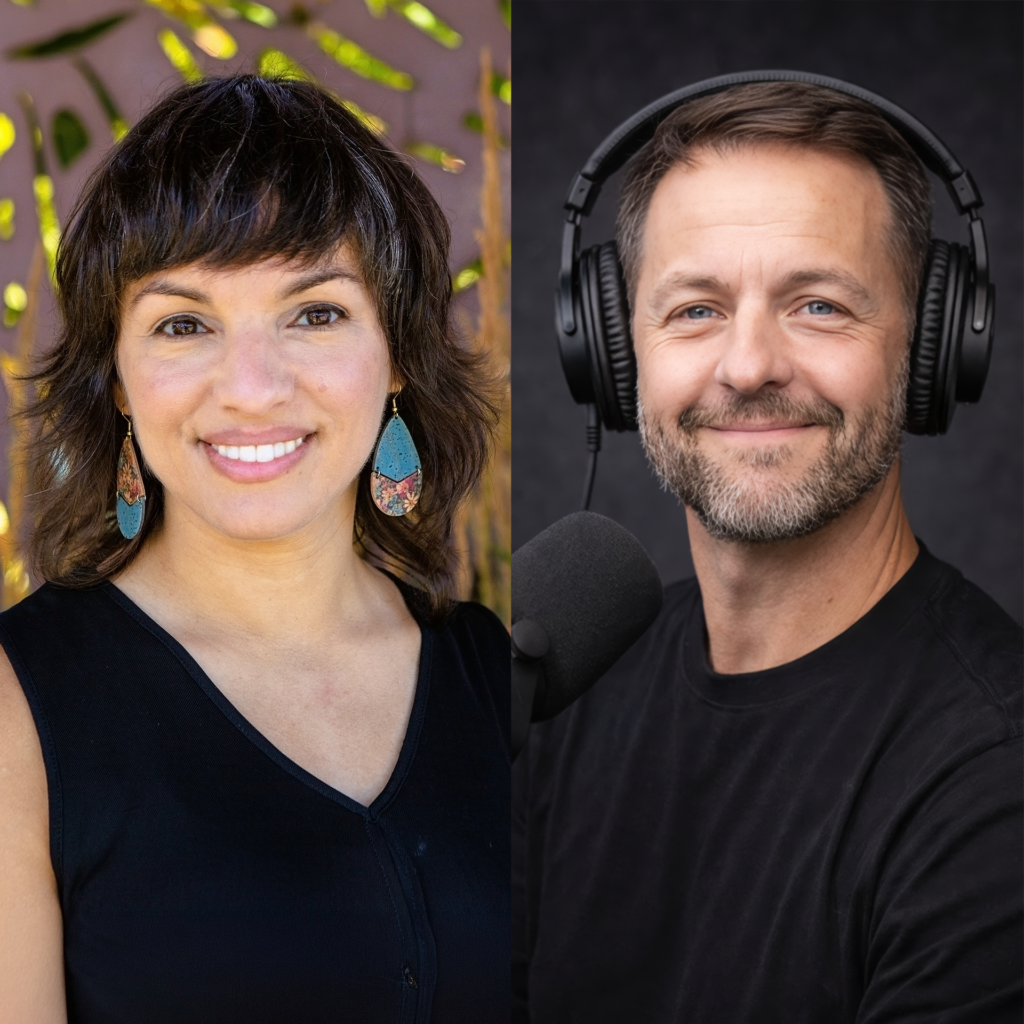
Mónica joins Eric Pratum on The Unfolding Thought Podcast to talk about political disagreements in families. If you want to know why your uncle voted the way he did, she suggests catching him while you’re peeling potatoes together. At a table of twenty, he has to think about how his answer will sound to everybody else. He may even defend a stronger version of his belief than the one he actually holds.
But what if somebody else has already started the argument? Mónica plays out a Thanksgiving dinner where Uncle Bob brings up security. She asks him about something that happened in his neighborhood. Now the rest of the table has a story to listen to, and Aunt Lucy might have one of her own. Mónica also takes up the harder case. If you think a relative’s belief is genuinely harmful, what can you ask without pretending to agree, and how do you decide whether you’re the person to ask it?
Topics Discussed and Questions Answered
- Why do some family fights hinge on how much each person cares about an issue?
- What does “Why did you vote that way?” sound like to the person who has to answer it?
- What can you do when someone else brings up politics and the whole table is listening?
- How can you recognize an assumption and turn it into a question?
- What does a journalist do when the person she interviews contradicts the story she expected to write?
- Can you hope to persuade someone and still be willing to change your own mind?
About Mónica Guzmán
Mónica Guzmán is a journalist, host of A Braver Way, and author of I Never Thought of It That Way: How to Have Fearlessly Curious Conversations in Dangerously Divided Times. She founded Reclaim Curiosity and is an advisor at Braver Angels.
Episode Links
- Mónica Guzmán — Visit moniguzman.com
- I Never Thought of It That Way — Visit moniguzman.com
- A Braver Way podcast — Visit moniguzman.com
- Reclaim Curiosity newsletter — Visit moniguzman.com
- Mónica on Instagram — Visit instagram.com
- Braver Angels’ guide to political conversations at the holidays — Visit braverangels.org
For more episodes — Browse all episodes
Questions or guest ideas — Contact Eric
Read the episode transcript
A lot of these sort of how do you bridge divides over Thanksgiving are all how do you do that at the Thanksgiving table with like 20 people, you know, with tables that spill into the living room. That's actually not the best time for something that's more difficult.
One to one is the best time. So it's after the meal. Right. Or if you and Uncle Bob are, you know, peeling the potatoes, like ask a couple of questions there.
Mónica Guzmán, thank you for joining me. Where does today's recording find you? So I'm in my downstairs office in my house in Seattle. The darkness has started to descend seasonally here. So if you were to go to other parts of my house, you would see heaps of blankets.
There's one right there. Right there next to the desk. And it's that it's that beautiful fall feeling. And I can't believe we're almost at.
Things like Thanksgiving and the holidays. Wow. So I'm in awe at life and how rich and busy and complicated it all feels. Well, would you mind telling me a bit about yourself?
Okay, let's see. I'm the mom of two kiddos, 14-year-old and 12-year-old.
I am an author, a book called I Never Thought of It That Way: How to Have Fearlessly Curious Conversations in Dangerously Divided Times. That book has sent me on a journey that came out in 2022. I have been doing a lot of travel all over the country since.
Tomorrow I'm hopping a flight to New York to talk to some folks there. Next week I'm going to be in Maine. It's been a real privilege because I'm someone who loves people. I'm fascinated by people.
I used to be a pretty shy kid, but then I started discovering that when you talk to people and ask them questions, you could help them unearth things that they weren't even really aware of that were super interesting about themselves.
I became a journalist for that reason. Got lost in other people's stories. Enjoyed creating media. I've done that a couple of times. And around...
2015, 2016, politics really started to encroach on my sense that through media, I could help people understand each other, that people are so interesting. And if we understand each other, things will be good, things will be better.
But our political divides were really getting in the way. And it felt like there was this shattered trust in the fabric of our society in ways that I couldn't reach just as a journalist.
So I ended up leaving a career in daily journalism to write that book, also inspired by my politically divided family. So this has become this has become a thing because my parents went right and I went left when we became citizens in the year 2000. We're Mexican immigrants.
But we have found ways, even when it's real hot, to stay in the heat with each other. To understand we've never changed each other's minds.
And we're still talking. There's still something we gain from it. So that's been definitive in my life. That continues. And it's just, it's one of the ways I find a lot of inspiration to just keep asking, what does it take to see each other clearly?
When things are in the way, when we're afraid of each other's points of view, when we're anxious about the state of the world. So that's my whole universe. That's my whole work. And it comes into my life as well and how I talk to the kids and how we run our family.
You said, I think, around 2015, 2016, that there was sort of a change that you perceived that was either going on at the time or something had changed.
So I'm wondering if you could help me understand that. What was different before and after, regardless of when you might pinpoint a change. If we were to say what was different in, let's say 2010 versus 2020?
Sharp disbelief about other people's beliefs, a sense that we cannot abide them and that they are harming the the world in deeper ways.
Coming from a lot of directions and in a lot of different flavors, there was a a clearer sense that we we've lost track of each other. There were critiques about no longer having the same shared set of facts.
And ah an isolation had taken hold and was growing stronger. That was making it much, it was making it hard to answer those questions. And so confounding questions, how could they possibly think like this? How could they possibly think like that?
Became so deep that it contributed to a sense of fear and hostility that was only growing. And I'm thinking about 2020 in particular. Oof, that was a year.
Yeah. And I don't know if 2010 is sort of the opposite at all. Right. But certainly the research shows us that the polarization had gotten deeper. And in particular, a type of polarization researchers called affective polarization, which is about how we feel about the other side. It's not what the substance of our disagreements truly is.
That came to define a lot of our politics and that our politics was seeping into everything else. Do you see any primary contributing factors to that this change? And if we don't say 2010, maybe we say 1990 or some point far enough in the past that you could measure a few things and say, no, that was definitely different.
I think of them in some big buckets. As people, we've always been more comfortable among people who are like us.
That's a very well-researched phenomenon, homophily it's called. We have been sorting more into like-minded groups. That's happened since 1990 for sure.
Geographically, that's really accelerated in recent years. There's also a human component around how we other people who don't seem like us, how there's a distance that grows there, and suspicion that starts to fill that gap.
And then there's siloing, which I think of as what happens when you ask questions or think about engaging with people who are like you versus who are not like you.
You You push off a them and you become part of an us. And the stories you hear about us and them are very different based on that. I think of the the the additive of sorting, othering, and siloing as being SOS.
Kind of a call for help. But Ah! And SOS, all three of those things, conspire to narrow our worldview while convincing us we see enough.
So the aspects of certainty come in, lock us into our mindsets. It's very unsettling to be uncertain. In times of political and social turbulence.
Ah, We've got enough going on. We're busy. We're tired. We're going to believe what we read on the Internet about millions of people. And then we're not going to have any questions left.
So that's that's one thing. But there's also more. There's some concrete things in the timeline. You mentioned 1990, which made me think of 1994. And that was the year that ah, Newt Gingrich's revolution in Congress, the congressional workweek was changed from five days to three.
What that meant was that our members of Congress didn't live in D.C. anymore. They would fly home. There's a lot of good to be expected. They're spending more time at home. Great.
But part of it was also to help the parties become more locked in. And Republicans had just gained control after not having it at all of Congress. And certainly they wanted to keep hold of it. Can't blame them for that.
But one of the consequences was our elected public servant representatives in Congress no longer had baseball practices or baseball games where they stood next to the member from the other party and made friends.
So there's ways in which we've separated ourselves structurally that has contributed to a ah division that seems to just kind of cycle and deepen as we go.
I think the biggest thing, the most... The thing that keeps accelerating is this vicious cycle where we are judging each other more while we engage each other less.
And that's really important. As a journalist, I was taught to go for primary sources. Secondary sources, well, that's hearsay. We got to talk to the real, we got to talk to the person, right?
And so you map that onto real life. And we're doing a lot of secondary sources about what people who disagree with us believe and how they view the world. And that makes room for a lot of misperceptions, which is exactly what's happened. And we're caught in the vicious cycle where we're judging each other more.
We're engaging each other less. So you fast forward on that cycle and you go, what are our judgments based on? They're not based on actual interactions with each other, which means there's a lot of projection that fills that gap. There's a lot of media exaggeration that fills that gap. There's a lot of fear-based imaginations that fill that gap, which is not to say that there isn't a gap.
But it's become it's become more more vicious and scarier. And that fear keeps us apart. And because we're apart, we're not realizing that there may not be that much to be afraid of.
It seems to me like a primary contributor must be that it's so easy to be satisfied with the that high volume of stories.
Yes. And to say, for my life, it's just enough to know that the other political party, the other religion, the other skin color, whatever it is,
They seem like they're like that. I've done enough work. Exactly. So... I'm sure there are a lot of other contributing factors, but it feels to me like the it's not Dunning–Kruger necessarily. That's maybe an outcome of this that I think I know more about you than I actually do.
And I know so little about you that I don't realize how little I know. But in part, it's the the volume and the satisfaction with, well, that's just enough.
Yes, yes. I think that's spot on. We have so much volume of words coming at us. It feels like conversation. It's not conversation.
It's not connecting with other human beings the way we were kind of designed to. There's a lot of that that atrophies. COVID was this forced social experiment. What happens when we have to be apart?
I also think about how easy it is to be isolated, alone, and entertained. You mentioned Netflix. I love the movies.
I'm really happy to know that the movie theaters are coming back, baby. People are coming back. Young people are coming back. I was really worried there for a minute that streaming was going to keep us all home, only hanging out with those who we already know really well, colliding serendipitously even less with people who are not already with us.
And it does seem sometimes like our society is doing that, closing us in more and more and more. And once you're really comfortable, why would you open back up again? And I relate to this because after COVID, when I didn't have to really do any commutes for anything, after that, I found myself resenting even even a 30-minute drive to an event. Was like, I'll just stay home.
No! Go! Get out! See the world! There's more than what you can access through that little screen of yours. But it does... Satiate us something. It does satisfy something. It makes us feel informed. It makes us feel connected.
And I don't want to diminish the ways in which it does connect us. But there's so many things that we are not bringing to bear into into those connections. On social media, many of us, you know, we're we're billboarding our opinions.
And there's this sense that you're talking to a whole person. But we only let Slim things show, and the psychology of those spaces have us battling kind of on a surface level really often.
I like to say that the internet is a non-place that makes us into non-people. So how do we get together as people? And you have to be more intentional about that now than you used to because our society's default settings, depending on where you are, of course, it varies.
But in some places, the default settings are so digital oriented. And the the ethic is that you don't need anything else. But you do. I'm particularly aware of, of because I'm a journalist, the impact on media.
It's very easy to learn about the world alone. So you're reading a shocking headline and you're talking with yourself about it the whole time. As you read it, you're talking with yourself. These these opportunities to say, hey, did you see what happened or what was on the news last night?
Talking with neighbors and just just colliding. It just doesn't happen as much. So we end up ruminating a little more about these things and forming our opinions sometimes really deeply with a lot of words that make us feel a lot of confidence. And that confidence can harden into certainty, which then chases away curiosity.
And as a journalist, it was astounding how often I realized I was wrong about people. About their stories, about what they believed.
I would come in under deadline, having already pre-written the story in my head. I just need this quote from this person. And then the truth of them got in the way of that.
And I had to make a choice. Well, do I just want to be lazy, stamp out the truth, simplify, grab a slogan, still tell the story that I imagined because it's easier and faster, gets me through the day?
No. No. I need to change my story. I need to sit with this person and understand what's really going on. And I really had to learn a lot of humility through that.
And I understood that it's easy for all of us to get each other wrong. And in fact, we get each other wrong every day, all the time, all the time. And a lot of pain comes from those misunderstandings.
So I started to think about assumptions. And assumptions are kind of the little minions of certainty. Assumptions are answers to questions you never thought to ask.
You just believed some guess that came up in your mind. But if you can notice those assumptions and turn them into questions, Now you're taking what could be judgment and turning it into a door into curiosity. Now you're taking what could be an uninformed conclusion and making it a door into curiosity.
And when you keep switching back to curiosity, and we're never going to be in curiosity all the time, then you keep learning. You keep opening yourself up to what you might be wrong about because we're all dead wrong about something. We just don't know what.
At any given moment, we're all dead wrong about something. And we have to ask ourselves, what's more important, the truth or our own beliefs? And most of us would say, well, the truth. Well, if the truth is important to you in a divided world, the world is conspiring against you searching for that truth because of all the anxiety, because of all the divisions, and because of all the fears, and because of all the misperceptions, and because of all the media and everything that's going on.
So what kind of person are you going to be I never thought of it that way is the name I gave to certain moments that that I've experienced, that lots of people experience. There's a part in the book where I kind of give a tour of some folks I know, and there I never thought of it that way moments. It's this miracle that happens when somebody else's perspective crosses that chasm between them and you and lands with you.
I never thought of it that way. Whoa. Something is reframed in my mind. That's amazing. You can't You can't find those moments unless you're exposed to something different.
Sometimes those moments are a little thing of delight and then you forget about it and nothing changes. Sometimes that moment will plant a seed in your mind and you may grow out of a belief you had into another one.
People are sometimes afraid of that because they're so afraid of changing themselves. Um, We all feel strong when when we feel confident in who we are and that nothing can change.
And what if I'm wrong is a really scary question. But every single time I've talked to people who've told me about a time they changed their minds, they're grateful. Because what they changed their mind to feels more true than what they had before. Otherwise, why would they've changed it?
So I never thought of it that way. But that way moments are the rewards of curiosity. They're the little gold coins that you find when you choose to ask one more question, when you choose to stay in an in an unsettling a conversation that's not quite terrifying yet.
You're not in the trauma responses of fight, flight, freeze, and fawn. You can stay, and so you do, and you hear more, and you open your mind because you realize it's closing. And once you realize it's closing, awareness creates choice. You can open it again.
And you make the world bigger. You make the world bigger despite in spite of all the odds. As you're describing this, On one hand, I'm thinking about behavioral traits that are fairly consistent. You know, our innate traits, our psychology can change over time, but there are some things that tend to be fairly consistent. If you look at the big five, for example, and, you know, your openness or your conscientiousness or whatever else. Yeah.
It seems to me like some of this is trainable. And yet many of us start from some default position where this is not natural.
Many people are going to sit down with ah mother, father, an aunt, or an uncle, a cousin, who knows what, and maybe we'll just avoid all political discussion religious discussion, whatever it is.
But there are a lot of people who are thinking, I really hope that this XYZ topic does not come up. And there's a lot of people who hope this topic comes up and somebody finally sees the light.
There's a lot of people with that hope, too. Yes, exactly. So how how do we handle these conversations in the coming holiday, even if I'm not able to convince my parents or whoever it is that I'm right and they're wrong.
And And it sounds like I shouldn't necessarily try to do that. I shouldn't necessarily hope that that's the outcome, but I'm going to sit down to Thanksgiving dinner in a little bit.
How do I go about having a productive conversation and getting to the I never thought of it that way point? Yeah. Rather than we build bigger and bigger division between us. Yeah. So a couple things to say off the bat.
It's all trainable. It's all trainable for all people. I've heard the argument, well, some people would rate low on openness to, you know, things and therefore they're innately incurious. Bullcrap.
That is not true. That is not true. Sometimes I think we over-index on these studies and then we treat them like labels and and um you know places from which to judge. This is all trainable.
It is also true, what you said, that some folks just begin kind of naturally in a place of more rigidity. That's true for all of us. I think it's really important. If you think of yourself as a curious person, I think of myself as a curious person.
I am humbled when I come to the places in my life where I am not curious. We all have those places. So never think that you've kind of, oh, not me. I'm so open. Oh, my God. No we all have those places.
So what is also true is that everybody is in their own landscape of this world. Places where learning new things feels delightful. Not just safe, but delightful.
And they're really interested and it's adventurous. I just finished an eight-week acting class and I was taking feedback so well because there's no risk in it for me. And I love learning and it's so great.
But boy, talk to me about AI. I've got some walls that come up. I've got some strong convictions. I can become a little mean about it. And then I have to soften. I have to become aware of that and make a choice of how I'm going to, what posture I'm going to adopt to allow constructive exchange of ideas to continue. Yeah. Because if I'm just there having already labeled, well, he's just one of those and and she's just one of those, what am I there doing? What am I there doing? Dominating? What am I what am I trying to do? You know, So we all have to make those choices. Are we performing? Are we learning?
Are we growing? Are we convincing only? So that's important. I think that coming into the holidays, the most important arena, really, to begin is with yourself.
Figure out what you want. Be honest with yourself about what you want. If you have a person in mind who's going to be there at those holidays and something bothers you, figure it out.
Figure out what you want. Do you want them to change? When people hear from people like me, they're ashamed of wanting people to change. I understand that. But let's be honest. A lot of us want people in our lives to change.
Begin with the honesty, not with the repression. Why do you want that person to change? What is it about what they believe or don't believe that threatens you or that feels like something untenable, unabideable?
What What is irritating? Why? What is your reaction to that person? Why? Ask yourself, go into memories of your past and pick up those scenes where things went wrong. What was going on there?
One of the deepest political disagreements or any kind of disagreement is when people disagree on how much to care about something. We don't usually talk about this, right?
When we talk about Thanksgiving and politics, people are like, oh, yes, the things about immigration and the things about the midterms and the things about the Democrats and the things about the Republicans. Most fights that get really tough are when one person cares a lot and one person just doesn't care that much.
And the person who cares a lot wants the person who doesn't to care more. And boy, does that get crazy, you know? So get to know your own, get to know, get to know your own desires.
Get to know who you want to change and why. And And ask yourself, then then be honest with yourself about Is that the purpose? How much how big a role would you want that desire to play in this time with them?
Because that that's where things can get a little crazy, right? People come to the holidays for lots of different reasons to be together, to check in, to catch up, to nourish relationships that have nourished us in the past.
To be part of a group that is a meaningful one. Family is amazing, right? It can be really amazing. Even if you have a Friendsgiving. I mean, that that group of friends can feel like family.
So there's a harmony that we all want. There's a togetherness we all want. What do you want? Make that list. I want to feel that togetherness. I want this person to change. Okay, how do you rank that?
And There are ways to seek all of those things. And when you take that, you know, maybe I want someone to change. All right. What What else is underneath that? Well, frankly, I just don't understand why blah blah, blah. Ah, maybe you want understanding. Because it's easier to pursue understanding and harmony and togetherness than it is to pursue trying to change somebody else.
If anybody has ever tried to change you against your will, you know how that feels. It doesn't feel great. Most of the time, you feel misunderstood.
Because most of the time, we don't we don't think we're villains. None of us wants to be the villain in our own story. That's just That's just the reality. None of us nods, going, oh, thank you for letting me see that I'm a monster. I appreciate that.
Nope, you're never going to get that. That's a fantasy. That's not going to happen. But if you do want to influence people, if you want to persuade, ah, okay, so there's that, there's that I want to change this person. Oh, but maybe, maybe what it, maybe I could seek understanding. Maybe I could also seek persuasion. Ah, persuasion doesn't work if somebody thinks you're not respecting them because they're not going to stick around to be persuaded.
They're not going to listen to what you have to say. All they're going to hear is reasons to stay away from you or to attack you back or to shut down, to freeze. Maybe to just kind of pat you on the head and say, oh, yeah, that makes a lot of sense. I'll think about it. But not actually you think about it at all but just to get you off their back.
Right. Persuasion is really cool. We can work with persuasion. How do you persuade or influence someone that you're going to see these holidays to think more like you?
You create the conditions where you can share each other's perspectives fluidly and with good reception, with good fidelity to what you actually believe. There's certain conditions that make that easier and certain conditions that make that harder.
It's a lot easier to do that one-on-one. A lot of these sort of how do you bridge divides over Thanksgiving are all how do you do that at the Thanksgiving table with like 20 people, you know, with tables that spill into the living room.
That's actually not the best time for something that's more difficult. One to one is the best time. So it's after the meal. Right. Or if you and Uncle Bob are, you know, peeling the potatoes, like ask a couple questions there.
A lot of the times, too, we put so much burden on a conversation. I'm I'm coming to understand or I'm coming to influence. I need him to know how I think about this. And then you spend an hour and it's all intentional and you're trying to like lock that person in with you and and it's all going happen right now. That's way too much pressure.
The you know, Usually influence is is something that happens just when we collide with each other, just when we spend time with each other. It's a question here and a question there. And in between, there's room to breathe and everybody goes outside and has fun and watches the game and then comes back.
Let Let life happen. Let life happen. And and ask yourself, if if the holidays come and go without my meeting these goals, Will life go on, right? What what what will happen? What What is the most important goal? And if there is one that's, I really need this person to understand this thing about me.
Okay, circle that one. Let's work on that one. Let's work on that one. How can we do it on that on terms that person can meet us with? Hey, can we can we go out to coffee just down the street?
I'd really like to talk to you about something that's been kind of bugging me. And um, I don't know. I just I just hope you have time for that this weekend. What do you think? You know, if there's something like that, carve out the space. Don't jump right in.
Carve out the space. I think one of the things that's really important that you said was you gave a situation. I'm forgetting what it was at the moment, but eat you.
Oh it was your acting class that you said something like there's no risk. And I think if we can help not just ourselves, but also the other party feel like we're not necessarily coming in to fight. But this is a this is a genuine question.
Why? Why did you vote that way? Or why do you support this policy? And not that I'm coming at you, Mónica, with why, you know, really aggressive in in tone or even just your perception.
There's a way in which why, coming at you with why, is not a question why. It's, I don't believe that you are worthy. And so you now have to defend yourself to me. That's the way it's heard when someone comes at you with why.
It's not a question of curiosity at that point. And, you know, tying that into having these conversations over the dinner table, for example, even if Uncle Bob and I are able to have a good faith conversation, getting down to, well, why do you support that politician, for example,
Can be very painful for everyone else when eventually it seems like we're going to peel back to well, the thing that I value is security or economic stability or whatever it is that Uncle Bob supports. And that's why he voted the way that he did.
If you're at the dining table and it's you and Uncle Bob getting into it, I mean, everything Uncle Bob says is being heard by lots of different hearts and minds. And and And could, you know, maybe Uncle Bob knows, maybe Uncle Bob doesn't.
But if he knows how everyone else might receive it, then he has to tread very carefully. Or maybe maybe he's got baggage with Aunt Lucy. And Aunt Lucy just needs to hear this, so I'm just going to go all in. And Aunt Lucy's just there just horrified. Or Aunt Lucy jumps in.
Okay, now you've got now you've got a a trio, and then there's a sniper over there, you know, Cousin Dan. He just has a way of just saying little things that just make everyone groan. And before you know it, it's just, here's this precious time, right?
And nobody wants it hijacked, right? So we just have to make those good tactful judgments about, if I have something that could turn quite serious, if I have something that could turn quite tender,
Maybe I know my family. Maybe I don't. You know, whatever. Maybe I've got certain intentions, but hopefully I don't want to trample too much here. So let's just be judicious about where we bring up certain things. Now, then comes the situation, though, where sometimes that's not under your control.
Somebody else brought up that thing. And Aunt Lucy jumped in and the sniper sniped and the defender. So Braver Angels, this nonprofit, has a way they talk about all the roles that people play. There's the gladiator who just invites the fight. There's the defender who all they do is just go, don't beat up on Aunt Lucy.
Don't beat up on her. Come on. Right. There's the um the peacemaker who's just like, can we all just stop? Right. You would think the peacemaker is the solution. She's not. Ah, Anyway, and there's all these, the sniper, the sniper who just waits and goes, ah, just tries to get a little thing in there. Ah, So yes, all these roles are now playing.
What do you do? What do you do? And again, it comes down to what you want. And if if what you want is to bring things into a place where it's less possible that relationships might rupture and and real pain might be felt here, then you want to try to play the role of the engager.
And the engager is not just trying to shut down the conversation. The engager is trying to make the conversation more constructive. Well Well, hold on. Bob said something interesting about security.
Uh, can I... Bob, have a question. Can you can you say more about why? You know what? What led you to to that in particular? Didn't something happen a couple of years ago? I remember something happened with you and and and this this thing that happened at the in your neighborhood. Do you Remember that?
Now you've gotten people to switch to story when people switch from argument and reason to story. People listen with a different ear.
You start to visualize what it was like to be Uncle Bob. And you also, you're you're um your defense is kind of calm for a little bit. Everybody gets a break. There's a softening, right? And that story usually begets another story.
You know? Aunt Lucy remembers what happened Uncle Bob. But Uncle Bob, you know, lu like Lucy experienced something that affected her in a different way and is now going to talk about that.
And And you see people just relax a little bit. It doesn't You're not going to get to the bottom of anything. But the engager can make a real difference. And again, I want to be clear. That The goal here is not minimize pain and discomfort at all costs over the holidays.
That's not it. I don't think so anyway. Um, I think something closer to the goal is Help people be seen a little more for who they are these holidays.
Why? Because that increases love. It's that simple. Um, That increases closeness. I think everybody wants to feel more connected and more seen and more heard and more understood.
What if that's the goal? And you can't get it all done. You can't get it all done all at once. Because for some people, you know, for for Aunt Lucy and Cousin Dan, boy, it's been tough between them for years.
This is a long journey. Right. But it's important to understand that one step on that journey is is is good. One step on that journey is good. One story that Cousin Dan heard from Aunt Lucy without rolling his eyes is good, you know?
So you just just don't demand too much from this time, right? And remember remember that everybody wants to be connected and be close at the end of the day. That doesn't mean ignoring who people are.
It means trying to create the conditions where they can be they can be seen a little bit better. And sometimes that means making things a little bit uncomfortable. Just do it in the way that's most likely to be successful.
Rather than make people shut down and disconnect more. We come to a lot of things feeling like ah many of these questions are existential. Yeah, absolutely.
That if you vote a certain way, I can't just let that statement go. I can't let that activity go because we're talking about the fate of the world, the nation, whatever else.
Yes. And if I'm a good person who wants to build a good world and I have a relationship with you, isn't my obligation to try to change you? That's not the most evil thought. That what What I want to see people do is to switch into persuasion rather than I need to change you. No, you you need to persuade them, which requires understanding. Them that's hard That's a harder road, but it's the only one that bears results.
You know, It's also a two-way street because they might change you. Ooh. Ooh. Yeah You might realize that everything you thought you were so certain about and you're so educated about, you've been missing a lot, actually.
That's hard. You said You mentioned stories earlier, and I wrote that down because I feel like that's a very important point. You know, One of the stories that you told, at least in brief, was the story about Newt Gingrich and changing the congressional workweek. That's a story that I go back to as well.
And There's so much more to the bigger story. But by telling that story, hopefully I give someone the opportunity to say, well, Eric, hold on.
There's more to it than that. And if I think just by telling a story, it probably makes the other person more likely to then tell another story.
Absolutely. Is, I don't even need, like, that's one of those where I don't even think I need the scientific study for that. I think we all know that. We've all been in millions of conversations. We know that's how this works. Somebody tells a story, our brains switch into story mode.
We visualize their lives. Automatically, we contrast and compare with our own. We find a story. That's just how that works. And when you when you trade stories, you're giving each other peeks into your experiences.
Like what? Ah, That's a window into my life. And if the goal is more connection and and being seen and heard, well, that's pretty direct way to toward that. I'm inviting you to see I'm relating to you something I've been through.
You are seeing me through that. And if I can if I can tell you the sorts of stories that help you see the path I walked to a conclusion that you don't understand. It's going to make that understanding less threatening. It's going to make that understanding more achievable.
Right. Because the person you you mentioned when when somebody's belief really feels threatening, this is the hardest question I get. It's the hardest family of questions I get. Is it how do you abide that?
And how do you even let a person talk about those beliefs in front of you? And doesn't that poison the world? Right. And these things are really these are really, really hard questions. Because I say that and everybody imagines their own worst idea possible. Everybody imagines that in their own lives.
Um, And those just those things just feel like the first mistake was even letting that come up. Oh no. That's why people say, I just this shouldn't even come up. It's either because there's going to be some awful, some idea I find truly, truly bad is going to come up and it will have been my fault or it's my fault for doing nothing.
Or I know that there's trigger happy people here and there's enough baggage psychologically that it's not even about the issue. It's that this person's just going to hijack. This person's going to trample. Ah, This person is going to react a certain way. Everyone's going in tears and nobody wants that.
So it's it's one or the one or the other of those things are kind of a threat. Um and And that's why, again, it is it is so important to try to have any part of those conversations one on one, because I'll say this. Sometimes people with ideas that and I'm I'm not here to you know, we're speaking in generalities for a reason.
Sometimes people with ideas that feel. Intolerable to others in society. Part of them. Feeling strong in themselves is attaching to that idea and believing that by defending that idea, they are defending themselves.
They're going to feel, right? It's one versus 20. They're going to feel pretty affronted. And so their guards are going to be up big. And they might exaggerate how much they believe that idea just for the sake of defense.
So now you're having a dishonest disagreement. You're having a dishonest exchange of ideas because that person is not actually honestly saying what they what they think. They're just They're just putting a stake in the ground and being strong because you guys never see things this way and you think I'm so-and-so and that's just not true. And so rather than trying to let you into my world like slowly and open myself up to change, no.
I'm going to make this even, oh, you want? All like let's go. Let's go. I will tell you exactly what I think. And I'll tell you in like the harshest terms possible. And it is going to make Lucy cry. And let's so be it. Right? So you just don't want that. You don't want people to feel that that they're being cornered.
You just don't. You just don't. But if you get that same person. Alone And you feel you have the capacity. And let's be clear, not everybody has the capacity for this. If somebody has, you know, X idea that feels truly harmful, not everybody's going to want to be there and unpack that with them.
But I will say, unless somebody is there to unpack that with them, it's highly unlikely that they will change that idea. Do you think we're on a certain trajectory with our standards, our behaviors or anything else around this, you know, as a as a society, as a country?
Yes, yes, I do. I'm I'm um, I am more optimistic than most I've realized. But I'm also more hopeful than most. And I, I, I prefer hope to optimism. Optimism is not, um, substantiated, hope. There's a beautiful definitions I love, but, but one of them, Sharon McMahon says that hope is choosing to act as if what we do matters.
Hope is tied to action. You know, uh, as Yuval Levin says, he's a scholar I love. He says, um, Hope is believing the world can be good if we are good. So it again, it ties it back to what we do.
It's not like like I'm going to sit back and just, I'm just going to believe everything's going to be fine. No, you need you need to lean forward and make it fine. You need figure out what that means. So So because I'm hopeful,
I see the power everybody carries. We carry a lot of power. And also because of my book and and my my travels and all the people I've met, all the communities I've connected with, I have heard so many stories of regular people who made huge differences around their own tables and their own families and their own communities with small steps, little ones, that took maybe a lot of courage,
Right? But boy, are they are they grateful. And those small steps are not technically difficult at all. This is not that hard. Now, I know how that sounds. Yes, it is. Yes, it is. Yes. In the moment, with the heat, yes, it is. Yes, it is. But you've got to come back to one step is enough.
You don't have to take all ten. You don't have to take all thousand. Yeah you You're not going to change this other person. Stop. Stop trying, please. Instead, go for persuasion. You know, Instead, go for understanding. Stop trying to change. That's too that's too much. But if you you know if you lower if you lower that sense of expectation for yourself, those small steps are going to feel a lot easier and you'll be able to take them.
I see a lot of hope in young people because I go to a lot of colleges and I and high schools, even middle schools. And I meet these these kids, these students who are like, what's the big deal?
Why are my teachers, why is my professor so afraid when somebody brings up a tough topic? Now there's young people going, I don't understand why this is hard. Why does everyone think this is going to destroy me to argue or disagree?
It's It's actually really cool. So colleges have been kind of the boy, a you know, a punching bag for a lot of our deepest ills on this and the classrooms and the protests and the performances. And Oh, my gosh, it's just gotten awful. And and sometimes the hatred and all of it.
But the classroom, the classroom is a place of learning and ah professors are becoming more and more equipped with with these tools and students are more and more equipped with the will. And they're dropping some of their fear because they weren't around for some of the more traumatizing years like 2020.
Those kids graduated, you know. So now there's people coming in going, I want to understand how to do this. And I And I look around, there's a lot of young people looking around going, oh, I get it.
The people who can actually make change in the world are the people who can who can tango with folks who disagree with them. That is true, by the way. That's the people who who are going to make the most difference. Ah, So that's um that's the most marketable skill right now.
We're going to see that. Ah, There's organizations and in schools pouring a lot of money into civil discourse types of programs and things like this. So we're actually buffing ourselves up with these skills that...
We've either abandoned or whatever. Um, And I think that's I think that's great. So, yes, I see I see a I see a really good trajectory. But like I said, I'm not someone who wants it all to happen overnight because I know that's not how this works. We're going to take the steps we take and I can't predict it.
Some things might get worse along the way. But I just I just hope I just hope we keep trying to open our eyes a little bit wider. If someone was to be thinking about only one thing after this conversation, whether we talked about it or not, if they were to take action on something or go and educate themselves, exercise, whatever else, is there something you would want to leave people with?
Every time you come across an idea that makes you react with repulsion, for whatever reason, you're scared of it, you think it's stupid, make the next thought be, I wonder what I'm missing.
Doesn't mean you're wrong about your conclusion, but I wonder what I'm missing. If there's people who believe this, I wonder how they came to believe it. And just let that question sit for like a half a second and then move on with your day.
But and invite curiosity in for just a minute to just bathe in it, bathe in it for it for a moment. And And yeah, that that will start to bring up creative new ways to react to a world that we don't get.
Is there somewhere that you would send people to follow you, buy your book or otherwise engage with you, I suppose, after this conversation? Yeah, there's a couple spaces, starting, I guess, with A Braver Way. That's my podcast that's all about meeting division with strength, strength of your convictions, strength in your relationships, and the strength of spirit, because it feels like a dispiriting time.
Also, I'm on Instagram at @moniguzman. And my book is I Never Thought of It That Way. Available everywhere the books are, including audiobooks and ebooks and all that. All that good stuff.
Ah, Yeah. And my website is moniguzman.com. I have a newsletter. So you could start with the newsletter. You could start with the podcast. But everything sort of feeds to everything else. Awesome. Well, I've been looking forward to this and I think I said it before we hit record, but so that everyone else hears it. I think we met 17 years ago or something like that, just in passing. So, oh wow and I had read your book and didn't even realize that it was, you know, this woman that I met so long ago, again, briefly. So yeah I really appreciate you being here, Mónica. I've enjoyed the conversation.
This was awesome. Thank you so much. And and everyone, have curious happy holidays.