Presumed Guilty: How We Broke American Democracy | Ilana Redstone
The most dangerous part of a political argument may not be the disagreement. It may be the moment one side decides the answer is obvious.

Get the next conversation via email
Fresh conversations to help you see the world more clearly
The most dangerous part of a political argument may not be the disagreement. It may be the moment one side decides the answer is obvious.
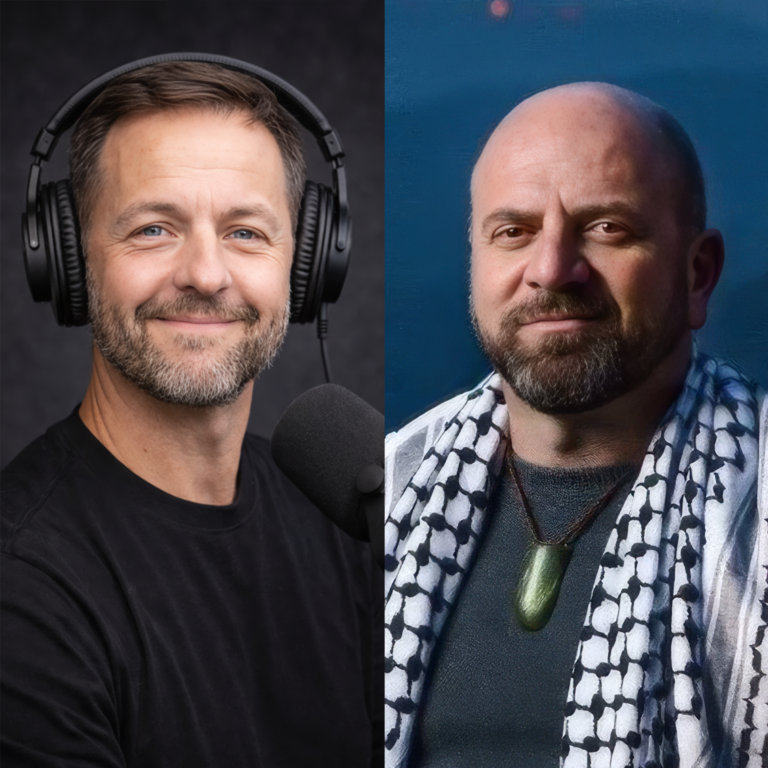
In this episode of The Unfolding Thought Podcast, Eric talks with sociologist Ilana Redstone about The Certainty Trap and her forthcoming book, Presumption of Guilt.
Ilana argues that moral condemnation often begins before anyone examines what the disagreement is actually about. What sounds like a clash of values may instead turn on different descriptions of reality, different explanations of cause and effect, or different priorities. When those layers remain hidden, “I think this policy will fail” can become “you do not care about people.”
She distinguishes confidence from certainty and offers a four-part framework for separating descriptive claims, causal claims, values, and proposed actions. The point is not that every belief is equally valid. It is to make the reasoning visible enough to test.
The conversation then moves from personal conflict to democratic institutions. Ilana argues that democracy is a way of managing disagreement, not a mechanism for settling it. When courts, universities, corporations, or other institutions treat contested premises as decided, dissent can begin to look like ignorance, bigotry, or guilt.
They apply the framework to inequality, discrimination, racism, race-conscious policy, and disparate impact. They also ask why civility and viewpoint diversity are not enough when the premise beneath a disagreement remains unquestionable.
Ilana closes with a warning sign: Notice when you ask, “How could anyone think that?” Then try to identify assumptions that would make the position intelligible, even if you still believe it is wrong.
Topics Discussed and Questions Answered
- Why does certainty turn disagreement into moral condemnation?
- How is confidence different from certainty?
- What disagreements are mistaken for conflicts over values?
- How can facts, causal claims, values, and proposed actions be separated?
- Why is democracy designed to manage disagreement rather than resolve it?
- What happens when institutions treat contested premises as settled?
- How did disparate-impact reasoning change arguments about inequality?
- Why are civility and viewpoint diversity not enough?
- Can you understand an opposing position without agreeing with it?
About Ilana Redstone
Ilana Redstone is an associate professor of sociology at the University of Illinois Urbana-Champaign. Trained as a sociologist and demographer, she studies judgment, certainty, political polarization, and institutional life. She is the author of The Certainty Trap and the forthcoming Presumption of Guilt: How Equating Inequality with Injustice Fractured American Democracy.
Episode Links
- Ilana Redstone’s website: Visit ilanaredstone.com
- The Certainty Trap: Visit pitchstonebooks.com
- Read the preface to Presumption of Guilt: Visit thecertaintytrap.substack.com
- The Certainty Trap newsletter: Visit thecertaintytrap.substack.com
For more episodes: Browse all episodes
Questions or guest ideas: Contact Eric
Read the episode transcript
Presumed Guilty: How We Broke American Democracy | Ilana Redstone
The Unfolding Thought Podcast — Episode 104
Published October 12, 2026 · Runtime 51:57
[0:02]
Professor Ilana Redstone, thank you for joining me. Where does today's recording find you? Thank you so much for having me. And so I'm honored to be here. So I am in Champaign, Illinois.
[0:15]
Would you mind telling me a bit about yourself? So I live in Champaign. I'm a professor in the sociology department at the University of Illinois. I've been here for a little over 20 years. I'm originally from the East Coast. I have three boys.
[0:30]
I did my graduate work in at the University of Pennsylvania. I have a joint degree in demography and sociology from Penn. For the first part of my career, I guess I could say I did very I did much more traditional academic work than I do now. So I was a quantitative researcher and I the topic I focused on was immigration. And so I analyzed data and wrote papers in academic journals. And and I didn't really have a political side to my work.
[0:57]
I mean, I guess to the extent immigration is always somewhat political, but it really was just about analyzing data. And I don't do any of that anymore. So it's been the past sort of 14 years, I guess. 14 years or so, maybe 10 to 14 years that I've done work on more sort of the political discourse space that I've been in.
[1:16]
You mentioned a couple of things that I hope to explore, but first, so I wrote down traditional because I wanted to make sure that I understood. When you say traditional, are you talking about things like quantitative and qualitative research? Are you talking about first-party secondary, sorry, primary, secondary research, something else?
[1:39]
I guess what I meant was sort of, I used secondary data. I did not collect it and I was analyzing it, but that's not necessarily the definition of traditional. What I meant was that I was doing work that was more easily It more like people knew whoever cared, but like people knew which bucket to put it in in sociology. It was like there's a bucket for immigration and there's a bucket for, you know, issues, questions on a lot on race and ethnicity. Like so it was clear. I guess that's what I mean now that you're pressing me on it, which is good. I think that's what I mean more by traditional is that it had a clear place to land. I don't think that's the case now.
[2:21]
Okay, that's interesting. And the another thing that stuck out to me, and you talk about this in your book, The Certainty Trap, I think it's early on when you're talking about demography, you talk about, I think, the difference between what demography actually is as a, as a practice or a study versus I think what the public thinks of it as. And whether you recall that or not, I think I recall that from your book. And so I was just hoping that you would explain, I guess, what demography is, what the study that you went into.
[2:56]
most people don't really know what demography is. What it really is, is it can be sort of narrowly defined is it's the study of how people enter and exit populations. So, and that can be, you can interpret that broadly, but how do people enter and exit populations? Well, fertility, you're born into it. Mortality, you die.
[3:17]
Migration. Those are the three sort of, it's the three-legged stool of demography. And so migration was, ah so my degree was a joint degree in demography and sociology. But with respect to the demography part, I was on the, like there were people who just, whose focus was fertility. There were people who focused on mortality. My focus was migration. um My father used to say that I, but basically I counted people, which is not, I mean, it's not totally wrong.
[3:43]
How did you decide to go into sociology, demography, or what was it that drew you into this? So I wasn't interested in any of this in college. well I mean, I was, but sort of only in the background. Like I was always sort of interested in questions that are morally and ethically complicated.
[4:04]
um But I actually majored in Spanish in college. um I went to the University of New Hampshire. I was not particularly academically focused. And the reason I majored in Spanish really was because I wanted to study abroad.
[4:17]
And so I spent my my junior year in Spain and Southern Spain and had a lot of credits in it and majored Spanish, but not because that was what I sort of dreamed that I was going to be doing in some way, teaching or whatever.
[4:29]
And so after college, how did I get into this? So I spent... One of the things that I was, I graduated from college in 94, so I'm 53. And one of the things, so college was a couple of things. One is it was obviously a lot cheaper. I went to a state school, although I was out of state. And so one of the things that I was very fortunate about was that I came out with no loans, And what that meant was that I was very, was free in a way that some of my, like, so for example, some of my former high school classmates were not like, I didn't have to pay off student loans. And so I traveled, I did a lot of traveling in my twenties. So I like, uh, after my spending the year, my year in Spain, I taught English in Mexico. I taught English in South Korea. I I was in the Peace Corps in the late nineties in West Africa. I
[5:15]
Did something called Crisis Corps in the Dominican Republic. Like I had all these experiences living abroad and overseas. And one of the things that that taught me in general was just that the world is sort of full of people who are just trying to do the best they can. Like, I mean, really just there people are just trying to get like, live their lives and be with their kids and, you know, haven't like make life work, whatever that means, wherever they are.
[5:38]
Sometimes when I say that, a lot of times people will sort of nod along and I'm like, well, no, that actually applies to the people that you politically disagree with, too. Like them, too. They're kind of they're just trying to figure their shit out like everyone is. And so that was one of the things I took from that experience from the Peace Corps in particular. So I was in the Peace Corps from 97 99.
[5:57]
And I think people have all kinds of experiences in the Peace Corps. One of the things that that I think is probably common is that you do end up with some pretty complicated, facing some pretty complicated ethical questions about, you know, what am I doing here? Am I, am I you know, is my presence here causing creating more good than harm? Am I propping up a corrupt government? Am I fostering some sort of dependency mentality? Like, What, you know, all the, all of the things.
[6:22]
And so that sort of piqued my interest. And so I went back to, I wanted to go to graduate school after the Peace Corps. And I really didn't want to take the GREs because I had not been academically focused.
[6:34]
And I went into a master's program. was a two-year master's program in international development. And I did a year of it because that first year I started working with a professor who got me interested in doing research. It was my first sort of exposure to doing research and I loved it.
[6:51]
And so he was the one who was sort of like, you should apply to PhD programs. And I was sort of like, what are you kidding? Like... And so I did. And I and because I was interested in immigration at the time, like he was like, if you're interested in immigration, you should go work with Doug Massey. So Doug Massey, who is, I think, retired at this point, but he was at Penn in the sociology department. I didn't have some it wasn't like I have a background in sociology. It was more like I wanted to go to I wanted to study immigration. I had a sort of mentor in my life who said, go to Penn and study with Doug Massey. I did end up taking the GREs, applying, whatever I did. I did obviously well enough to go. Ilana, how did you get from your, I guess, more traditional research into the less traditional research? What was it that changed in the world or your career or your interests?
[7:43]
So I guess first I would characterize what I do now, the way I think of it as kind of sitting at the intersection of three different fields. So one is political theory because of how it relates to democracy. The other is moral psychology because it's about moral condemnation. And the third is philosophy because it's its really has to do with epistemology and sort of how we think about what we know. And so the way that I got interested in it was I guess in some ways I'm interested in what, when someone, talk you know, I'm, I'm one of those people who like, when someone tells you that you like, you're sort of, you get the sense that you're supposed to think a certain way that you're like, no, fuck you. Like, I'm not going to do that. um'm And so I think some people are just kind of like innately like that.
[8:32]
So there's a little bit of that. And what I noticed, I think what I started to notice increasingly was that really conversations in my own department, in my own discipline, in the in the own in sort of the political space were much more like it we felt like it felt like there was a memo that everybody got that I missed.
[8:52]
Like I would be sitting in. So, for instance, you know, if I was sitting in a faculty meeting and I remember I can't I could not put a year on this, but I remember at one point sitting in a faculty meeting and and the conversation was about graduate students and there was a graduate student who had left the program. which is always something as a department you're always concerned about. Like if you have people leave the program, especially a small program, it's like, well, what did we do? Is it something we did or didn't do or whatever?
[9:18]
And the student, if I remember correctly, it was a black man who had left the program. I didn't I didn't know him. And so the question was about sort of why the student had left the program. And and the conversation during the faculty meeting was sort of about Like there was this clear assumption that he left because there wasn't, that there weren't enough black faculty and that there weren't, that that that he didn't, he wasn't mentored well enough. And I remember sitting there and going, well, okay, sure. I guess that's possible. Like, but do we even know like, like what this go is going on with this person? Like it's maybe had nothing to do with that. Like, But it was just so like these. So, again, that was sort of like, well, like, was there a memo about this that I missed?
[10:00]
And so the idea that there was a right way to think about issues on related to race, gender and all of those to harm intent, all of those topics. And I didn't it didn't make sense to me where that came from. Like I was it just didn't ah it didn't make any so like what did it mean
[10:20]
what did it mean sort of politically for a political conversation to say that there's one sort of position that is so morally right? Does that, what everyone else is just backwards racist? Like, what does that even mean? um and so that, you know, and that observation is I'm sure not unique to me.
[10:38]
And so I wrote The Certainty Trap trying to figure out moral condemnation sort of from a mechanically, like, where does it come from? Like not,
[10:49]
not sort of from an emotional place, but but mechanically what makes it work. And so The Certainty Trap was sort of my effort to say, okay, well, the thing that you the thing that licenses moral condemnation and judgment is certainty. If you're going to be morally outraged about something or righteously indignant about something, you can't do that without being certain. There's something that you're treating as certain. Now, there's a separate question about what should be treated as certain and when and da-da-da-da-da.
[11:13]
um But just mechanically, like that has to have that those two things happen to go together. So that's sort of how I ended up sort of stepping into this. Do you think that for you, you know, you asking those questions or not being as certain as I think others were in that particular experience with that graduate student, but I'm sure it shows up in other places.
[11:36]
Do you think that you have a predisposition to a skeptical, to be skeptical? Do you think that you were just, you know, not going along with maybe some pluralistic ignorance that if the rest of the group was expressing? Do you think maybe it's something else?
[11:55]
I don't know. don't, it's funny. I don't really think of myself as a skeptic. Like, although I I could see how the label would fit in some ways. Like I, it's mostly, I just, I am a fan.
[12:09]
I am a big fan of clarity, like, and clear and clear thinking. And so like, I was talking, I was talking, actually, I was talking yesterday to someone about this or somebody at the University of Missouri. we're talking about all of this. And I was talking about,
[12:25]
has ah Hopefully this will connect, but I was talking about how sometimes, you know, writing a book called The Certainty Trap and then this doing the work that I do, like sometimes I find that my work is often misunderstood.
[12:39]
And one of the ways in which it's misunderstood is that people will sort of the two. Well, there's two ways. One is that people will understand a piece of it and sort of fill in the blanks with the rest of what they think I'm saying, which is usually not what I'm saying.
[12:51]
But the other is that when you write a book called The Certainty Trap, people think that you're making an argument for relativism. That like, if you can't be certain, then then then you must be saying that everything is, which is and not what I'm saying at all. Because so what I ended up saying was, so the way this came up yesterday was that Relativism only comes into play if you don't have a clear goal.
[13:17]
Right. So like in the conversation yesterday, what I was saying to the to the Missouri person is I was like, so let's say your goal is democracy. which is, you know, a great goal. Once you are clear about what your goal is, it can't be the case. It just, it like as a matter of logic, it cannot be the case that any moral system is as good as any other at getting to that goal, right? Like it just, it doesn't make sense. And so as soon, and then he said to me, he said, well,
[13:47]
how can you be sure about the goal that democracy is the right goal? And I was like, well, you can't like, I mean, you can't be sure. Like you can just say, well, I think this is the better system based on, you know, better than what, based on what history has shown us or whatever argument you want to make. My point is that you said skepticism. So I, to me, that's not skepticism. That's clarity. Like I want people to be clear about their assumptions, about their values, about their causal claims, because it's,
[14:14]
And the way it relates to sort of the political polarization and everything is that the moral judgments that we make when it's like, you know, I you don't care about this thing that I care about. It is,
[14:27]
The majority of the time, those kinds of accusations or you're a racist, which would be right like but another version of the same thing, are actually disagreements at a different level.
[14:38]
um And so about a descriptive claim or a causal claim or a values claim and understanding that point, the the answer to understanding that point is not agreement. Like agreement's not the goal, but it is...
[14:51]
The recognition that I get it with a different set of assumptions, someone else, I see how someone else could get there. But in my mind, that's about clarity and and precision more so than it is about skepticism.
[15:05]
When you were describing The Certainty Trap, you talked about your interest in moral argumentation or the moral claims that we'll make as a result of our certainty.
[15:19]
And so were you... Were you hoping with The Certainty Trap to simply expose us to the ways that we become so certain? Were you hoping to help us understand the outcomes of perhaps unfounded certainty? Or were what was your goal, I guess, with the book?
[15:44]
I believe that the problem that I'm describing in terms of the political conversation and and judgment is very poorly understood. so And the solutions that people tend to grab for, you know on campuses it's things like civil discourse, viewpoint diversity, et cetera. Those are kind of coming at the problem sideways and they don't really have a mechanism for solving the actual problem, which is this moral condemnation problem.
[16:11]
To me, the solution and the what we should do is almost implied once you understand the problem. Like, so like, so I guess my goal in explaining the problem is not just, I mean, partly it's just sort of intellectually interesting. I appreciate clarity and logical arguments and right. Like, but partly it's that once you actually understand the problem, the solution becomes much clearer.
[16:35]
How much do you, sorry, how different are these challenges at an individual level versus a collective level? As in, you know, whether it's in your research, Ilana, or even just thinking about myself and, you know, questioning things that I have perhaps ill-placed confidence in.
[16:58]
You know, there's a, there's a different way of thinking about my own psychology and the outcomes of my certainty or a lack of certainty.
[17:09]
There's a different way of thinking about that than about, well, what happens at a societal level when we deal with these challenges and we deal with the change in certainty by different groups over time?
[17:23]
At the individual level, certainty can clearly, I mean, it can, it it can clearly affect our relationships. I'm not a psychologist. I don't pretend to be one, but just as a matter, like, so I'll give you an example from my own life. So I had a friend who, she was in an argument with her husband They were in an argument about parenting, as people do fight about parenting. And the weekend coming up, she had a sort of professional development thing that she had planned to go to. And she doesn't do a lot of professional. Like she just she's not someone who does a lot of travel for work. Like she doesn't do a lot of like professional development stuff. So this was kind of a big deal for her to do this. You know, it's a once a year kind of thing.
[18:03]
And her husband also like the following weekend, I think had like a guy's weekend plan, like a goal. I think it was like a golf weekend or a guy's weekend or something.
[18:14]
And this was a pretty serious fight in their marriage. They've since moved on and they're fine and happy and everything's great. But at the time it was a pretty big rupture. it was a pretty big fight that they were having. I remember her telling me about sort of telling me about what was going on because her husband had suggested, well, you know, I don't think that this is a good time for either of but of us, excuse me, for either of us to travel, right. To be a apart because people could, I I don't know if she they were worried about infidelity or like, I don't know what that's like. Right. But like when we're in this big rupture, this is not a good time for us to be traveling. And so he was this, their husband was saying, you know, I won't go on the guy's weekend and you shouldn't go to this professional development thing. development thing And I was listening to her
[18:57]
and I was angry. Like I was getting angry. I was like getting pissed off for her. I was like, well, your work thing is not the same as his guy's weekend. Like you need this. Like, and I was like, er you know, and like really getting angry about it.
[19:12]
And then they, at the end of the day, they ended up working things out. And I think they both took their trips, but like, She came back to me the day after or the next day. So I'm getting all like pissed and I'm like, well, who does, who the does he think he is? And like, that's like, you know, that's not acceptable. Like that's so manipulative or controlling or whatever. Like I'm, you know, getting all up in my, up in my righteousness. And she comes back to me the next day and she's like, well, we talked and, you know, and he really is concerned about what it would mean for our marriage to take, to be apart during this time. She's like, he's genuinely concerned about
[19:43]
whether it's, you know, saying, saying or doing something that we would regret later. And I was like, and as soon as, you know, as she was explaining it to me and I was listening and I was like, yeah, I get it. I was like, I get it. Like, I get how he could get there without to not wanting to take the trips without being manipulative or controlling or whatever. Like, and so, but but what I felt before was certainty.
[20:07]
Right. It was my certainty that the only way that he could be doing those things is like that manipulative jackass, like, or that controlling jerk. Right. And as soon as she told me, I was like, no, I I see how he could get there. Like, what doesn't matter if I agree with it or not, but I see how you can get there.
[20:22]
This is really interesting and connects to a lot of how I think about culture change and the ease of, sorry. Yeah, culture change is probably the right way to put it, but, and I won't go too far into it, but I have this thought that one reason that we don't apply so many cultural standards to, you know, what we don't have such great group cohesion, let's say in a lot of groups is because we don't spend a lot of time together. We don't have shared, a lot of shared norms or whatever else. And I'm not saying that we don't have them. I'm saying that similar to a hundred years ago, where we all share the same media or whatever else that, you know, and we had stronger religious standards and so on.
[21:07]
that it was easier in some respects in the past to see things in a similar way. And then for those cultural norms to fill in for having actual data about something. And so we, if you were certain about something, I, if we're in the same group, I was probably certain in a similar manner, regardless of whether we're correct or not,
[21:35]
And so when you were saying that, I guess in my, in my own words, you sort of saw it a different way. Once you had a little bit more information, then I started thinking about different aspects like, you know sort of headline tweet culture where we don't really read the article.
[21:56]
We just see the headline and we, have some confidence about what the news story is or we hear the soundbite or any number of other things and and how easy it is to move on from there and not bother to either be informed because more news comes to us later on or to put in any effort to go and get more information about this particular conversation.
[22:23]
No, I think that's right. So you asked sort of two questions. You asked one at the individual level, and then you also asked at the societal level. So the individual level, so that's that's my sort of story at the individual level, although it's not the only time I've been guilty of such behavior.
[22:39]
So at the societal level, and and this is where I said that my work sort of now sits at the center or at the intersection of well political theory and philosophy and moral psychology. So the way I would answer that at the societal level is that Certainty actually plays a really important role with institutions or can play ah a very strong role with institutions in a democracy. And so you say, when you say at the societal level, that's what I'm going to talk about about, about institutions. And so when people think about what a democracy needs to work, and God knows there's lots of people, lots of smart people doing a lot of thinking about this, thankfully. One way to think about it is you could think about it as sort of a tower with three blocks. The top one is laws.
[23:24]
Right. So like, what does a society need to function a democratic society like? Well, you need laws and you need people to follow those laws. And although not always, because people break laws and we then we recover much of the time. But you need laws about whatever that are about the separation of powers, about elections, about about the things that are not related to the democratic process. You just need laws.
[23:46]
So then below that, you have norms. And this is getting back to your question about certainty and so at a societal level and institutions. So below that you have norms. And so norms fill in the space where the laws don't reach. So if I'm an elected official and I'm giving a press conference, norms are why I would invite the person from the media outlet that doesn't like me.
[24:10]
not not There's no law that I'm aware of that says that I have to invite that person, but norms would suggest that I should so that you know they I can have sort of wide and fair coverage. So when when laws and norms are broken, those breaks are usually very visible. So a lot of times people will point to the Trump administration in this case, right? So violations of laws and norms, they're very visible. Now, there are two reasons that laws, or at least two reasons, I would say, two that I'm going to focus on, why norms and laws can get broken.
[24:41]
in a democracy. So one is that you could have just a rogue actor come in who just doesn't care about laws and norms and just says, you know, what the fuck, I'm going to do whatever, um and just sort of throws tradition to the wind.
[24:55]
that would be So that's sort of the rogue actor version coming in. The other version, and I'll get to the third block in a second, The other version is that the violations at the top two levels are the result of a violation ah of a rupture, I should say, at the bottom level. And so, which I haven't described yet, but ah I'm getting to. So if you mistake, if you believe, if you treat it as a rogue actor, if you have violations at the top two levels and you treat it as though it's a rogue actor when it's actually the result of a fracture at the bottom level, you have a real problem. So what sits at that bottom level? The bottom level is an understanding, a shared understanding of what it means, what we are doing and what we are not doing when we participate in a democracy.
[25:43]
And specifically what that means is it has to do with our institutions. And it means that ah decisions that are arrived at as part of the democratic process, whether it's laws, policies, whatever,
[25:57]
Those decisions do not mean that the underlying question, the moral or contested, the contested moral or sometimes even empirical question is settled.
[26:09]
Right. So like so if we make a law, I'll use the examples. Stealing is illegal and stealing is ah it's a little bit of a weird example because it is something that morally most people do agree is wrong. But the fact that stealing is illegal does not all does not determine, is not the thing that determines that it's morally wrong, right? So our laws and policies that we set, institutions that have democratic and epistemic authority or democratic or epistemic authority, When they set policy, when they make decisions, they are not settling.
[26:45]
They have not arrived at some masterful answer to a contested question. The reason that matters is because if our institutions with debt with our authoritative institutions in a democracy, if those institutions start to treat the underlying question as settled, what does it mean for people who disagree?
[27:05]
So if something is settled, what does it mean for people who disagree? Well, if it's settled and you still disagree, there can only be two reasons why you disagree. One is you're too stupid to realize it. And the other is you have kind you have some kind of motive. Like what is your motive for you have some, you've got something going on here that you don't want to accept the fact that this has been settled.
[27:26]
And so that is exactly what our institutions have done over the last, this is what the second book is, that that our institutions did over the last 50 to 60 years is embed really two questions as settled. This is particularly true of higher education and the media. And the questions that got treated as settled, and the book is about, sort partly about why this happened, how this happened. The questions that got settled are sort of related. One, is inequality fundamentally unjust?
[27:59]
And the answer is yes. we've just Our institutions treat that question as yes. It's why underrepresentation in a given job, whatever, is considered evidence of racism or discrimination. So is inequality fundamentally unjust? That's treated as settled.
[28:16]
And what is the cause of inequality? It's discrimination. So there's a causal claim embedded in there as well. Now, how do I know that that's the case? Because it's not like institutions are coming out and saying this.
[28:27]
The reason that you know it's the case is because of the, it casts certainty on those claims, casts a particular moral shadow. And so you can, you can tell by the moral shadow that it casts. So one of the examples that I give with students I did last week with students was used the example of, are you familiar or would your listeners be familiar with the term colorblind racism?
[28:50]
Yes. OK, so colorblind racism, which is race, you know, it's that the opposition to race conscious policies is itself racist. So the only way is what I tell told students is that I'm not taking a position on it. I'm just explaining sort of how it works. The only way you get from opposition to race conscious policies, the position as a position and is racist, you have to pass through something. There's something there that's doing the work. What makes it racist and not just I don't know, opinion an opinion, like an opinion about how you should allocate resources. Well, the thing that makes it racist is if inequality itself, racial inequality, is evidence of discrimination, is evidence of racism. If the inequality itself is evidence of racism, then refusing to fix it through race conscious policies makes sense that it would be racist. But you have to pass through that assumption first.
[29:47]
Because without that assumption being treated as given, without that premise treated as given, opposition to race conscious policies, it might be racist, but it might be like, who knows? There's a million reasons people could have, maybe not a million, but like there's certainly other reasons someone could have that, take that position. And so you, this is what I'm saying is that you can see it by the moral shadow that it caught that it casts. So let me stop and let you respond.
[30:14]
That's fascinating. I'm really, I'm looking forward to your book first and foremost. So I'll ask two basic questions before we go deeper. One, the title of the book. What's the title of the book? And two, I wanted to make sure that I got this down, you know, that I set the sort of the categories correctly. You said laws and norms, and then I forget the term or the simple categorization.
[30:40]
The title is Presumption of Guilt. How Equating Inequality with Injustice Fractured American Democracy. So that's that's the title.
[30:52]
The bottom of the three towers is what is, so that it's does it it's a little bit, there's an asymmetry because the top, you can say laws, norms, there's like tidy words for it. The bottom is a shared understanding of what we are and are not doing when we participate in a democracy. which is that our democratic process, the decisions that we arrive at through a democratic process are not settling the nor the contested questions that that drive those decisions, right? Because if you think about it, democracy itself is a system. What is it more than anything else, or at least as much as anything else? It is a system for living with disagreement, not for resolving it.
[31:35]
Right. It says we take all these people, every person gets one vote. This, you know, like it's clearly the ah the our our track record on this is not perfect on how we've implemented this. But it is a system for recognizing that.
[31:52]
People are going to differ in their values and their priorities and their in in all of these things. And this is a system for living with disagreement, for for making decisions in the context of disagreement, not for making that disagreement go away.
[32:06]
That shared understanding level, at least as you're describing it, is different from having goals. As in, we're not saying, okay, we have laws and laws sort of, they are the things that are set in stone.
[32:22]
This is, you are allowed to or not allowed to. It's like 10 commandments or whatever. We finally wrote these things down, you know, then we have norms, which whether it's legal or not, you just do or don't do certain things.
[32:36]
And then at the third level, I, it is it shared understanding as in it's a, it's a similar, so like, I don't know if you're familiar with his work, but a gentleman named Edgar Schein would have characterized this, I think, as underlying basic assumptions. And in Chris Argyris's model, I forget exactly what it's called, but essentially it's the often unconscious set of values or beliefs that we share.
[33:07]
versus having a goal. And I could see goals fitting in here, but it sounds to me like you're not saying what is the goal of democracy. You said something to the effect of what is it that we're doing when we do democracy?
[33:24]
Okay, so that's fascinating. So the assumption in that three three block tower or whatever is, the assumption is that the thing that you care about is having ah is having a functional democracy.
[33:35]
So that is the assumption. Like, none of it matters. if If you care about something else, if you're trying to create a monarchy or if you're trying to you know, stage a coup. Like, I mean, like then then then, right? So my, the whole thing is like assuming that you care now, it would be fair to say, well, how would you know if you had a functional democracy? And you could say, well,
[33:58]
you know, well, that'd be a great question. Like, you know, you would assume that there would be a peaceful transfer transfer of power. People would have trust and in some degree of trust in institutions. You would have, mean, you wouldn't, I would assume that not thinking that that your political opposition is fundamentally immoral or evil is part of having a healthy democracy, right? Like, so that you could, so that disagreement remains disagreement, not you, I can't, like, we cannot coexist. on And so I would think that that's a sign of an unhealthy democracy.
[34:29]
So when you talk about categories, I'll give you an example, actually, that is not political that I go into in the book. But let's say I'm trying to make a decision about whether or not to have a piece of pumpkin pie.
[34:40]
And I so there are different ways, different things that might go into my decision. So and we might think so this is the category so there are descriptive claims so the first level is descriptive claims so this pie has sugar this pie has pumpkin this pie has a crust this whatever like whatever whatever whatever descriptive claims about the pie at the second level there might be there are causal or interpretive claims so that might include I think this pie will taste good. I think this pie will make me fat. I think this pie will make me happy. I think this pie will make me make bad decisions for the rest of the day or good decisions or whatever.
[35:22]
So then the third, right? So then you have category one, category two, and then category three is, this is what your comment about goals made me think of, is what you might think of as goals or values or priorities. So my goal might be being happy.
[35:37]
My goal might be, and the pumpkin pie is going to make me happy. My goal might be feeling like I'm in control. And that means not even a pie. My goal might be, you know, whatever, being healthy. And maybe that means I only take a bite of the pie or whatever. Like, and I'm trade, you could trade off these goals. Right.
[35:55]
And then the fourth level is sort of the should, like, what should I do? Should I eat the pie or not? So if someone comes in and says, understanding that there's sort of these different tiers, now imagine that I'm that I eat the pie and someone says to me, well, you clearly don't care about your health.
[36:12]
Right now we can see like you can see all of the it becomes visible. Like, well, how did you get there? Like, how did you get to I don't care about my health? When we can see that, like, we differ about the causal claim or the value of the priorities being traded off in this particular instance, like that. That's so it keeps you.
[36:32]
That's the kind of clarity of thinking that it keeps thinking. The moral, the sort of oversimplified moral judgment, you don't care about your health or you're a racist for opposing ah race conscious policies. Like if you want to take it back to the heated example. Right. It's what keeps it keeps the moral judgment out is by making the goals clear, the priorities clear, the values clear, the causal claims clear and the descriptive claims clear.
[36:57]
really interesting okay so you said that I think in your new book there's bit of history but then there's also the exploration of why it is that we do these things, some exploration of the structure that you're describing.
[37:19]
And is that it's so there's it's sort of two aspects. How did this all develop or what's been the change over some amount of time? And then also simply understanding how this works.
[37:31]
Yeah. And what to do about it. I mean, the what to do about it is largely, like I said before, it's largely implied by once you understand what happened. Do you go into in your research why it is that we moralize?
[37:44]
Like where this came from? Yeah. so what is it about... I guess, so if we don't go too much into individual psychology, and maybe that is appropriate because maybe that's the the ground from which at the social level, at the group level, we moralize.
[38:03]
yeah Wherever it is that we start, I'm wondering, it it it seems to me like it's implied in some of what you're saying that moralizing has either gotten worse or grown if we don't want to put values-laden term on it over time, or if it has not necessarily grown in some sense, then whatever it was that was pushing back against it has maybe stopped being like the counterbalance to moralizing.
[38:38]
Yeah, so I would say, so it's a great it's it's a great question. um So the at some level, political parties and and certainly individuals, we've always more or less, like we, you know, you can go back historically and say, well, you know, we've always been saying like, you're a dirtbag, like, you know, you're a whatever, like people and you know in our political conversation. And that's not unique to this country. And that's just kind of political mudslinging. And I think it's probably been worse at some times than others. But um What changed, I would say, so you sort of framed it as did it get worse or did the thing that was pushing back against it sort of weaken? I would say that it that it that the car that it became institutionalized. so that this the the more And by the it, I mean the moralization. So the moralization was institutionalized in a way that it didn't used to be. And that
[39:29]
though as best that I can figure out, and I and I sort of, at the preface of the new book, I sort of lay out a challenge to readers, like, if you can find a better explanation, like, I'd like to hear it. But as best I can figure out, that was something that changed around the time of the Civil Rights Movement, and that it had to do with so ah this is again this is all in the second book that it had to do with what anti-discrimination law was going to mean when after the Civil Rights Act of 1964 was passed.
[40:02]
So before the Civil Rights Act was passed the main lever to pull if you had if you were going to file an anti-discrimination case or a complaint was the Equal Protection Clause under the 14th Amendment and so that had two limitations that was two main limitations One is that it only applied to state actors because it was part of the Constitution. And so if you felt like you'd been discriminated against by a private actor, by a private employer or whatever, like too bad for you. The other was that to successfully bring a claim under the under the Equal Protection Clause, you have to demonstrate intent to discriminate.
[40:34]
Establishing intent to discriminate is really it's a very high bar. And there's really only two ways that I'm aware of that you can do it. One is if there's sort of a smoking gun, like I there's a letter written somewhere that says, you know, I'm an employer and I don't want to hire people with black or brown skin, or I don't want to hire women or whatever, right? That doesn't really happen. The other way that you can prove intent is you can rule out, you can effectively rule out any other possible explanation.
[41:00]
So when the Civil Rights Act was passed, it now suddenly we solve the problem of not applying to state act, not the legislation, not apply or the constitutional law, not applying to state actors, because now you had a statute that said that it applies to everybody. And then there was a question about, like, are you going to still hold the bar at intent? Like, do you still have to prove intent? And so what the courts decided in 1971, the Supreme Court decided was unanimously, actually, was that intent, you don't need intent, you don't need discriminatory intent to violate Title VII, or and initially it was Title VII of the Civil Rights Act.
[41:37]
So what does that mean? that means that That means that if Title VII of the Civil Rights Act is meant to prevent employment discrimination, which is basically racism. So Title VII is meant to prevent racism.
[41:50]
And now what the court decided was that Intentional discrimination was a violation of Title VII. It always has been. But now so was just having an unequal outcome.
[42:01]
Having an unequal outcome was also a violation of Title VII. So that was, now the idea, that was a 1971 decision. Those ideas had been around for a long time before then, like about you so that racism lives in systems, not in the hearts and minds an individual of individuals, but those were not new ideas. Like there's a lot of, there's an academic literature on it.
[42:23]
What the court did, and so you asked what changed, what the court's decision did was it institutionalized. It gave institutional weight to the answer to the questions that I just posed before, which is what is the cause of inequality and what is, and is inequality itself fundamentally unjust? So what changed was the institutionalization of the, of the answer to those questions.
[42:48]
Does that make sense? Yeah, that's fascinating. and it's interesting when it sounds like some of this is, okay, so you actually, you talked about this at one point earlier, and I had written this down before coming into this conversation.
[43:06]
So you had a much more eloquent, eloquent way of stating this, Ilana, than I did. But the the way that I think of this particular issue is a lot of times when it seems like we are arguing over values, I think we often are arguing over definitions.
[43:24]
So we we can talk about racism. We can talk about fairness. We can talk about truth, whatever it is. And you and I seem to be having an argument and you know in In some cases, we may actually, in the end, if given a long enough time and enough goodwill, we may actually agree.
[43:45]
and not We don't necessarily need to be arguing, but the thing is we never got clear. about what do we mean when we say truth. And so I'm telling you my position and why you're wrong and you're telling me yours, but we're sort of working on different levels because we we have a different definition here.
[44:05]
And I thought about that a little bit as you were describing this because it does seem to me to speak to when somebody says systemic racism, for example, or whatever else, that there are some people that never thought of the issue, if we're talking about racism, for example, as being systemic.
[44:32]
And so then if you make that claim to me, If I'm a good conversation partner, I have to stop and think about what does that mean? If it's actually true, do I really understand it?
[44:45]
And if I don't agree with you that this thing is systemic, then have to back up a bit and then and also hope you will back up with me.
[44:56]
And many people, ah unless you tell me I'm wrong here, it seems like many people that I might get in that conversation with aren't willing to back up and let me explore whether or not I think it could be true.
[45:13]
Yeah, I think that's probably true. I mean, I don't have sort of empirical data to back that up. but I mean, you can just look at our political conversation and sort of right see that that seems to be true. I mean, I would say that so so there's sort of two things. One is that a lot of times which what you said, which is that a lot of times we appear to be disagreeing about.
[45:32]
ah what we appear to be disagreeing about values, but we're actually disagreeing about something else. I would take it one step further. I would say that sometimes we are actually disagreeing about values, but what we're disagreeing about often is about the priority, like the ranking. Like, so for example, take a non-heated example. Let's say that we're trying to decide whether or not to establish a curfew in our town for teenagers, right? Because there's been some, whatever, there's spray painting the sides of buildings or whatever. And so we might actually disagree about the trade-off between sort of adolescent autonomy and social control over, Like sort of our control of ah as a community. Like we may actually have the same. So we may have different information. We may have different causal causal explanations. We may have the same, and we may disagree about sort of how we prioritize these things. What I'm saying is that you are always gonna be better off
[46:28]
understanding where the disagreement comes from. Is it a disagreement about category one, two, three, rather than, oh, you don't care about the safety of kids or you don't care about the, you know, the, the beauty of our community. Like once you get into that space, then things start to deteriorate very quickly. And so the categories, like even the the dividing, understanding the category claims is not about It might help you realize where you agree. But I guess the point is also that understanding where you disagree still keeps you out of that space of, well, you just don't care about this thing that I think you should care about.
[47:08]
Can you say what the so art do you want to say what the solution is or should people just read the book? No, I will. They should read the book anyway, obviously. um But ah no, I mean, the solution is to admit is to surface the thinking, is to surface the assumptions, is to recognize so that that there are no claims that don't get to be questioned, that are exempt from being questioned. None.
[47:30]
Not my claims, not yours, not anybody else's. a lot of work in this space will focus on things like curiosity and intellectual humility, which are great and important. And I fully support those things and more of it. The problem is that most of us are not very good at recognizing when we lack intellectual humility or curiosity, right? It's very easy to see when other people lack it.
[47:55]
It's not very easy to see when we lack it. And so what part of the, and one of the implications of what I'm saying is that It's that feeling that the answers are like, how could anyone think this? that the That the answers are simple, obvious. Like how could that, that guy's, you know, what a controlling, manipulative person for telling you to not go to the whatever, to not to go to the professional development thing. It doesn't mean that it that there can't be, that there aren't people out there who are manipulative or controlling or racist or whatever. Like it just means that you're willing to say, well, how do I how do I know this? How do I know this? And what if I'm wrong and what are other possible explanations? But the thing that you should be paying attention to is your sense that the answer is obvious.
[48:42]
Ilana, I think I have two initial questions before we wrap up. And the first is when the book comes out and remind me of the name that's I'm wrapped into one and the other is if somebody remembers only one thing from this conversation, is there something that you would want people to walk away with?
[49:02]
Yeah. So the book will be out in April of 27. It's called Presumption of Guilt, How Equating Inequality with Injustice Fractured American Democracy.
[49:13]
So the publisher is Pitchstone. And if anyone wants to find me, my name is unusual enough. I'm And I'm at a public state institution. I'm very easy to find. Always happy to hear from people. If people walk away with one thing, I guess I would say pay attention to your own sense of when you're when you're when you think the answers, particularly on political issues, but on any issue, when you think the answers are obvious questions.
[49:37]
Like that, like, oh, how could anyone think that? How could anyone? OK, well, that's that's your that's the thing that you should be paying attention to and and ask yourself, OK, this is my sort of initial reaction. Can I come up with a path to that position? That thing that I think is so objectionable that no one could do it, that would actually make sense to me.
[49:58]
Can I construct it in my own head? this You could do this by yourself. you don't even You don't need a... If you're red, you don't need a blue person. If you're blue, you don't need a red person. like You can just do it in your own head. um and And it's because it's just so it can be solitary thinking work that you then practice with other people. But that would be what I would leave people with.
[50:16]
And you sort of answered the final question that I'm going to ask you. But the, so where should someone go after this?
[50:28]
Would you direct them to Google you or to look up your books? where If they want to learn more, follow you or something else, where should they go? Yeah. So I have a website, which is just Ilana redstone.com. I am on like Twitter and, or no X, whatever it's called. I don't know what else, of LinkedIn, I guess. I don't really do. I do very little on social media, but I am there. Like I do check it, but the best way to sort of reach me, I guess would be email at my university emails there, But but I do. Yeah, I do have a website. I do. and One thing I do is sort of post on LinkedIn, guess, more than on than on X. I will post articles and stuff when they come out, even though I don't do a whole lot on them on those social media sites.
[51:10]
Before we wrap up, I will say that I really liked your book. I hope that someone that listens to this goes and buys your book because it was a five-star read in my book, and there are not a lot of those. So I hope that because people won't be able to, most people that listen to this won't be able to buy your next book yet, or maybe even pre-order.
[51:32]
You could pre-order, on Amazon. ah Okay. Well, then I will pre-order after this. Well, Professor Ilana Redstone, I appreciate you agreeing to join me. I've really enjoyed this conversation. So thank you.
[51:44]
Thank you so much, Eric. It's been a pleasure.