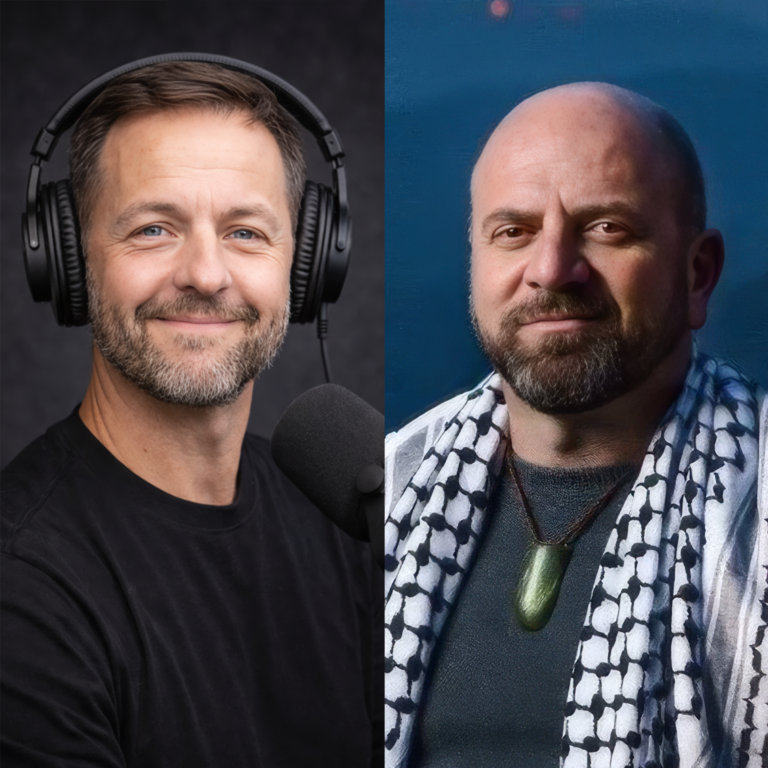
The Ad Contrarian, Bob Hoffman: How Marketing Lost Its Mind
In this episode of The Unfolding Thought Podcast, Eric Pratum speaks with Bob Hoffman — author of Adscam and The Ad Contrarian — about the uncomfortable truths at the heart of digital advertising. Bob…
Get the next conversation via email
Fresh conversations to help you see the world more clearly
In this episode of The Unfolding Thought Podcast, Eric Pratum speaks with Bob Hoffman — author of Adscam and The Ad Contrarian — about the uncomfortable truths at the heart of digital advertising.
Bob explains how adtech evolved into one of the largest surveillance systems ever built, why marketers mistake data quantity for quality, and how political deregulation is quietly eroding online privacy.
They unpack the illusion of precision in behavioral targeting, the billions lost to fraud and waste, and why empathy and ethics—not algorithms—may be the only path to rebuilding trust between brands and the public.
Topics Explored
- How real-time bidding turns personal data into a global broadcast
- Why the online ad economy rewards fraud more than performance
- The quiet rollback of digital-privacy protections in the U.S.
- How measurement and “attribution” distort both marketing and democracy
- What Arielle Garcia’s revelations say about Google’s control of ad trade groups
- Why marketers keep believing in bad numbers
- What honest advertising might look like in a post-surveillance world
Links
- Bob’s website – Visit bobhoffmanswebsite.com
- Irish Council for Civil Liberties report on real-time bidding – Visit iccl.ie
- Arielle Garcia article – Visit mi-3.com.au
- Pentagon Pizza Twitter story – Visit usatoday.com
- Don McMillan video, How Marketers Twist Statistics – Visit youtube.com
Key takeaways
- Real-time bidding broadcasts personal information at a scale most consumers and marketers do not understand.
- Digital-advertising incentives often reward surveillance, fraud, and the appearance of precision more than genuine effectiveness.
- Rebuilding trust requires greater honesty about measurement, privacy, waste, and what advertising can actually prove.
Questions this conversation answers
- How does real-time bidding turn personal data into a broadcast?
- Why is behavioral targeting less precise than marketers believe?
- How do fraud and bad incentives persist in digital advertising?
- Why can attribution metrics mislead both marketers and the public?
- What would more honest and trustworthy advertising look like?
Continue listening
If this conversation was useful, continue with Rich M. Smith: Why Most Marketing Fails Before the Campaign Starts.
For more episodes, visit unfoldingthought.com
Questions or guest ideas? Contact Eric
Read the episode transcript
Lightly edited automated transcript. Speaker labels are omitted where the source did not distinguish speakers.
Welcome and Introduction
00:00:02
Bob, thank you for joining me. I really appreciate it. This is the second time we've been able to record together. I've followed you for a lot of years. Where does today's recording find you?
00:00:14
I'm at home in Oakland, California.
Career Journey and Achievements
00:00:16
You, if I recall correctly, have owned, I think you told me last time we talked, three agencies. And is it is it three?
00:00:26
Two. I've been a part I've been a part of three agencies, but I've only owned... And a partner in two of them. Yeah. You've written, how many books is it now?
00:00:37
I think it was six at my last count. Seven. You missed one. Seven. Okay. And, and there are a fair number of times that I have checked the top books and I think it's advertising or advertising and marketing or something like that on Amazon.
00:00:55
And you've had one or more books in that top 10 or something. Yeah. Yeah, I each of my books was a number one Amazon seller in the advertising category. But, you know, what does that mean? How many people read advertising books? Only idiots like us.
00:01:10
So...
00:01:14
It's a, it's, I had a large piece of a very small slice. Well, you know, I have, I have three children. They are, they're fairly young and I will say to them somewhat related to this, I hope that generally all things being equal, I would rather be a big fish in a small pond than a big fish in a big pond where there are a lot of other big fish. So yeah,
00:01:42
A king among cats rather than a cat among kings. I like
Parliament Speaking Experiences
00:01:47
it. You have, I think, also spoken to the European Parliament.
00:01:53
Is that right? Yes. I I was invited to speak in Belgium to the European Parliament in 2023. That was very exciting. And two years before that, I spoke to members of Parliament in the U.K.,
00:02:09
But that was during COVID and I did it via, you know, video rather than actually traveling to London. But the experience in Belgium was very gratifying. It's, it was great. and I loved it.
00:02:26
and That's awesome. Well, so we've hit on couple of things from your past.
Transition from Teaching to Advertising
00:02:33
So, whether in brief or at length, sort of what has your journey been and where does that bring you to whatever it is that you're doing today?
00:02:45
I started my work career as a science teacher, believe it or not, in middle school in New York City. And I was the worst teacher in the history of education.
00:02:58
It just wasn't for me. You know, I was teaching middle school and I was teaching science and only two problems with that. I don't know anything about science.
00:03:09
And I don't like children. So, you know, it wasn't for me. did that for a few years. And then I decided I you know, I really wanted there to be a writer of some sort.
00:03:20
And so I got a job as a copywriter in New York at Panasonic, the electronics company. yeah worked there for a couple of years. Then I moved out to San Francisco. and I got a job at a small agency there.
00:03:35
And we grew the agency. At one point, we were the largest independent in San Francisco. We sold that agency to an international agency. I worked for them for a couple of years. And I didn't like working for anyone else. to I'm too big a pain in the ass to work for anyone else.
00:03:53
So I left there and I did three years of, I had a creative services company and I did that for three years. And then I missed the agency business, believe it or not.
00:04:07
And I went back into the agency business. And we had a nice agency and we grew it for like 20 years. And then I retired in 2013 and stumbled into a career writing books and speaking.
00:04:26
And I did that for about 10 years.
Reflections on Retirement and Family
00:04:30
And now I'm pretty much retired from retirement and I'm doing nothing very much. Every now and then I write something about advertising just as kind of with bemused detachment, or maybe it's detached bemusement, whatever it is.
00:04:54
But I'm no longer seriously dedicated to advertising world. And I'm enjoying being, I just became a grandfather five months ago, and that's great.
00:05:09
And doing a lot of traveling to Chicago where my daughter and grandchild live. And that's pretty much what I'm doing. I think I recall when you wrote in maybe your email newsletter or something like that two, three years ago that you would not be regularly writing anymore.
Concerns About Digital Advertising
00:05:34
That, you know, you said something to the effect of, When I have something I really want to say, I will say it. And I feel like since then, things have seemed to come in spurts. Like sometimes you will send out an email or write an article and then you may have have one the very next week.
00:05:51
And then there could be a long time in between. But I think I also remember you might have said something like the issues of things like online tracking,
00:06:06
digital advertising, you know, hyper-targeting, we could throw in any number of keywords here, those... the those People haven't woken up, and maybe I could say, to those issues.
00:06:21
And the problems fundamentally have not changed. And so sort I think what I read into that was, why just keep saying the same thing?
00:06:32
Do you feel like I'm characterizing your, I guess, motivation or mindset properly?
Dangers of Online Tracking
00:06:37
Yeah, I'm... How many times can you rewrite the same shit?
00:06:42
You know what I mean? And that there I keep talking about this. say I've been doing it since 2010, believe it or not, that I've been writing about the dangers of tracking. And nobody seems to care. I mean, there are a few.
00:06:58
There are some people who care. But for the most part, it's it's a big issue to me, but it doesn't seem to be a big issue to many other people.
00:07:09
While we have seen plenty of change or drama in social media, and we have seen, you know, Cambridge Analytica and other news privacy manipulation, whatever stories.
00:07:27
Do you think that whether it's from 2010 until now or from 2020 until now, over some span of time, do you feel like there has been any substantive growth or decline in concern about tracking?
00:07:45
Not in the U.S. There is, you know, the Europeans are a little, actually they're more than a little ahead of us on this. They have regulations.
00:07:57
Sadly, they haven't been very well enforced, but they have regulations that are much more stringent then those in the U.S. about digital policy.
00:08:11
And it's disconcerting. it's getting it's getting worse now with all the billionaire tech boys now being friendly with Washington. yeah The the opportunity for sensible government intervention into the abuse of personal data and information has passed.
00:08:43
And maybe it'll come back in a few years, but right now there's very little momentum that I see. Maybe I'm you know maybe I'm not tuned in like I should be, but I don't see any momentum in that in that direction now.
00:09:02
I think on the if I could summarize some of what I think I've heard from you over the years into a couple of statements, perhaps, I think that maybe on the consumer side of things that you would, you have a an issue with tracking tracking hyper-targeting and any number of things because there's the opportunity for manipulation because there are privacy concerns there may be other issues and I would love for you to enlighten me but then if I can throw in here as well first I think I have also heard from you
00:09:49
quite a few more concerns on the brand side of things whether we want to talk just about brands or the whole industry agencies tech companies whatever because they we have issues of like do we have quote-unquote water cooler moments anymore are you able to as I think I became aware of this idea from you Are you able to make your brand famous anymore?
00:10:18
When nobody sees the same thing, we have a lot of data on people in our database, let's say, and then we get hacked. And so there are any number of things, but I'm I would love for you to, you know, sort of explore or take apart any aspects either the consumer side and or the brand industry side of things so that we can sort of make clear what some of the problems are as you see it?
Risks and Misconceptions in Digital Marketing
00:10:50
Yeah. Well, let's start with the, the big issues and the big issues I think are about tracking and,
00:11:05
and how that is dangerous both to individuals, to democratic institutions, and to national security. the worst governments in history, the worst governments in history, have had one thing in common.
00:11:26
They're the ones that abused the privacy of their citizens. They followed them everywhere, they listened to their private conversations, and they compiled secret files on them.
00:11:38
This is exactly lee what the marketing industry is doing today. And The marketing industry is engaged in these practices to and unbelievable extent.
00:11:51
The KGB, the Gestapo, the Stasi could only dream of having the depth of information about citizens that Google and Facebook and other adtech companies have.
00:12:06
According to a report by the Irish Council on Civil Liberties, people in the U.S. have their online behavior and location broadcast to thousands of companies and organizations around the world hundreds of billions of times a day.
00:12:27
Google alone sends data to 4,698 organizations around the world, including organizations in Russia and China, and there is no control over this data about us once it's sent.
00:12:45
A report to the British Parliament. asserted that by the time the average child in Europe is 13 years old, the adtech industry has 72 million data points on that child.
00:13:02
And they are far more stringent than we are. The number in the U.S. s must be astronomical. Now, we would never allow or accept this level of spying on us by governments.
00:13:16
But for some reason, we've learned to accept it by marketers. Now, Next, targeting is a danger to democratic institutions.
00:13:28
In recent years, we've seen a serious wedge in our society, in our political life, and there's a direct link between tracking by the online ad industry and the polarization of democratic societies. A study by a Facebook group of executives in 2018 reported that almost two-thirds of people who joined extremist groups on Facebook were directed there by recommendations from Facebook's algorithms.
00:14:03
And where do these system where do these algorithms get their data from? From tracking us. Tracking is also a national security threat.
00:14:15
group of a bipartisan group of U.S. senators wrote in 2021 that the information... that the information gleaned from tracking would be a goldmine for foreign intelligence services that could exploit the data to inform, quote, and supercharge hacking, blackmail, and influence campaigns.
00:14:40
So tracking is not just a marketing issue or a brand issue. It's a societal issue, and it's very dangerous to democratic societies, I think.
00:14:53
I'm curious about the industry side of things as well. It feels to me like there are potentially a lot more things to point out there, whether they're bigger or smaller, course. The industry as is obsessed with tracking because they think it will make for better targeting.
00:15:12
Okay? And all ads are targeted and always have been targeted. Nobody runs ads for Motor Oil in Vogue magazine. It doesn't make sense. Targeting is just common sense. Okay?
00:15:27
The problem with targeting is how the targets are derived. and And that's where tracking comes in. the The fundamental premise and promise of tracking is that it would help create better targeting.
00:15:42
Of course, this is a cruel joke. We've all seen the idiotic effect of being targeted for products that are of no interest to us. and And that comes from how foolish the they data collection and tracking industry is.
00:16:06
There was a study by a company called Adlook, a digital media company, and they took data and that was derived third-party data providers.
00:16:20
And they took that data about segments of the population and they compared that to what those same segments said about themselves. So there's what the data said about them and what they said about them.
00:16:33
Here are some of the results. 47% of the people who the data said were women were men. 50% of the people who the data said were men were women.
00:16:46
67% of the people that the data said were parents said they had no children. 52% of the people who were supposed to be 18 to 34 said they were over 35.
00:16:59
60% of the people who were supposed to be over 45 said they were under 45. under forty
00:17:07
76% of the people who were supposed to be married said they weren't. Okay? If my dog, Roscoe, had flipped the coin, he would be more accurate than than all this fucking data bullshit that the industry has collected.
00:17:23
Here's another great example. is it There's a very smart woman called Ariel Garcia. She's the chief operating officer at Check My Ads.
00:17:34
okay And she checked the files of seven different data brokers to see what information they had on her. Okay?
00:17:45
Here's what she found. She was in 500 different audience segments and just a with a bunch of contradictory, useless crap data.
00:17:57
For example, she was both a man and a woman. She worked in food service, in agriculture, in it as a defense contractor, as an engineer.
00:18:07
And she was simultaneously both... on the poverty threshold and classified as high income. And that's the trash that tracking gets you.
00:18:20
They are incompetent and irresponsible. And we're basing so much, not we, because I'm out. The marketing industry is basing so much of their spending on this nonsense that they're getting from data and data brokers.
00:18:41
And it's all based on tracking, right? That's what tracking gets you. So why do you think so many marketers still believe in online tracking and believe that online advertising works despite this evidence that you've surfaced to the contrary?
00:18:59
Okay. I hate to disillusion you, but there are a lot of really stupid marketers. Okay. And, they're not all stupid. they There are some brilliant marketers, you know, there, there are some, and there are some pretty good marketers, but a whole lot of marketers are stupid and they don't know what they're doing.
00:19:19
That's one reason they believe. Second reason, it's better to be wrong in the normal range than to be right outside the normal range.
00:19:33
And if you say, if you're a marketing person and you say to your CEO, yeah, I'm not going to do any programmatic online advertising. It's all junk all left in it. You say, what? Coca-Cola's doing it.
00:19:46
Budweiser, you know, Apple's doing it. What do you mean we're not going to do it? Well, I you know, it's it's ineffective and it's wasteful. and Well, you're in trouble, man, because your CEO...
00:20:03
hangs out with other CEOs, and he knows what they're doing. He doesn't know the facts about online advertising and about program particularly programmatic advocate on online advertising.
00:20:17
He doesn't know. And he thinks you're an idiot. So, which leads us to the next issue. The most compelling objective for a marketer is to hold on to their job, right?
00:20:32
and And online advertising, programmatic, I' I'm saying I want to differentiate programmatic from direct bought.
00:20:44
But like 80% of our online advertising is programmatic these days, I think. Online advertising, programmatic online, provides a lot of fraudulent numbers that make marketers look good.
00:20:59
You know, the our audience millions of people and, you know, click rates are this. And, you know, he dangles it in front of the boss. Look, look how good we're doing.
00:21:10
The boss don't know that, you know, it's 80% fraud. and He doesn't know. it It makes the marketers look good, and they need to look good. They want to hold on to their jobs.
00:21:21
So there's that. And finally, why do marketers continue doing it?
Brand Fame vs. Digital Efforts
00:21:30
It doesn't work and as promised, but sometimes it works.
00:21:36
And so, you know, they have some indication that, and you know, over here it worked for me. So I'm gonna not going to mess with that. So there's that also. But that's essentially what is keeping, you know, programmatic alive.
00:21:55
There so many threads that want to pull on and I don't want to you know, go down a rabbit hole and then start over at the next one.
00:22:06
I feel like so many objections that you face to this are, and forget the exact term, but it's something like decision-making by exception.
00:22:18
You know, when you say the average man has this amount of grip strength or this height or whatever, and, you know, the average American male is five, nine or whatever the number is.
00:22:33
And You go, well, I know most of the guys I know are six feet tall. and So that must not be right. It's, yeah, well, okay. You know, birds of a feather flock together in in that particular case. But also if you have a pizza shop, I don't know, you have one pizza shop and that is it.
00:22:55
Fairly small time, I assume in this instance, There could be any number of of types of online advertising that you're doing, but let's go with the fairly common. You're going to run some Google ads.
00:23:09
Maybe you get into meta or whatever, and maybe you are even being pretty disciplined about tracking your return, apparent return, you know, direct response return by channel.
00:23:25
Now we can talk about multi-touch and all of that stuff because the consumer journey is like, yeah I don't know if you recall this, but the old family circus cartoons where the little boy like goes a thousand different places before he ends up at the place he's supposed to be.
00:23:40
and So, but let's just ignore that for the moment. Okay. For your small time pizza shop, you are spending a thousand bucks a month and you are tracking that, you know, we get clicks, we get phone calls from those and we track $2,500 of revenue back to that.
00:23:59
Great. You know, Whether we want to critique aspects of that, it might work for you. But then to me, it becomes much more obvious when you have a medium to larger size business, maybe not the the you know Fortune 100s, but you have a big business that is spending I don't know, whatever a big number is, $100,000 in monthly ad spend online, and they really aren't tracking their results.
00:24:32
You know, not just how it's affecting their brand, but let's say direct response sort of ROI. And You, and for them to take the pizza shops instance of, well, Bob's wrong here as justification for why it works in their case, to me just seems like,
00:24:53
The you miss the fundamental point that you probably don't know when you run a lookalike audience on your website visitors that, well, if one of those people that visits your website is both a man and a woman and works in defense and also is a baker or whatever it says, then what what is in your lookalike audience?
00:25:18
Let's get back to first principles about this. What can advertising realistically do? Now, in the case of direct response for, it can get you leads, okay?
00:25:38
And that's fine. There's nothing wrong with that if it's actual real leads and not imaginary, if it's not bots pretending to be people and all that kind of stuff.
00:25:54
What can advertising realistically achieve it can can it achieve? It can do a lot of good for you. But the most important thing it can do for you is to make you famous, in my opinion.
00:26:10
Brands that are famous have an enormous advantage over brands that are unknown. If your brand is famous, your advantage over your competitor is enormous.
00:26:26
Okay?
00:26:28
Now, now When you're dealing with human beings, the answer is never black or black or white, yes or no, always or never.
00:26:40
It's always a matter of probabilities, likelihoods and probabilities. what the you you're You're never going to, whatever you do in advertising or marketing, it's never always, it's never, but it's,
00:26:57
likelihoods, is this likely to affect that? Is that likely to affect this? The most likely effect of advertising that will be positive is that it will make you famous.
00:27:09
That's its most likely. So whether you're a pizza company spending $100 a week or a larger advertising spending $100,000 week,
00:27:27
The best way to spend your money is to make you famous among the likely consumers of your product and even some unlikely consumer because you you think you know who your target audience is. You think you know who your customer is, but you don't.
00:27:50
it's It's been shown in marketing a thousand times. You think you know. But you don't. And so my advice to anyone, if your objective is not just direct response, but if your objective is to build your business, the most efficient way to spend your money is in whatever media you think will make you the most famous.
00:28:20
Maybe it's online. Maybe it's television. Maybe it's ray locally. Maybe it's radio. I don't know. That's for media experts to tell you. But what I can tell you is...
00:28:34
The more fame you create, the more likely you are to be successful. doesn't always work. Plenty of famous brands go out of business. We're talking about likelihoods and probabilities.
00:28:45
And the likelihood is that famous brands will do a lot better than brands that aren't famous. So that's my advice on spending advertising dollars. The last time that you and I recorded, I remember, I still think about this pretty frequently, actually.
00:29:03
I misstated something and... I didn't catch you? I think, actually, I think I remember you giving, like having a look for a second and I attributed it to...
00:29:18
you deciding whether or not you wanted to correct me. But I I said something like, people aren't going to respond or they're not going to buy from me just because I'm cool or something of that nature.
00:29:34
And what I meant to say was just because I'm trying to be cool, just because I'm trying to be famous or look famous. And if I can, just for simplicity's sake, equate cool and famous for the moment, and you know, I think it's reasonable to but To put put forward a scenario like, well, just because someone looks like an influencer, because they have the flashy Instagram photos or they're standing in front of a Ferrari or who knows what it is, does not mean that they are famous in, I believe, the way that you are stating.
00:30:14
If they are actually famous, then people want to be near them. They want to be like them. They want to own that product because they're there is some sort of connection. There's something about it. There's a deep human need that it fulfills or, you know, any number of things.
00:30:30
And so I, but as I said, I still think about this, that really the point that I was trying to make in the thing that I, I hopefully I was agreeing with you is that,
00:30:43
becoming famous, which again, I I do totally agree with you. One, it takes a long time. It's not often direct response. You know, you're not going to say, see an immediate ROI, but that when you succeed, there are payoffs that are independent of immediate actions.
00:31:04
I remember you Had an example in your email newsletter a long time ago that you you made a point about the reason that Volkswagen sales in the United States bounced back within 12 months or 18 months or something like that was because they had a 50-year track record of brand advertising.
00:31:27
And I think that this, it relates deeply to what you're saying that you, we might need immediate response. We might need to direct response, whatever it is, but you are unlikely to grow a famous brand, to grow a major, you know, fortune 100 company or whatever it is.
00:31:50
If all you do is programmatic advertising. Yeah, well, one one of the biggest issues I think now in media is marketers' obsession with personalized one-to-one advertising.
00:32:05
I think it's stupid. I think what you need to do is mass media among people who participate in your category.
00:32:19
that that you know And you know it may be localized. Maybe you're just a single pizza shop. But over time, your success...
00:32:31
is not going to be based on how many coupons come in this week. And, you know, a lot of what a lot of what happens in direct response advertising is that the people who most likely to visit your pizza shop are the ones who respond to your direct response appeal.
00:32:55
It's like, you know, it it if you have to... hand out discount coupons for 10 cents off on your, a dollar off on your pizza.
00:33:15
Where is the most likely place that you're going to be able to show success on having handed out those coupons? Online at the pizza shop.
00:33:28
You go to the line at the pizza shop, you hand each of them a dollar off coupon, and they're going to redeem the coupon and you're going to look like a brilliant marketer. Well, it's the same with direct response.
00:33:40
A lot of direct response is talking to people. the The people most likely to respond are the people who are already your customers. because Because they have an interest in in you know what you have to say or do.
00:33:54
So there's that. Bigger picture, though,
00:34:00
Only 5% of people are in the market for over in general, 5% of people are in the market for what you're selling at any given time.
00:34:13
So when you advertise to just people in the market but for your product by direct or anything like that, or what we call, what do they call it? Performance advertising.
00:34:30
You're missing 95% of the people who might someday be customers. And, you know,
00:34:38
That's just plain dumb, in my
Disconnect in Marketing Strategies
00:34:41
opinion. That's one. And the other part of it is so much of the data you get is baloney. the The number, you know, the clicks and all. and It has been shown to be, there are so many, there's so much corruption, there's so much fraud, so many bots.
00:34:56
There are more bots. There's more activity online by, ... malignant bots than there is by human beings, if you can believe that. that that That was discovered by a company called Barracuda Systems. you I remember you once making a point that no one walks down the grocery aisles and picks their
00:35:28
the cheese or you know whatever that product is because they align with the brand purpose or that you know there's that I'm gonna go with brand purpose because I can't think of any other phrases at the moment marketers are living in a fantasy world okay and The fantasy is that people want join the conversation about their brand, and they want to have relationships with their brand.
00:35:59
And if there are if you know we're lucky, they experience brand love. Also in the fantasies, consumers want to engage with our content, and they're hungering for more relevant advertising, and they're attracted to advertising that's more personalized. Okay.
00:36:17
And my work in the agency business has convinced me of exactly the opposite. I think people are perfectly happy to have the shallowest of connections with most of the brands. they They are quite satisfied just to buy the product and from time to time and then move on, right?
00:36:39
And I think the facts... I think the facts back this up. The segment of a major brand's customer group that engages with them, that engages with the brand in any but the most transactional way is tiny. In fact, it's infinitesimal.
00:37:01
They buy and they move on. overwhelmingly consumers do not want to join the conversation about your brand. They don't want to have relationships with your brand and they don't experience brand love.
00:37:16
you know, all, all the horseshit about consumers wanting ads that understand them and that are personalized to them, in In a poll done by the Harris poll people, four out of five people surveyed said that the collection of data for the purpose of ad targeting was a negative, not a positive.
00:37:43
People don't need you to collect data about them to me you know the and so that they'll have conversations with you. Well, that's bullshit.
00:37:54
I'm curious if you see, I guess the marketing space, but maybe we could talk about life more generally like this. I was relatively early into social media. I think I recall you telling me, or maybe I read it at one point that,
00:38:11
you know, you were tweeting or you were writing blog posts or whatever early enough that, you know, you were able to build a following and dare I say, become an influencer, but let's not let's not even go there.
00:38:29
so, but that I became, I was just burnt out. I got burnt out around 2012 or so. I started to have concerns personally about privacy.
00:38:43
And I think this is heavily influenced by my own personality viewpoint, all of that stuff. But I started to feel like in marketing, there's a lot of trend chasing, shiny object chasing. And there's also... oh you mean like the metaverse?
00:38:59
Yes. Like it's like hand-waving. And it's like, we're going to do this thing like Pepsi refresh or something while, and you know, either it's other marketers or maybe even it's you, if Mr. CMO or Ms. CMO, who is like, you're talking about, we're going to do this movement stuff or, you know,
00:39:20
As a lot of brands were doing up until the most recent administration in the U.S., it seems, you know, we're all for these brand purpose things. And like I said, I feel like it's sort of like a lot of hand waving.
00:39:32
And then in the back office, you have more like your performance marketers or whatever who are like, I'm just going to do the things that we know work. And yeah and And in large part, whether they work for your goals, you know, or not, we have numbers at the very least, and the numbers make it look like things work.
00:39:54
And so there is this disconnection from reality, either that the the marketing space really is disconnected from reality, you know, or we're, I as a CMO appear to be disconnected, but I'm really just disingenuous.
00:40:10
The whole brand purpose thing, it's just virtue signaling. That's all it is. it's It's, you know, corporations, I applaud corporations who do good things and help people.
00:40:26
That's great. And God bless them. Keep doing it. But don't rub my fucking nose in it. Don't tell me how virtuous you are. You know,
00:40:38
I give to charity too. And so do you. I don't put up a fucking billboard to say how charitable I am. So don't do it to me. Okay. Do what's good.
00:40:49
Do what's right. And do it because it's the right thing to do. Not because you can make marketing hay out of it. That's what pisses me off. And do do consumers really respond to that?
00:41:04
In very few. If there are certain companies who have built a, a brand, asset out of doing things like that, people at Patagonia and, yeah, there are a few others.
00:41:20
And,
00:41:24
But for the most part, consumers couldn't give less of a shit about your your virtue. They want a product that works well, tastes good, is nicely designed, and isn't too expensive.
00:41:42
That's what they want.
Challenges and Privacy Concerns in Advertising
00:41:44
And if you're... If you're focused on other things, you're probably missing the point. So I forget how I said it, but I I said something about marketers being disconnected from reality, which is also something you've talked about.
00:42:02
And yeah not just sort of alluding to it or it being implied by some of the things that you've said you're saying but in in your past writing you've said things along this line so as of today I guess your best assessment of the marketing space generally or the direction that we're moving what sort of reality do you think most marketers are operating from Let me answer that as it relates to advertising because I'm an advertising guy. I'm not really a marketing guy. I
00:42:33
But I think some of the some of the great unrealities of marketers is they don't understand how advertising really works.
00:42:46
And I'm going to be contrarian here. I'm going to be a contrarian here I think effective advertising does not have to be relevant or differentiating or insightful or any of the other cliches we throw at it.
00:43:07
The most propitious effect of advertising is to engage our enjoyment button and gain our attention. Advertising that we enjoy is far more likely to be remembered. Advertising, if we enjoy it, we're far more likely to remember it and for it to be effective.
00:43:28
Marketing is about strategy. Advertising is about execution or... or
00:43:42
enjoyment or entertainment, if you like. And I think this is this is a big factor that marketers don't understand. I think one of the most underutilized and underappreciated tools in the advertising toolbox is stilliness.
00:44:04
I think... consumers love silliness in advertising. If you look at some of the most famous advertisements and not all, but some of the most famous, they were silly.
00:44:19
And of course, MBAs and CMOs would strongly disagree with me. They believe in seriousness of purpose. They believe that the foundation of advertising effectiveness is built on a bedrock of strategic relevance.
00:44:37
I disagree. Marketing is about strategy. Advertising is about execution. Marketers take themselves very seriously and they take their jobs very seriously.
00:44:51
Most people see the advertising industry as both boastful and ridiculous. And I believe they appreciate advertisers who don't behave with great self-importance.
00:45:05
I remember another point that you've made that I want to tie in here was you've said before that basically you've put forth a challenge.
00:45:19
Name one brand that has been made famous by online advertising. And people will bring out, I don't know, Casper or Purple or whatever mattresses.
00:45:29
And I think what you've said is they they may be big businesses in one respect or another, but name, you know, a Fortune 100 or a Fortune 10 that is famous, you know, that people respect at the top tier.
00:45:43
And hopefully I'm at least roughly characterizing this correctly, but it seems like, that going along with what you were just saying and that, that some of the, one of the challenges advertisers must face is going with that, you know, sort of distinction that you've laid out, that marketing and advertising, some of the challenges they must face must be things like when you're a public company, you have to report quarterly results and the the average CMO is only going to last whatever the number is now, somewhere between 12 and 24 months, more than likely.
00:46:21
And so why rock the boat? You want to keep your job. And so maybe I believe you, Bob, but... Why would I change anything if it's just going to result in results, you know, becoming famous five years from now?
00:46:42
I need results this quarter. Absolutely. And that's, you know, where we started with marketers. most you know of their top 10 objectives, nine of them are to keep their job.
00:47:01
And they will do what they have to do to keep their job, even if it's not good for In other words, here's a way to look at it. The importance of keeping a job means that in in a lot of circumstances, the benefit of the individual marketer is not aligned with the ben with with the success of the brand.
00:47:31
That they that they they're out of alignment The marketer wants to keep his job and do whatever it has to take to keep his job or her job.
00:47:42
And as for the brand, the the the greatest success for a brand is a long-term success. It's over years. It's not what happened this quarter, as you pointed out, and not what happened that one what's happened this year.
00:47:58
And those are the things that are important to the marketer. Not important, but in the top of the mind of the marketer. So so the the disalignment of objectives is harmful to brands.
00:48:16
So I'm going to jump back a little bit. we were talking about tracking and privacy concerns. And I can't remember if I encountered this because of you or.
00:48:30
yeah so tell me if you you heard this, but there is a Twitter account. I forget exactly what it's called, but it's something like national security pizza or something like that.
00:48:40
And this Twitter account reports on pizza shop orders around the Pentagon, if I recall correctly. You didn't hear it from me, but but I've read the story. Yeah.
00:48:53
In brief, the you know the for those unaware, the there was a spike in orders of pizza in the, whatever, 12 hours or something before the United States bombed Iran, if I recall correctly.
00:49:08
And... I I don't follow this sort of stuff much. it just comes up in, you know, my LinkedIn feed or something of that nature. But this seems quite related to concerns about tracking that, you know, we also have these things that people are carrying around their Fitbits at, you know, secure military installations. And then all of a sudden they're, you know, the outlines of this military installation are showing up on Strava or who knows what. And it just seems like all of this tracking,
00:49:40
yeah much bigger than advertising, you know, is really a big concern. It's a national security issue. And, yeah, the pizza story is a great one.
00:49:51
You know, Iran... might well have known in advance because, you know, people at the Pentagon were working late. They were working all night. What does this mean?
00:50:05
We know that because of the activity of that pizza shop that everyone at the Pentagon goes to. We know that they, they had to stay open all night. So that's a, yeah, that's one of the sideshows of the, of the tracking problem.
00:50:24
So I've, I think you said something that was leading here, whether you intended it or not. And even if I'm misremembering, then, you know, I think it's a reasonable thing to discuss nowadays that, you know, we have,
00:50:43
We have governments, other governments around the world, but also think the United States either dismantling privacy protections or signaling that they're just not going to enforce some existing privacy protection laws.
00:51:00
And so... Do you think that there is some kind of worldview behind the choices or certain motivations behind the choices to dismantle privacy protections for the, you know, the individual or the consumer?
00:51:14
I don't think there's any conspiracy or philosophy behind that. It's just that there are too few people with too much power.
00:51:28
I going to talk about the U S and these people are very influential in, Washington and some of the most profitable companies in the history of the world are adtech companies.
00:51:44
And these people fund a lot of the politicians and the politicians are not going to go against these people's wishes. They, they don't,
00:51:55
the last thing that Facebook and Google and Amazon and all the rest of them want is regulation on spying on people.
00:52:08
And, and they will fight and they will, they will spend enormous amounts of money and fight enormous legal battles to maintain their ability see see into the behavior of individuals.
00:52:29
and so you know depressing And it's, and it's unfortunate and it's dangerous. And it will lead someday to some very, very bad consequences, I predict.
00:52:43
And it's already kind of leading to some very bad consequences. But, you know, when you're in the middle of the ocean, it's hard to know that you're, you know, if you're a fish, hey you think the world is all wet, so you don't really see the big picture.
00:53:02
I think I understood something you said earlier as saying that advertising or tracking or maybe some combination of them create division.
Shift from Mass Media to Targeted Marketing
00:53:18
And so I think that there is an influence on culture from, you know, one or more of these things. And yet at the same time, I think something that we're saying is that advertising does not shape culture or influence culture.
00:53:38
in the ways that we might think it would. Like, you know, gosh, I am I and at a loss for a great example. But when you think of, you know, the great ads from history,
00:53:54
And think of how everybody saw those and people were talking about them. That's sort of the example that I'm thinking. yeah And so on one hand, so seems to me like with division, there's a shaping of culture.
00:54:09
And yet with hyper-targeting, with programmatic, you know, more generally, that there is an inability to shape culture in the ways that advertising could.
00:54:24
Yeah, I'll give you an example of what you were reaching for. Back when I was a kid, there was a an ad for Alka-Seltzer, and was the spicy meatball.
00:54:40
Mama Mia, that's some species. Spicy meatballs, Jack. Take 28. Out, Tony, and act. out tony and a
00:54:52
Mamma that's a spicy meatball. What was the matter with that? The accent.
00:54:58
Cut.
00:55:02
Cut.
00:55:06
Macy, macy, ballsy, ballsy, bat. Take 59. Then, action. and action
00:55:14
yeah Sometimes you eat more than you should. And when it's spicy besides, mama mia, do you need Alka-Seltzer? Alka-Seltzer can help unstuff you, relieve the acid indigestion, and help make you your old self again.
00:55:28
Mama mia, that's a spicy meatball.
00:55:33
that Okay, let's break for lunch. oh I You're too young to to know that one. But it was, you know, in nobody for two years went to a restaurant and ordered meatballs without saying, oh, that's a spicy meatball.
00:55:52
Because it was such a... it was such a phenomenal advertising success. Anyway, yeah, you're right. there There are two reasons why advertising doesn't shape culture the way it used to.
00:56:14
First, as we said earlier, advertise advertisers used to employ media that were mess, and they would try to reach as many people as possible.
00:56:29
And one side effect of this is that when there was a campaign or a slogan or a jingle that was particularly distinctive, it would find its way into popular culture.
00:56:42
That doesn't happen anymore because many marketers no longer believe in mass media. They believe in one-to-one personalized media.
00:56:56
And I think it's stupid, but, you know, what what major, major brands have been created by one-to-one personalized media.
00:57:12
Coca-Cola, McDonald's, Toyota, Budweiser, Apple. No, they were all built by mass reach media. But marketers, for some reason, and don't buy that anymore.
00:57:26
Okay. A second reason why the the effect on culture is no longer what it used to be is that most advertising has become awful.
00:57:42
it's It's just not any good. It used to be that about like 85% were terrible, were good. but there were about fifteen percent that were good And now the ratio is has changed dramatically.
00:57:57
Maybe 5% of advertising is good and 95% is horrifying. Well, that means that there's a third there's only a third of good ads than there used to be.
00:58:10
and And they are not... seen by very many as many people as they used to be seen by. And so naturally, the effect is not what it once was.
00:58:26
When you say that many marketers don't believe in mass media, do you think part of that is due to the fact that mass media is difficult? pain in the ass. It's a pain in the ass. It used to be easy to reach a lot of people.
00:58:42
Now it's really hard. If you want to become famous, like I say, you should, if that's your, if, you know, that should be your objective. And if you want to do it,
00:58:53
It's hard, man. you need a really good You need really good media people to figure that one out because it's so fractionalized these days.
00:59:05
That doesn't mean it shouldn't be your objective. It just means it's way harder than it used to be, and you need way smarter people than you used to have in media. Sadly, we do not have way smarter people in media than we used to have.
00:59:21
So there's that problem. You know, it's easy to plug something into a computer and, you get a read. Okay, I don't have to think very much.
00:59:31
I can just, you know, hit computer key and get some kind of answer. But that doesn't cut it.
00:59:44
you need to You need to be smart. You need to think smartly. You need really smart creative people, and you need really smart media people. to get to that level of fame that you eat that you want to get to these days.
01:00:00
And you know there're are there are all kinds of ways to become famous too. I mean, it's not just advertising. You can become famous by having a, in public relations, you can do stunts, you can have a CEO who's good copy.
01:00:16
you can have you know There's all kinds of ways. Facebook and Google and Tesla didn't become famous through advertising.
01:00:27
They became famous because the media fell in love with them and they had controversial figures who who were CEOs. And so, you know, advertising is just one way to become famous.
01:00:41
Now, the thing about advertising is it's the only way to become famous that you can buy your way into. You can't buy your way into any of the other means of becoming famous.
01:00:55
And that's the that that's the one really special thing about advertising. you can You can become famous just for having good ads. And it's it's a great advantage to be that way.
01:01:11
I really appreciate that you brought up that last point because I was remembering this quote from Arthur Schopenhauer, which, you know, Bob, when was the last time you were on a podcast and Schopenhauer was quoted? Oh, always. Yeah.
01:01:26
They were always quoting Schopenhauer to me. He said, as I brought it up over here. If a person only rides and never walks, she will soon lose the ability to walk herself anywhere.
01:01:38
And brought that up because, you know, my wife, she grew up in Western Montana. We were there not long ago. we go every year. and her uncle raises bison.
01:01:52
Every year he's got 50 something bison. And he was talking to her about tanning hides. And there's nobody that you can find to tan hides anymore. But if you have a really well, if the hide, when the buffalo, when the bison is skinned or whatever, obviously I know very little about this process, but when
Loss of Traditional Advertising Skills
01:02:13
they take the hide off,
01:02:14
if it's taken care of well, and then it's really well tanned, then it's worth a couple thousand dollars. And he was saying, there is in, you know, end effect, there is no one out there that tans hides anymore.
01:02:30
And so maybe I didn't need both the Schopenhauer quote and also this story, but my point being that it is, it's difficult to have really awesome media strategy yeah it that is going to build your brand over time. It's hard enough to have great direct response strategy. You know, it's hard to have good strategy as it is, but it's even more difficult to do great casting for a commercial or video of any type to write the script well, to shoot it, to pick, you know, to pick your placements and all of that.
01:03:09
And so, you know, if a person only rides and never walks, you'll soon lose the ability to walk he yourself anywhere. I'm thinking, well, where is that taking us? You know, do you, do you have hope for the advertising space that by and large, that there are enough people who know how to do the right kind of work that, you know, that population can grow or like how do you see things?
01:03:38
Well, if you ask me, do I have hope for the advertising industry, the advertising industry will go on. You know, businesses are not ever going to need to advertise. there There's always a need to advertise, and they will go on.
01:03:55
But do I have hope that it's going to get better? I think it's it's been getting worse since... Since the internet, it's been getting worse.
01:04:10
and And that's because, you know, advertising has always been part art and part science, but the science part has subsumed the art part.
01:04:24
I should say the pseudoscience part has subsumed the art part. And that's, and, you know, people who were, you know, brilliant, creative people who won, you know, I did a study one year of who won like Nobel prizes and Pulitzer prizes and, you know, all kinds of creative area prizes.
01:04:54
And I found that, Probably none of them could get a job in an advertising agency, despite the fact that they're brilliantly creative. They're not good casting for advertising.
01:05:08
and And that's what we're dealing with now these days, I think. But I want to get back to one of your points. I grew up in in a project in New York City, and we didn't have any bison, not even one Think about how deprived I was.
01:05:29
Okay. I brought, I brought up another quote here. So Jonathan Swift, he said that vision is the art of seeing things invisible to other people. And I brought that up because we we could apply that in any number of spaces, but I think it's relevant to advertising because you have to see the potential. You have to have vision for the long term.
01:05:57
You, I mean, maybe we could talk about having a different set of values. I don't know. But that we're, you know, I believe you've commented before about even the role that the relationship between business and universities, about how, you know, a lot of businesses expect that their new hires come out of school already knowing Google Ads or whatever it is.
01:06:29
Whereas I don't know how long ago it was that a lot of businesses, white collar sort of jobs really expected we're going to hire this person and have to train them and if I go through a class on digital marketing but it's really just google ads or something of that nature then it seems to me like earlier and earlier we are setting people in a lane
01:07:03
you know, or we're limiting their view or putting blinders on them such that you, before you've even really gotten an idea of all of the possibilities for the world or for your career, we have said, you know, you really got to learn Google ads. so And I don't mean to pick on Google ads.
01:07:23
It's a great technology and in many, many ways, but just as an example, feel free to pick on them. I have I have no qualms about doing it. I don't see why you should.
01:07:35
So, you know, it it seems to me like it becomes hard to, you know, like a Schopenhauer quote, to walk anywhere. it You know, to it becomes hard to step out of the programmatic lane and think bigger. And yet there's probably an aspect of humanity where you yearn for possibility and danger and not knowing what's going to happen next.
01:08:02
And yet if if we constrain you earlier and earlier, and it makes it just harder to have vision and to see those things that are invisible, which is the future brand possibility.
01:08:18
I can only use myself as a, an example in this, but I, and I'm not advocating ignorance. And I think education and learning stuff is very important, you know, whether in university or he wherever you're coming out of it's very It's very useful to be educated in that subject.
01:08:49
But the problem is, are you being educated in the right stuff, as you suggested previously? but just now.
01:09:01
And I don't think the marketing and advertising schools are teaching students the right things.
01:09:12
And I like I said, I can use myself as an example. I had no training at all in advertising before. I didn't even know what advertising was until I got a job.
01:09:23
And I started writing ads, and I had to figure it out for myself. And I had no previous... previous training, no education in it. and But I had it made me have to work harder and to develop my own theories and my own opinions on how advertising works and and the important stuff.
01:09:55
And as a result of that, I think I have some unconventional ideas about it. And I think it helped me look at it in a whole and a more holistic way.
01:10:09
And, you know, I may very well be dead wrong about everything I've said here today. It's very possible. But at least I have a point of view that is personal and to some degree original.
01:10:26
And like I said, I'm not an advocate of ignorance. I don't think you know I don't think it's best not to have training. But it's best if you have training that's correct, not training that's incorrect.
01:10:40
And that's where I think and you know a lot of people are teaching marketing and advertising that never worked in the industry. They just took courses, and they learned shit from from courses, and they're just you know They're adding some new stuff every now and then, but mostly they're repeating what they learned 100 years ago, and they they they've never taken the time to try to push the erase button and start from scratch and figure it out for themselves or learn for themselves how it really works.
01:11:17
that's That's such an important part of being happy in your job, to be doing it your way, to figure it out your way. and You know, I I don't mean to be braggart, but, you know, I made a lot of money ignoring the opinions of experts.
01:11:36
And I think it's a very valuable, being skeptical is such a valuable point of view to have, particularly in our industry where there is so much bullshit.
01:11:54
And, you know, if you're skeptical in science, sure, that's fine. You try new ways to do things. and but But there is a there's a bedrock of information that you're building on.
01:12:08
In the advertising world, there's no bedrock of information. All there is, every few years, there's new trends popping up. Nobody respects what happened or even knows what happened 30 years ago, 40 years ago, 50 years. They don't know. They don't learn it. They don't care.
01:12:28
They, you know, they know about, they think they know how it works. And, you know, and I'm sorry, I don't think they do. And if they took the time to just take a week and forget everything you learned in your courses and think for yourself, how does this really work?
01:12:49
How do you, it because it's, you know, marketing isn't about how marketing works. Marketing is about how human beings work. And if you say, how, look at me, how, why do I buy Coca-Cola instead of Bob's Cola?
01:13:08
co I don't know. Bob's Cola may be better than Coca-Cola, but Coca-Cola is famous. That's why I buy it. I, you know, I don't think very hard about
Debunking Generational Marketing Tactics
01:13:17
it. You know, I don't do blind taste tests on which Cola is better.
01:13:24
I just, you know, I go with the one that I'm most familiar and comfortable with. And, you know, in most categories, that's how people behave. Now, in some categories, they do a lot of research and then go online. But that's 5%.
01:13:38
95%, they go with what's familiar comfortable.
01:13:44
they go with what familiar and comfortable People, when you say, why'd you buy that kind of cheese in the grocery aisle? Or why is it that you choose Coke over Pepsi?
01:13:56
People will state something that is not necessarily the reason, you know, because there's just so much going on underneath the surface, if I can put it that way, unconsciously in your brain.
01:14:08
And how else... I mean, really, I think you would agree with me, but I would ask plenty of other marketers and advertisers out there. Do you think your best chance of influencing those unconscious decisions that people make is to one time say, do you want Bob's pizza?
01:14:31
Or to have inserted into their head, Bob's pizza, Bob's pizza, Bob's pizza, In way that is going to stick with them, such that when you say, why'd you buy Bob's pizza and not Eric's pizza?
01:14:47
Yeah, sure. They'll give you some reason. But the reality is that it was in there and they don't have to know why they purchased it. You are, I'm going to go back to another thing. You are at least in, in the way that we've been talking about it to them, famous.
01:15:03
Well, you know, Daniel Kahneman and a good friend of mine named Richard Thaler both won Nobel Prizes, and a lot of their work is on behavioral economics.
01:15:17
And they you know they demonstrate that people, look, people are not logic machines, nor are they puppy dogs. There's a little bit of...
01:15:29
logic in decisions. There's a little bit of emotion in decisions. And sometimes it's all logic. Sometimes it's all emotion. there you know There's a continuum, and depending on what you buy.
01:15:43
But you are right. the People who will give always give you an answer for why they bought something, but that's not necessarily why they actually bought And no one's going to say, oh, I bought Coca-Cola because it's famous.
01:15:57
No one's going to say that. They'll say, oh, like it better. Why do I like better? Because I drink it all the time. That's why I like better. Why do I drink it all the time? Because it's famous. Exactly. And if you're only hitting them when they're already standing in the line, as you said, then you miss all of those opportunities to be inserted into their consciousness, to be, to be ever present.
01:16:21
Yeah. Everybody else that I know buys Coke and that's why I buy Coke. I don't know. So, okay. As I start to bring it around to a close, we
01:16:34
I'm going to use the the word consumer. I'm going to, I want to use it broadly. and As in consumers, whether it's, you know, you and I as individual buyers of Coca-Cola, as we've talked about, or Bob's pizza, who knows what, or if we're talking about B2B audiences, whatever, you know, we can, we can zero in or be really broad.
01:17:01
Is the idea of the consumer different today than at some point in the past? And I believe to the extent that you're going to tell me that it is, is there something that you would suggest that marketers or advertisers think about so that they they can make their work more effective?
01:17:25
the answer is yes and no, about whether consumers today are different than in some point of the past. You know, circumstances change, but principles don't.
01:17:43
Technology has changed consumer behavior to a certain extent, but the principles behind what consumers want have not changed. And, the, the,
01:17:54
one of the One of the idiotic things that marketers have done is to create, it's really the research industry that has done this. they they They've been selling us a lot of baloney about Gen Z is this and Gen Y is that and Gen X is this and how they're all so unique.
01:18:15
And it's largely nonsense. There's just as much variety within generations as there is between generations. And the idea that everyone who was born in the year 2000 is suddenly uniquely different from the people born in the year 1999 is absurd.
01:18:35
It's ridiculous. And, you know, yeah all of a sudden, hundreds of millions of people are different from... from a you can't, the you it's just so dumb.
01:18:49
You know, there's something called group cohesion, and it's a measure of how people within a certain group are likely to behave similarly.
01:19:02
And there's an agency called BBH, and they did a study of group cohesions. And they found that people who floss their teeth have about 10 times the group cohesion as people in Gen Z. Okay.
01:19:23
And people who drink orangina have twice the group cohesion as millennials. So the idea that, oh, yeah, oh, this, they, you yeah, it's baloney.
01:19:35
but You know,
01:19:39
this Gen Z and Gen it gen this and Gen that are far more heterogeneous than the research industry would have us believe.
01:19:51
Believing in these categories is just laziness on the part
Creativity and Enjoyment in Advertising
01:19:56
of marketers. Right. So the answer is, yes, today's consumer is is much less different than previous generations than the marketers would have you believe.
01:20:09
What has changed most is the gadgets. The marketers seem to believe that because people are using new gadgets, their needs and desires have changed.
01:20:20
But mostly they haven't. You know, the researchers sell us this Gen Z, Gen X stuff because it's good business for them. They they can go in and make presentations. and You know, they get hired by marketing firms and and advertisers to tell them how this new generation, how what do we have to do to attract this new generation? And, you know, it's mostly baloney.
01:20:44
I remember you writing an email or it could have been blog post quite a long time ago, maybe 10 years ago. And you had a paragraph or something from a newspaper maybe a magazine. And it was something about how the young people today are concerned with causes and whatever the issues were progressive, whatever.
01:21:09
And then, you know, I've seen you do this. I've seen others do it. the You're like, when would you guess that that was written? And it was like the time magazine article. 1964 about baby boomers, all the things that people were saying about Jen something.
01:21:27
It turned out it was not a Jen something. It was baby boomers. So, you know, and the the research industry in the marketing world is so full of useless crap.
01:21:43
I mean, the the the methodologies that market researchers do would get laughed out of any scientific laboratory in the world. They're so unscientific men most of the time.
01:21:59
You know, just the way they phrase a question can have such an impact on the on the answers they get. and But, you know, the marketing industry buys it. The advertising industry buys it. So I guess it's good for business.
01:22:15
it may not be It may not be good science, but I guess it's good for business. Yeah, you remind me of, I forget, there's a comedian who, he his shtick is, I'll I'll put a link in the show notes because I know I'll find it. His shtick is sort of like data and yeah I'm kind of but like nerdier topics, let's say.
01:22:41
And He's talking about bad presentations of data of data and research, and he says something like, you know. if we did the simplest of math, we wouldd avoid obvious problems in life, particularly when it comes to marketing and commercials. That's what marketing people are good at. They can take statistics and make them say whatever they want.
01:22:58
They can make their message fit a statistic. So I figured if they could do it, I'm an engineer, I'm a pretty big guy, so I worked up some slides to prove that anybody can do that, if we can go back to my slides. So here you go, I looked at some statistics and I found these on the internet and I'm just gonna make it say what I choose to make it say.
01:23:12
So they polled a thousand people. Turns out three out of a thousand people polled said they've choked on a potato chip. Not died, just and they were fine. Same thousand people, only one in a thousand said they've choked on a pretzel.
01:23:23
So if you were in marketing, you could say, pretzels, the snack is three times safer than the potato chip. Absolutely true statement. Suddenly people would be running from that dangerous potato chip. Kids are killed by them every day, run! Another quick example, your chances getting Alzheimer by age 85 are one in 10.
01:23:38
Kind of scary, actually. The average smoker lives to be age 66. So if you were in marketing in a cigarette company, you could say smoking lowers your chance of getting Alzheimer's. Right. Absolutely correct statement. I can see the commercials now. Go ahead. Light up. You won't be getting Alzheimer's. We hope to stamp it out the next generation. Go ahead. Two a day.
01:23:55
And I've participated in plenty of these things to let like just to to be honest, where, you know, you you get in in analytics and all that P hacking and so on that is happening in particular in social science right now, where you get the right number.
01:24:11
And that's what the CEO sees, right? I think coming back around to one of the earlier things is, but is there revenue? Well, no, no, no, no. no Let's wave our hands. yeah We got followers.
01:24:21
We got buzz. We got share of voice. Who knows what, but did it move a business needle? I'm being very vague here, but hopefully people will be generous in how you're hearing me here.
01:24:32
But let's not talk about that part. a lot of that goes in. Yeah. Yeah. Okay. I, you as I said, you've been really generous with your time and I, I would talk to you once a week if you would give me the time, but so where, where do you direct people and then, you know, connect with you or whatever else should we send them to the three word brief or something else? And then if we haven't covered something or if you have words of wisdom, you know, if people remember nothing else,
01:25:03
What might that be? The most important thing, if you're working in advertising, try to have fun. it's It's become a very serious business.
01:25:15
And all my friends who are still in it say, it ain't as much fun as it once was. And it's not that serious. People aren't going to die because you make a bad ad.
01:25:26
So try to enjoy yourself and and try to do something good. we We need more good advertising. Advertising, you know, it was once thought of as an art.
01:25:39
it It was like the black sheep of the arts, but it was considered, and no one today would consider advertising an art. So try that and good luck with what you're doing. Eric, thank you for having me. I really appreciate it.
01:25:55
And anytime you want to talk, I'm happy to do it, but not once a week. Well, thank you. I appreciate that. And where do we send people? My website.
01:26:07
It's called bobhoffmanswebsite.com. How's that for simple? I like it. Well, okay. Thank you, Bob. I really appreciate your time. And I have no doubt that if if people listen to this, they will enjoy it as much as I have enjoyed it. thank you.
01:26:25
Great. Thank you. Take care.