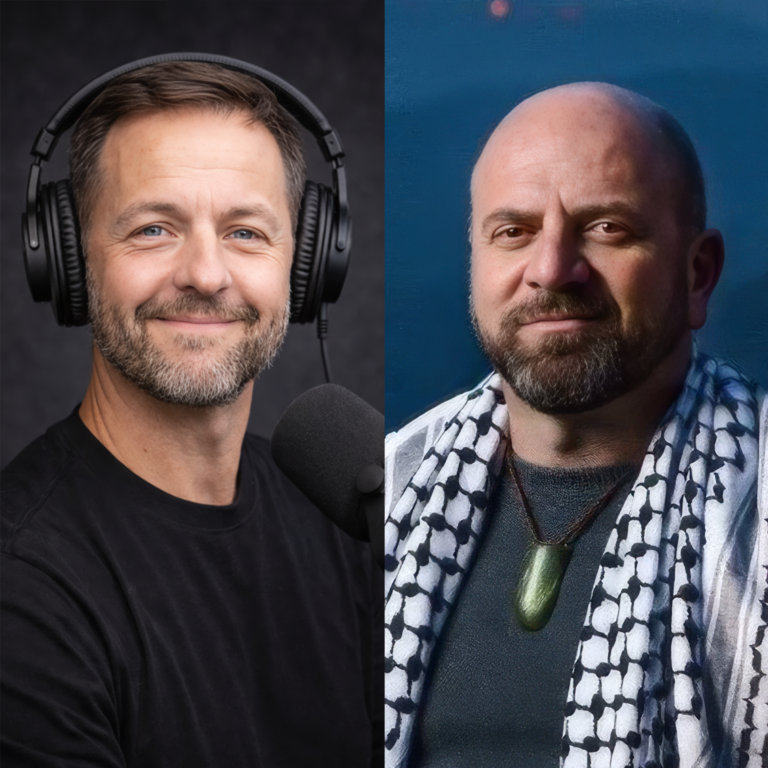
Ryan Hogan: The Recruiting Industry is Broken
Eric Pratum sits down with Ryan Hogan, founder of Talent Harbor and the creative mind behind ventures like Run For Your Lives and Hunt a Killer. Ryan shares insights from his unique journey—from entrepreneurial…

Get the next conversation via email
Fresh conversations to help you see the world more clearly
Eric Pratum sits down with Ryan Hogan, founder of Talent Harbor and the creative mind behind ventures like Run For Your Lives and Hunt a Killer. Ryan shares insights from his unique journey—from entrepreneurial experiments as a child, through notable successes and tough lessons, to his current mission of reshaping the recruiting industry.
Ryan discusses the flawed standard recruiting model, his innovative “Recruiting as a Service” approach, and the critical importance of hiring for cultural alignment rather than just skills. He opens up about lessons learned from his entrepreneurial and military careers, emphasizing resilience, the power of micro-actions, and the necessity of embracing failure as a learning tool.
Topics Explored:
- From Creepy Crawlers to Talent Harbor: Ryan’s entrepreneurial journey
- Disrupting Traditional Recruiting: What’s broken in the standard recruiting model?
- Recruiting as a Service: Aligning incentives, eliminating success fees, and reducing friction
- Lessons from the Military: Discipline, structure, and why some rules exist
- Hiring for Cultural Fit: The overlooked key to long-term organizational success
- Failure as a Teacher: Why Ryan embraces mistakes and what they’ve taught him
- Future-Proofing Careers: The role of AI, automation, and human authenticity in the workplace
Links:
- Talent Harbor: Visit talentharbor.com
- Connect with Ryan on LinkedIn: Visit linkedin.com
- Ryan’s Podcast, Confessions of an EOS Implementer: Visit podcasts.apple.com
- The New Common Denominator of Success by Albert E.N. Gray: Visit amzn.to
- The Go-Giver: Visit amzn.to
For more episodes, visit: Browse all episodes
Join the conversation by emailing Eric at: Contact Eric
Key takeaways
- Recruiting models shape recruiter behavior: contingency success fees can create friction and incentives that do not fully align with the employer.
- A durable hire requires more than a skills match; leaders also need a clear, evidence-based view of how someone will work within the organization’s culture.
- Resilience, disciplined micro-actions, and learning from failure become more valuable as AI and automation change how careers develop.
Questions this conversation answers
- What is broken in the traditional recruiting model?
- How does Recruiting as a Service change the incentives surrounding a hire?
- How can leaders evaluate cultural alignment without reducing it to vague “fit”?
- Which lessons from military discipline translate to entrepreneurship and hiring?
- What remains distinctly human as AI and automation reshape work?
Continue listening: Explore how work has changed while many management systems have not in Kelly Monahan: Work Changed. Leadership Didn’t.
Read the episode transcript
[Music] Welcome to The Unfolding Thought Podcast. My name is Eric Pratum. Today's guest, Ryan Hogan, is a Navy officer and entrepreneur whose experience runs the gamut from selling creepy crawlers to founding an apparel company, running zombie themed obstacle course runs, founding and then exiting a highly successful subscription mystery box business, and now founding and running Talent Harbor, a company aiming to disrupt traditional recruiting. Ryan's stories and arguments are fascinating and also really relevant for anyone building teams and businesses. So, I hope you'll find this conversation just as interesting as I did. And now I bring you Ryan Hogan. Ryan, thank you for joining me. Would you mind telling me about yourself? Yeah, sure. Uh Ryan Hogan, gosh, really kind of two different trajectories. So, one of those was with the military. Joined 17 years old.
My mom signed the permission slip, eventually went on to become an air crewman. Made a made a ton of mistakes in the military and and we can talk all about that. And I think some of it's been kind of relevant to where I am today, but I was one of those kids that was lost and I needed discipline. Um, I needed direction. I just need to kind of find my way. Um, but I had a lot of energy, a lot of passion, a lot of ambition. Um, and and that's what the military brought me. But it it didn't come easy, you know. I I joined to find myself and and I was not the not the best. Um, but worked my way up over over 10 years and eventually got into a program called the Seaman to Admiral program. Got a commissioning. So, I went from flying in the back of helicopters, which was amazing. Um, except for that number three compressor stall when we started dropping out of the sky.
But um everything except for that incident and then I became an officer, drove ships for a while. Um but there's also been this this entrepreneurship journey and that journey started in third grade in uh Mrs. Price's class. I used to sell creepy crawler. So do you remember do you remember the easy bake oven for boys? Uh used to make those uh those insects. That was uh that was it. And so I started selling those for um 10 cents if you wanted one. But if you wanted custom colors, and I would have to go home, that would be 25 cents. Misprice shut us down. But a a good early life lesson in in finding product market fits, understanding kind of where where demand exists. And uh it just never stopped.
It went from that to mowing lawns to shoveling snow to parking cars to selling t-shirts to a zombie event called Run for Your Lives, which was basically if you think back to 2010, 2011 Warrior Dash, Tough Mutter, Spartan Race, things like that. This was a 5 kmter obstacle course race except we put 250 zombies on the course that would chase you around um and they would try to take your the flags off your flag football belt. that grew very very fast. So I've had probably thousands of ideas. Out of those ideas, maybe I got 50 of them out the door. And out of those 50, only three have found maybe four, but really three have found some sort of significant traction. And that was the first one. And it took off and it blew up and that was amazing, but it also just dropped off a cliff.
And so so many lessons learned um how to hire maybe maybe hire for experience and expertise and and also hire for culture fit and and leave your best friends as best friends and see them in other places. Um and also how to watch a balance sheet and put a a group of peers around you. So took all those lessons learned, launched Hunt A Killer. Hunt A Killer went from zero to 50 million bucks in six years. It was an incredible journey. Crazy ride. We can go into detail on that too. And then today I'm in recruiting and like the most common question I get is how did you go from zombie events to a murder mystery experience to recruiting? And that's uh it's not so much of a mystery. But anyhow, that's it. That's it. That's that's been the journey over the last 40 years.
Ryan, am I assuming correctly that whether it was run for your lives or some other business that you started those after you went maybe into the reserves from the military? That would be the logical thinking there. No, I would all of these companies were side hustles and um so the company the com one of the companies I started was called Warwear and it was a performance athletic apparel specifically tailored to the war fighters of tomorrow. Um gosh I I needed a lot of help uh marketing back then. But basically we bought we bought a bunch of shirts. And when I say a bunch, I mean a a a twocar garage full of boxes, shirts imported from Bangladesh. And that was the first lesson in if you build it, they don't come. Um but at that point, I was stationed at um Puxen River, Maryland. And I was a test and development air crewman on M860 Sierra.
So basically, we the Navy was trying to take all these mine countermeasure systems out of the 53, put them into this this uh smaller platform. And so I was like, "Ah, well, while I'm here doing this, I I'll try and sell some t-shirts." Uh, that didn't work. And and so that was the first experience. And if you build it, they don't necessarily come. Um, especially if you're not solving any sort of problem. And so fast forward, I had to figure out a way to sell those shirts. And so I saw Warrior Dash and I called up my best friend from uh grade school and I was like, "Hey, do you want to start a an event together because I've got a whole garage full of shirts that I need to move and basically we can use the event as the vehicle to give these away for free." And that was that was it. But I was still active duty at that point.
Um I wound up getting picked up for a program called Seaman to Admiral, which put me through um an NOTC program. And that's when Run for Your Lives took off. And then right at the tail end of that entire program, Run for Your Lives died. And then um got a commissioning in the Navy, shipped out to San Diego to drive ships for a few years, and then launched Hunt A Killer. And so I was still active duty. And then Hunt A Killer took off, which was great. And then that allowed me to transition to the reserve. So I did 15 years active duty and launched three or four different companies during that time. Actually, probably more, but just three or four that actually got off the ground and then um uh and then hunt the killer. So, now I've been in the reserves for the last eight years.
Do you think that there is something that is either unique or less common that seems to have driven you to execute upon these ideas? And I ask that in part because I think that a lot of people that are that think that they are not creative actually are in many ways. We all have ideas all the time. I think one of the things of many that separates people that have an idea but you know they never sell those t-shirts or even order them or whatever is just that they either don't believe that they can do something or they just don't take any action ultimately. I think it's it's that for whatever reason they don't take any action. You seem to have acted upon a lot of your ideas. So, do you think that was did it come from your parents? Did is it just the way that you're made up or is there something else that's different about you perhaps?
Yeah, I one of the things you just really that really resonated you just said you said um lack of belief in and a lack of action or lack of taking that first step. 100% agree with you because you have to validate these things for yourself and like I never in a million years would have dreamed that that Run for Your Lives would have taken off and did $8 million bucks. I never in in a million years would have thought that Hunt to Killer grew to to $50 million. But it's like once you start validating these things, so like once you get a first order, then a second order, and like you start solving the problems that are right in front of you, you start to believe. And then once you believe and once you've experienced it, you're like, I can do this. I can continue to do this. So even if you were even if you failed, so like let's be clear, run for your lives failed. I had already validated.
I was like, oh, like I am capable. We can do this. I I realize that wasn't your question, but 100% agree with you with that. And it's like you have to you have to just start. And when you start, like you're going to fail. You're going to fail and you're going to fail and you're going to fail. And then eventually you're going to get a hit. And when you get that hit, you just validate it a little bit more that like, oh, this is how it works and it does work. But to the to the upbringing, I was just talking to uh um a good friend of mine about this a couple weeks ago and and he was like, "Hey, what what kind of family?" He's also an entrepreneur and um he was like, "What kind of kind of family did you come from?" Cuz my comment to him was, "I feel I feel like to a certain extent I will create chaos in companies."
And so it's like sometimes there's like no fires, but then then um I'm an arsonist, so I'll go in and create some fires. And it's to me it's not happening um intentionally. Like I'm not saying, hey, today I'm going to I'm going to wake up and I'm going to go and create some chaos for the team. And that's that whole EOS like visionary and integrator thing. And so the integrator is is generally kind of that buffer between the visionary. So so the visionary can't distract the company too much. And um and I think there there's two things like when I told him about this he was like hey I just read this book and and I forget what book it was but he was like and he's very similar to me and um he was like what was your upbringing like um I was like well you know my mom and dad divorced when I was one or two and he was like okay well how did you how did your what did that look like?
Like build me paint me a picture of this. It's like, "Oh, well, my mom got full custody and my dad would come every other weekend." And he was like, "You know, what did that look like? You know, was was your dad on time? What's that relationship?" And and I don't think by any stretch of the imagination that um that like there was a lack of care or there was um there was anything that like there's nothing that made me feel that there was anything wrong but there was also to a certain extent and I don't talk about this too much but there was there was disappointment like there was times where where you know I'd be waiting for my dad to come and and he would be 30 minutes late 45 minutes played something like that.
And and so there was just this constant like to a certain extent disarray and like and and as we were talking about this, he was like, I just read this book and like that fits the profile of people that just like are just going to chase. Like you're just going to keep going. Nothing's going to get in your way. So anyhow, long-winded. I don't know the science behind all of this, but like I certainly think that there is something to adversity that is experienced early in our days that translates or correlates to our ambition, but then we can't explain it. So then we never find our why. So then all we do for decades is reading books about we need to understand our own purpose because otherwise we're just going to continue to chase.
I don't know if this is any validation or support for you, but you know, I have for a time in my career, I worked a lot with organizations, nonprofits specifically, that work in homelessness, poverty, addiction, things like that. And it seems to me maybe universal that many of the people that have challenges in their life of one sort or another now in the space that I was working in, addiction was often a piece of what people were dealing with, but they had plenty of other things that they were dealing with in in you know their own unique sort of recipe. often the people who would have the the the steepest growth, you know, and they would have their own ups and downs afterwards, but, you know, would grow out of the place that they were, the depths of life or the emotional depths or whatever it was that they were in. seem to have recognized that they have agency.
And that there are a lot of things that happen to you in life, good and bad things. And yet I have a choice about how I feel about the thing or what I do next or what I do six months from now. And I suspect that you are one of these people that you know despite any of the positives or negatives that came along with plenty of experiences that you've had you know not just your upbringing that one of the things that you learned was I can do something. I'm not just a recipient o of or a victim of other people or what life gives me. I agree with that.
Here's the other interesting part because we were talking about this a little bit earlier of this idea of like you have to you have to validate it and like there like I to be to be 100% clear like I was a entrepreneur for quite some time like a entrepreneur is the person that has all the ideas but what we talked about like never takes the action on those ideas and never validates to themselves that they're capable of achieving whatever that is. And like that was me for quite some time. And I'm trying to figure out how how I broke through that. But the one of the things is like always putting my back against the wall. And so it's like for me it's been about microactions. A micro action would be something like, hey, I have an idea. And most people will just sit on that idea. And I've sat on quite a few ideas. But then if I go to legal zoom. com, um maybe we go get a sponsorship for that.
um go to legal zoom. com and I file the LLC like now now I'm like oh okay like now now I have to move forward now I have to do XYZ and then it's the next step okay well now I need my EIN okay well now I need to put up a website okay now I need to do this and like for me it's always about setting myself up in a position where I have no choice but to move forward to see whatever it is through you know while you were talking I went to grab this little book off of my shelf here and it's a printing of a speech called the new common denominator of success by an insurance salesman named Albert Een Gray. I'm sure you've heard this a variation of this statement plenty of other places, but I remember it first sticking with me from this gentleman's speech. And he gave this speech in I think it was the 40s or the 50s, so I don't I believe he's not around anymore.
One of the things that he says is something like successful people don't want to be told no and yet they're willing to be told no. And as a result of being willing to be told no, successful people hear no a lot more times than unsuccessful people. And that I feel like some of what you said speaks to that, you know, and you'll have to tell me, of course, as we go through this conversation if I'm projecting a bit too much, but I can tell you having freelanced through part of my career, actually for quite a long time, having worked in businesses and now building a couple of different businesses of different types that it is really easy to get into a mindset of waiting for someone to tell you what to do or coming up with the idea or just telling yourself for some reason that it's not worth doing something, taking an action or taking a chance, making an investment.
And yet I come back to this speech quite a lot. I recommend if you haven't read it, you can find the new common denominator of success by Albert Ian Gray for free online. You don't have to buy the book. If you haven't read it, I would read it because I find it really inspirational to think that you know if something's really worth it to you, you are willing to risk not just money, right? but also that it hurts when people tell you no or when people tell you that warware I think it was is a bad idea and I'm sure that it you had some confidence until that idea failed and then afterwards it or even worse because you had the failure and you didn't have the belief of people around you. Yeah.
You know what's you know what's so interesting about that is Warwear was the company that like close friends and family were like oh cool like you started a t-shirt brand that's cool like you can do something with that and that went nowhere and it was all the other crazy ideas where they were like that's insane like I'd be like hey I'm going to I'm going to develop this event where like there's zombies on the course be like no one's going to pay for that. So that's been one that's been like kind of like a litmus test for me is like if enough people that are close to me are like, "Hey, that's a great idea." I'm like, "This is terrible idea." So I still get told no all the time. But the beauty of nos is that there's a lesson in every single no.
And so like let's say I I've never well I guess I kind of did doortodoor sales cuz when I did the lawn mowing and the um uh and the snow removal so we did some doortodoor but like let's say you're a door-to-door salesperson and you're just knocking on doors and the owner says no. Understanding like why that person said no will allow you to get less nos in the future. And so it could be something like they don't have a need for whatever that product is. Um they're not so maybe it's not the right window. Maybe they're not your ICP, it's not the right geography, demographic, whatever that may be. There's a variety of reasons, but like the more nos you get, the more you learn. And eventually, like then you start figuring out ways to get around the nose. And so a part of that might be like not going to that same neighborhood, going to the neighborhood across the street.
Therefore, like now the nose have reduced, you're still going to get them. But that's that's something. And like it's like work smarter, not harder. And that's something that we do today at Talent Harbor like you know we don't do a lot of cold calling and cold email like all that stuff where like you know is the person in need for a recruiting agency like is it the right IC all those different things like for us it's about building meaningful relationships and like how do we build those relations can we just ask somebody if they want to you know go do XYZ it's like well how do we reduce that friction and just like you we have a podcast and so like instead of just going in immediately with like an ass that doesn't have return. We go in immediately and we say, "Hey, do you want to come on our show? We would love to have an amazing conversation with you."
So, anyhow, I loved what you said there and it's like you got to get the nose. You got to go through like you got to go through the trenches, but the whole idea is that like you don't go through your entire life uh getting nos because you're figuring out how to get the yes's. Yeah, I totally agree with you. And there are a lot of things that I want to ask you about your journey and about some of the, you know, businesses that you've mentioned. However, I feel like you are in the recruiting space now and that for me in particular, I'm very interested in not just what you're doing, but also your ideas about the future because of all of the economic uncertainty that we have going on and AI, automation, robotics, and so on. So, I guess I'm going to put it like this. So you founded Talent Harbor as I understand it with sort of a different model from what we traditionally see in recruiting.
So Ryan, what's your beef with the standard recruiting model? My beef with the industry is twofold. And so one, we'll talk about business model and two we can talk a little bit about process. But from a business model standpoint, somewhere, I think it was like the 1950s, somebody started placing people, which meant like people were coming back from the world wars and they were like, I'll take I'll make this introduction with this soldier to this company over here. Okay, they got a job. Let me go to this company and ask them for 30%. Where did that come from? It just came from my head. 30% commission for their first year salaries. What? Why that has not changed over the last 70 to 80 years, I have no idea. So my first beef is that there's this business model that has never been challenged and everybody just believes that recruiting is worth 30% of first year compensation.
Can you negotiate it? Sure. So maybe you can get it down to 25%. If it's a a a shop that's willing to go even lower, maybe 20%. But the fact that hiring somebody cost $25,000, I mean, we spent about a million dollars at at Hunt to killer on recruiting. The fact that like that's a thing made zero sense to me. So my first beef is like there's been zero innovative thinking and if you ask a recruiter why are your services worth 30%. Maybe they'll get into quality, but the reality is that's the way it was and that's that's what they're doing and that's just been the model.
Think about technologies innovation databases like 30% was when humans to humans were making inerson connection and then we had filing cabinets and fax machines and all these different things and so you had an actual like you know you had to go deep into a niche because you had to have a a a database of sorts of people that you could pull from. What do we have today? A billion people online that are in some sort of database that we can pick from. put a layer of AI over top of that and like now you can you can decipher between who's who and curate that list. So anyhow, my first beef is that we're using an archaic business model and there's zero self-awareness with recruiters on this because they just think that they deserve it. I'm like the anti-recruiter recruiter and probably based upon the conversations you've derived. I'm not a recruiter.
Um I just find incredible brilliant people to partner with that can help with um these things. I was not a game designer. I was not an obstacle course designer. we went out, we found people that could help with these areas. And then the second thing with recruiters beyond the the lack of self-awareness is their process. Like when you bring a contingent recruiter through and it's all about 30% commission or success fees, then they you are actually being sold to at that point because all they want you to do is hire that candidate because they don't get paid until you hire the candidates that they're putting. There are so many times that I've worked with recruiters. We worked with about seven different shops.
So many times we worked with recruiters in the past and I felt like obviously we had the ultimate decision but I felt like the recruiter was like advocating on behalf of the candidates instead on the behalf of us. Here's a dirty secret. Recruiters prep the candidates before they ever start interviewing. As a business owner, why would I want someone that's prepped? Do I want them to understand the business? Yes. Do I want them to be motivated to come and speak to me? Yes. Do I want them to know all the dirty secrets and questions I'm about to ask? No. Like that you're not getting an accurate reflection of who that who that human is. And so just some of these tactics and some of these misaligned incentives, it it really turned me off, which is why I got into this. And with Talent Harbor then I think you implied this but maybe did not say it. you have a retainer or something like that.
So, there's no success fee. It's a standard rate or hourly or something of that nature. And then it sounds like you also may have a different engagement with candidates. Yeah. So, we call it recruiting as a service, which is basically like we took the playbook right from Hunt to Killer. Hunt A Killer was a subscription box before before the retail distribution and we took a we took the playbook from that and just said, "Hey, listen. It's a flat monthly fee. You stay as long as you need us." Um, for us, the average time to hire is about 48 days, which means most clients stay for about two months active. If they don't have another role, they'll turn it on pause. A few months later, they'll have another another um requirement. They'll come back and they'll turn it on. But that's the whole premise is that it's recruiting as a service.
So, it's a flat monthly rate, no contracts, no success fees, no [ __ ] just like just a simple model that aligns incentives. Now, there there is the whole, well, maybe you just take longer. If if that's the case, then you would cancel your services and you would never come back. Like we are because of our model, we're actually incentivized to do incredible service because in order to in order to extend lifetime value and have repeat and returning clients, we have to do good work within that first month or two. So long-winded, that's the model and that's that's how we kind of see it. And then when we think about the process, there are there are two things that recruiters are trying to do as you're qualifying candidates. The first is you're trying to predict future performance and that's based upon what have they accomplished in the past.
Um what drives them, what motivates them, um the different things that that are going to make them successful in that role. Then there's the second part and you're trying to predict their future behaviors and that's their actions. That's their values. That's the construct that says this is why I made the decision that I made. And that's not going to determine their sex success in the role. That determines their success inside of the organization. And so when I've gotten hiring wrong in the past, it's not because I couldn't read a resume. It's not because I couldn't say, "Oh, well, this person has the relevant experience and they said all the right things." It's because I brought people into my organizations that did not that did not align with the core values of the company.
Um, and that's what so many like I would say 90% of the time companies miss that because most companies especially small medium size like recruiting is not a core competency for them and recruiting is a core competency just like you have an operations and you've got all these different systems and processes. If you don't have that built out for recruiting, your odds of getting it wrong are incredibly high. And then recruiters in general, like they're very, very rarely are they asking specific behavioral questions. Very rarely are they understanding the company and diving deep into the core values and then being able to translate that into does this candidate fit into my organization.
There are thousands thousands of recruiting shops and and you get a lot of like recruiting shops that are like one person or maybe one person and and an executive assistant and it's a very fragmented and a majority of the recruiters out there in my experience like my experience onboarding recruiting shops using recruiting shops throughout all of my businesses I've probably used a dozen of them in my experience most of them are terrible And the problem is is because of that and because it's a commodity like you have to come in with some sort of unique thing. And so like the the problem the problem we have as an organization is we're kind of competing for price. Uh we're competing on price. So when you say when you say like you know the 30%. A 30% commission. Let's just take a an a salesperson with an OTT OT of $60,000.
Um, and let's say that's some sort of like SDR role for a software company. That's $60,000. One human. Go find one human. That is $60,000. For us, we're $5,000 a month. We're placing in two months. That's $10,000. And usually when people are using us, they're hiring more than one role at a time. So, think 60* 3, that's $180,000. For us, it took us three months to do that. That's 15,000. And like, weirdly, we're competing on price. And we're trying to figure out how not to compete on price because the the brutal truth here is we are best in the world at this. But the only way that we can get our foot in the door and kind of get around the clutter is by saying like, "Hey, our business model aligns." Like we are incentivized to do great work because you will turn us off spend 5,000 B. That's the risk, right? They spend 5,000 bucks and it was terrible. We have not had that happen yet.
So to get our foot in the door, we go in through the sales core function of an organization and then we do um we compete on the business model. Once we're through the door, we stay because we do incredible work. But like we've been really thinking through like you know is there is there a better way? Is there more that we can offer? Because like recruiting is a commodity and like you know we don't want to compete on price. We just think the business models of the 50s are stupid. It sure seems to me like when you talk about understanding the company's values and their culture and I think then it becomes implied in what you're saying that if Talent Harbor does not bring on the right person for you, you're going to be replacing them in six or 12 months, which is another in the standard model 30%.
When people hire the wrong person, what typically a business owner, especially small medium-sized business owners, and this this was me, like I would say, how much money came from my bank account, mine as in the companies, how much money came from the company's bank account, went into their went into their salary or benefits. So, let's say it's a say it's a $200,000 hire. They worked there for six months before ultimately made the decision that's 100,000 bucks. You'd be like, "Oh, well, that wasn't that wasn't so bad." and you know it was just a h 100,000 bucks. That's it. No, it was absolutely not just 100,000 bucks. You have to think about the time that you spent to recruit that person. You have to think about the money that you spent to recruit that person, the the heartache, the um the opportunity cost, everything along with that.
And the degradation to culture and at the peak of Hunt to Killer, we were about 150 employees. And we had we had some issues. Um, we had some some wrong hires. We had some EOS likes to call it right person right seat. We had some wrong person right seat scenarios which meant they were incredible at what they did. They just weren't a good fit for what we were trying to build, you know, as a as a company culture standpoint. And that infected the entire organization because it goes from one or two individuals to their team. It goes from that team to that department. Then it goes from that department and starts infecting the other departments. You start to think about like the degradation to culture.
You start to think about the organizations that they made or the decisions that they made for their team and the actions that they took and the things that you didn't do that you should have done or the things that you would have done if you would have hired the right person. You take all of that and like now you're a million bucks easy into that and maybe even like a a weird trajectory of you would have been on a completely different level. And then, oh, by the way, you've got to redo the search. And when somebody's doing a search, it's never because they have too much capacity, right? So, how many companies out there, you know, everybody's operating at 50% capacity and someone goes, "Hey, we need to go hire someone." That that never ever happens. When when hires start happening, it's because people are already at 100%, maybe even more. They're they're working 10hour days.
And so when they start hiring, it's a it becomes this like collateral duty. So it now stacks on top of their day-to-day, their kind of special big projects, and now they've got this new thing where they know that they need to go find the right person and they feel all this excruciating pain, but they don't know how to prioritize things because work still has to get done. What are some of the experiences that you've had or some of the things that you went through that in addition to working with recruiters of course you feel like trained you or educated you about these things that you're saying are highly important culture being one example. Uh just doing it wrong. I mean the the battle scars from like hiring the wrong people and and not understanding our culture like when when a CEO there's not many jobs for for a CEO.
Now in a startup it's every job because CEO is wearing every hat but once you get to a place of where you've got a a good senior leadership team in place like there aren't many jobs. They are the most impactful jobs across the entire organization but there's not many of them. And it's it's like culture is the number one and and being able to be intentional about what you're putting together and drive that culture forward cuz the minute that it goes, the minute that it slips, like think of something. There's always this example of like, you know, you walk you walk by a piece of trash on the ground, do you pick it up or do you just step right over it? And it's like the minute that you you make the decision to step right over it and someone across the the warehouse sees what you just did, like now that person steps over it. Now that person steps over and it creates this thing.
And so to not be intentional about creating a culture, the whole thing can go to the wayside. So, you know, for me it's about the lessons that I learned even through even through Hunt to Killer. like you know from the outside looking in it it looked incredible like number six on the ink list and we raised a whole bunch of money and a whole internally like problem after pro and consumer product by the way is like one of the hardest verticals to to because like just consumer demand opinion like everything's changing constantly you're trying to stay ahead of like curves and all these other and trends it's it can get wild but like our culture at Hunt to Killer was constantly tested and it was tested to the degree of like, uhoh, we've got another inferno burning this week. Like, are we going to step up to the plate and and figure it out or, you know, or we not?
So, anyhow, yeah, I I I think the easiest thing is like, why do I know these things to be true? Because I because I lived it. Because I made all of those mistakes. It doesn't mean I know how to fix them. It means I went out and found the person that knows how to to do these things better. Um, and now she's doing it for other companies, which is great. I forget where I encountered it, but you know, with you being in the military, I'm sure you've heard plenty of these things and perhaps thought to yourself, uh, that's a story about the military. I never heard that, you know. So, I was reading some book and I don't recall if this person had been in the military or not, but they were saying in the military, you know, let's just be very general here. In the military, there's this idea that if you have a standard and you don't uphold it, you've now set a new standard.
And I thought your example of, you know, there's a piece of garbage or whatever it is and you just step right over it or walk by it is a really great sort of visual of that because the standard on paper or in a warehouse, the rules that we follow, safety regulations might very well just be up on the wall and they say something and we don't uphold that thing. Now the standard is reset regardless of what is up there on the wall. So you might very well have never encountered that exact thing because I have never been in the military and you know there are plenty of these business books or thinkers like uh Simon Synynic or someone like that that will say in the military it's like this and then you're thinking it wasn't like that for me. No, I've I've got a I've got a list and I've been keeping this list ever since I So I was in E1 twice.
Um, which meant uh I made E2 and then got into a little bit of trouble and and went back down to E1. And since I've been in E1, I have been taking notes on what not to do. And like and there are great leaders in in the Navy. There are impeccable leaders in the military, but they're not all great. Like everybody's human and um and like it's the law of averages and not everybody is great. And and I took a lot of notes of like what not to do. And it was consistently those leaders that would say something, put out guidance, but tolerate less, right? Like there's there's an ex when I was in E1, I didn't do everything right. Or let's just use a different rank. I don't know, E3. like like I didn't do everything right. Maybe I would have stepped over that trash. But it's about the leaders, right?
Like if I stepped over that trash and a leader looked right at me and didn't say anything, I would say that's now acceptable. If I saw a leader do something like that, I would say that's now acceptable. And so like the leader set the standard. But to like Simon's next point, you know, what is it? Leaders eat last. Like that's not Oh, in the army that's an amazing thing. In the Navy, in the Navy, we have ward rooms and we all go into these ward rooms and and people bring us food and it it's a really weird a weird thing. We we haven't bridged that gap yet, tradition, I guess. But yeah, I I agree with that. And it's like it's the it's what the leaders uphold and what they allow. Are there things from your military experience that have been useful in your businesses? And I suppose are there things from your military experience that you feel civilians don't understand or maybe overlook?
Yeah, I'm not sure civilians really understand what it is we do. Just looking at like public discourse of like everything that's been going on over the last several years, I I'm not sure there's a a great understanding. I was a a hard head in so many different aspects. Like one of the reasons that I I got into entrepreneurship was because I didn't want a boss, right? Like um there's a certain there's a certain part of me that that like I need a feeling of accomplishment. And so like give me give me a task, give me a duty, give me an order, and like I will go kill it. Maybe that's like 15% of the time I really want that. the other 85% of the time I just need you out of my way so like I can get this whatever this is done and and I've got my own ideas on on how to do it and and my ideas are better than yours.
I'm not saying they really are but like especially as a as a young person like that's how I would think. And so Run for your lives was the first real like holy crap like we have a company right now. Holy crap like we have we have teammates we have employees now like this is this is crazy. So everything I did, one, I wanted to stay off of that do not list. So all of those notes that I had taken for 10 years leading up to that, I wanted to make sure that I avoid them. Things like don't say be on time, but be late. So So like when we say we're going to be accountable and we're going to be on time and we didn't run it like the military, but like being on time was an important thing. And I still think I still think that that is. But everything else we did opposite like core values in the Navy, it's honor, courage, commitment. I was like, why does the Navy have these things?
like that doesn't like yes we repeat them yes we do these things but I don't think it's that important so we didn't have that like hierarchy I was like we don't need hierarchy everybody we'll just run a flat organization so there were some things I was really hard-headed over and then like when you start getting when things don't start going right you start to understand like oh that's why that's why those things are the way they are that's why this is this like even from a retention standpoint you know the the Navy from a when when they promote or when you're eligible from E1 all the way through, call it like 05, like everything is strategic in nature.
When those bonuses come, when the training comes, um when those commitment comes, hey, I want to go to college, great, we'll pay for your college, but you're going to owe us three years in exchange for us paying for your college, like everything is mapped out and it's been mapped out over the last hundred years of trial and error. Is everything they do correct? Is is, you know, is um is all of the policy and process in there appropriate? No, that's not. But like at the highest level, I was trying to run away from those things because I was like that's government, that's bureaucracy. And at the end of the day, there is a ton. Um, so usually I would answer this question with things like grit and tenacity. Like what what things have I taken from the military? I've taken this winning attitude of never giving up. But like I I actually didn't like that's always been inside me.
Maybe the military activated, but that's like what I've discovered about myself is that like that was that childhood stuff of like not gonna give up. And so when you set that aside and say like, well, what other things did did we carry over? It's a lot of things that I thought didn't belong and and are just like the core of of an organization. when you realized you were running a business or not necessarily running a business that you had a business in Run for Your Lives or maybe Hunt to Killer depending on when it came. How long was it before you started to question some of that what I'm going to call contrarianism perhaps?
some of that lack of valuing the standards and you know even stating it like this is making me think of that phrase when the student is ready the master appears or something like that right like how long do you think it was before you started to go oh maybe there is something to honor courage commitment yeah yeah and to be clear mostly because I'm still in the Navy. I have always believed in honor, courage, commitment. I just didn't understand how impactful that type of stuff was in laying the foundation. And this gets back to like just being a hard head. There wasn't like some like just natural thing that happened where I was like, "Oh, the Navy was right about this. Okay, it was right. I have to experience it." And so, how did I learn it? I learned it through failure and then I learned it through retrospection. And that's what's crazy is like it was already there.
All of this stuff was like already there, but I chose to ignore it. Did what we did. It failed. And then as I started retrospection on the failure, why did this happen? Why did this happen? I don't understand this. Then I started to draw the lines to all of the things out of um out of the military. So it I mean it's just it's wild to me that that like I'm the type person you'd be like, "Hey, that that pot's hot." And I'd be like, "Yep, it is. Ouch." And that's just how I've been. I would rather I would rather just act. I would rather just do and figure things out along the way than like do a whole bunch of research or a whole bunch of thinking because I can learn very quick as we go through. So yeah, that was that was it. It took failure, brutal failure, but it changed everything. So like the first thing like you know made the correlations, made the connections, failure that sucked.
Came back as soon as Hunt Killer started to take off. First two things we did. One, we got an amazing person that was good in accounting. Two, I joined a Vistage group. So I immediately had a group of peers around me that could help me solve problems. Not too far later, we did um we implemented EOS. And then like we started hiring the right people, not all of our best friends. And like that's how we took a zero to eight million dollar company into bankruptcy and then had another company from 0 to $50 million with an exit. You know, one definition of culture is that it's a process of social learning.
So social learning basically meaning that you learn something through a group and it may seem rather obvious but just to make it explicit I suppose some of what is culture what shows up in culture regardless of whether it's music or art or habits or stories that we pass on was it results resulted often from one person or a group of people learning when I do this when I touch the hot pot I burn my hand and so we then tell our children and we tell our children's friends don't touch the pot a hot pot because you will burn your hand and then over time even though I realize that this likely seems like a stupid example it just gets to a point where no one that you know has ever touched a hot pot and doesn't actually know like through experience that you will burn your hand. It's just you just don't touch a hot pot. And I there are two things that I'm thinking about at the moment.
One is, you know, when you went and started your own businesses and there was some of the, you know, I'm going to do things a different way that it's easier to forget some of those cultural lessons, you know, those cultural standards because you're no longer in that same group, you know. And I wonder if had you been able to do Run for Your Lives as a project within the military, which I realize seems absurd, but let's just pretend that some of the constraints that you would have had on you might very well have turned out to be positive because you never got to test the cultural standards, but you never had to learn the hard lessons.
either which there's value in learning those lessons of course and and the second thing that I'm thinking about in addition to you know you kind of stepping outside of the culture and then having to learn some lessons again second thing that I'm thinking about is as it relates to talent harbor or just hiring generally I mean we don't want to have people generally that are the exact same as everyone else you know in recent years we've had plenty of discussion about diversity in any number of things and we can define those or talk about them in any number of ways but just in a very simple manner. You know there's a lot of value to different perspectives and different types of people and so on. And that also brings challenges because if we're not aligned around our values and our some of our modes of behavior and our vision of the future, then Ryan, you hire someone for my business.
You have no concern whatsoever for cultural fit. and they bring in with them the inability to learn from our past lessons because they don't fit in that culture. So that brings me around to it the doubling down on the importance of hiring for culture because why have an individual and our group yet again learn the same lesson over again? Why not pass it down because the person fits in and can learn from us? Yeah. There's um one of the things that you said that that really stood out there and it what's really interesting about about the assessment or or or the path you took this down with the like you don't want everybody the same.
And one of the questions that we have consistently got up or got or received and we actually just did a workshop a couple days ago and it was first question and Alana my co-founder laughed and she was like I just got this question last week and it's like if you're hiring for core behaviors how do you not hire all of the same people? If you're hiring for core values how how do you not hire all the same people? And I think what's important is like what you keyed in on diversity is incredibly important. You want diverse perspectives, diverse experience, diversity of thinking, diversity of upbringing, diver like however, however you want to chop diversity. Organizations need diversity because you need everybody everybody looking at the same problem, but you need people coming from different angles and that's how you're going to get the best solution.
When you hire people for your core values, it doesn't mean that you're hiring a whole bunch of people that think the same way. um or that that decide the same way. Core values are something that's that are broad enough to open the aperture to get that diversity inside the organization without saying like, hey, everybody's going to come to the same conclusion on this because they've got the same perspective. And so for for us, like even even at Talent Harbor, like our number one core value is go-givers. So there there's a book called Go-Givers. It's one of our favorite books. There's a funny story of like Alana posted about the book and he also reached out to her and she was like, "Hey, can we chat?" And he was like, "Yeah, here's my cell phone number." Like just wild stuff. But he is his book is awesome.
And it's this philosophy of like stop not not stop caring about money, but stop doing things in anticipation for some sort of return. Like don't do things because you think that it's going to result in something. just do good things to do good things. And I promise you, I as the author of this book promise you that if you just do good things in this world, good things will happen to you. And like we embrace that wholeheartedly. And that's our number one core, not that they should be numbered, but like that's our that's one of our core values. And that doesn't that doesn't say anything about like, you know, was this person from here or come from there or or anything like that. It just means like people need to come to our organization with a servant first attitude and that's it. Um we just open the app and make sure we've got we've got diversity of thought in there.
I think that when we talk about values, one of the important things for people to remember is that there are many largely universal values. Now, I say largely because we can't always prioritize 10 values. You know, we might be able to prioritize three or four or some number that rarely come into conflict, but there will be times when you value something of the nature of always tell the truth. And you also value being quick to make a decision perhaps or I don't know what exactly. And yet something comes up, it puts those two values in conflict. And so while many of us hopefully value truth and integrity and courage and honor and commitment and so on, I think one thing that we should generally be doing in our organizations is saying if we can only hold ourselves true to these three values or these five values, whatever the number is, we will place these above just about any other value.
That's not to say that there aren't values that you yourself prioritize or that we try to hold ourselves to. It's just that we will sacrifice other things in the service of this. And so you can bring someone in that values plenty of other things, but they either because of their constitution, you know, say, "I also value honor, courage, and commitment above pretty much everything else." Or, "I can come to be a person that places these above everything else." Yep. The other the other thing like honor, courage, commitment, only three. That was another thing like hard-headed thing like when I when I looked at that I was like I was like the Navy's got it wrong. You know, we're going to have 10. And Hunt or uh Run for Your Lives had 10 core values. And if I went to anybody in that organization been like, "Hey, what's what's uh number seven on our core values?" You'd be like, "I don't know."
Like less is more when it comes to core values. I think the Navy and the military like nailed it on these things. And and that's something that we like we have four of them today at at Talent Harbor. And the other thing is like core val core values should not be easy. And if if your core values are never tested, then they're probably not core values at all. Um and like I I'll give you an example like one of our things is do the right thing. And when we are looking at decisions and when we are looking at things that are happening inside of the organization like we're questioning constantly like is this the right thing? And an example would be um we had a client at the end of last year. So we only charge per role. So let's say somebody is is hiring five salespeople. If it's all the same job description, we don't charge you any more than the base rate.
Like you hire as many people as you want. We'll just keep sending them your way. And we had one client that came to us and we had him on two jobs. So there was a call like a marketing manager job and some sort of sales job. And we had filled one of the roles. Great. We were celebrating and they said, "Hey, we want to swap this role out for this." And we brought that internally and we looked at both job descriptions and like we had a lot of conversation but we were like these are too close. Like this is too close to call. Like what would the right thing be? the right thing would be telling the client, hey, these aren't two roles. These are actually one, so we're going to save you a few bucks. But like those are the conversations, everything that you do to you should be bringing in your core values to make sure that you're that you're living by them.
And by the way, like think if think if we didn't have that conversation, we would have kept charging them. And then think if somebody else, if one of our lead recruiters inside the organization is doing these and they're like, I'm doing the same search for both of those and then they go look at that person's account and realize they're getting charged for two roles. What's that person thinking now? Are they like, well, we're just taking advantage of the client because I'm doing the recruiting. It's the same role or they're close enough to where like it won't spread me across two different searches. That's that's where all of this stuff that's where it matters. Yeah, I agree with you.
And personally, I also like values that are both open to interpretation so that when someone interprets them in a different way than we generally believe they should be interpreted, we're able to say hopefully I understand why you made that decision. However, you know, here is the way that we try to behave. So there's an ability to say you're a thinking person, you know, and you thought you were holding yourself to these values. Let's now talk about how they show up in the world. And and then that's really the the second aspect is even though I personally value having a value that is open to interpretation. I think one thing that a lot of organizations don't do and it's not just with values, it's also like goals and vision for the future and any number of things. They don't take the time to say things like well how does this show up in the world?
And as a result, you often get into places where somebody says, "Oh, yeah. I value truth. I totally value truth." And they just interpret it in their own way. And they do something that we think violates the value. And then we point fingers at one another. The company says, "I don't value truth." I say, "The company doesn't value truth." when we could have just taken the time to say what does this look like in that situation that you're saying you know what does it look like for us to do the right thing. Yep. And there there are three components to a core value and then there's constant reinforcement. So when you look at a core value you should have three things inside of your organization. The actual core value. So it's like a very very very short phrase or like two words or three words but something very short.
The second component of record value is an actual definition like write out two to three maybe four sentences really explaining what this core value is. And then the third component is a vignette. Think back to somebody in the organization that has done this action and write what they did and why it fell in line with this action. So once you have those core components of of your of a core value or of your core values, then it's constant reinforcement. There were times that at Hunt A Killer where it was like people like, "Are we in a cult?" Because every Friday we would jump on the line and and we would we wouldn't pound our desk, but we would be like, "All right, what are our five core values?" And people would shout them out. And then we'd go real quick and we'd say, "Great, we're going to focus on this one today." Um, and we'd spend three minutes real quick.
Hey, this is the core value. This is the the vignette, blah blah blah. Then we would do shoutouts. And shout outs were managers and and leaders inside the organization would give me their um um give me a quick description of who and what they did and which core value that was. And I would announce it to everybody and I would say, "Hey, you know, John Smith this week, um uh this was uh do the right thing. You know, he made this decision, took this action. Hey, he's getting a a $20 gift card or something like that. It's not about the gift card. It's not about it. What it's about is continuing to talk about like this is how this organization behaves because when we behave like this, we win. And at the end of the day, like that's what we want to do. And what we're trying to document are the core behaviors of the organization that lead to that winning. There's no right or wrong here.
Like if you went and worked at Tesla or X and then you went and worked at Zappos, like two completely different call. One one's like, you know, kind of hippity dippity and and like whatever and they'll pay you to leave, but like you just got to be focused on these things and it's very fun. The other is hardcore. Like you're going to come in, you're going to work x amount of hours a week and like there's not going to be a lot of resources and we're going to beat you down. Those are completely opposites. One's not right, one's not wrong. Both are obviously leading to success. And so just being able to define that, articulate that, and reinforce that daily um is critically important. You know, you talked about some of the things that you're trying to address with Talent Harbor around the business model and serving your clients.
Well, you also talked a little bit about some of the challenges that you face, you know, helping your potential clients understand the value of your model or that you're able to do the job. And where are you in the development of this business at the moment? Well, we figured out the model. We've put a we got a proven process in place. We've been doing this for the last year and a half. Alana's been a recruiter for 25 years. Basically, like my whole philosophy in in business, well, one is that businesses are just vehicles. So, a question I get all the time is like, well, is recruiting really fun? Like, you came from this sexy business and you know, murder mysteries and you get into recruiting. It doesn't matter to me. Like, it doesn't matter whether it like that doesn't that's not what motivates me.
What what inspires what it motivates is bringing brilliant people around solving hard problems. And what I identified in the recruiting industry was a really tough problem because it's been around for 70 80 years and like nobody's nobody's had enough self-awareness to say hey like should something change around here and so that's uh that's that's been important. So where are we today? We are growing incredibly fast. Um I think we really kind of found product market fit and we're just kind of like we're having fun. We're doing great work. We've taken we've taken the the proven process, we we've documented it. We train all of our tenured recruiters to the proven process so we can do the same consistent quality work across the board. And we're just kind of having fun and and growing it.
And like I think I was talking earlier about this just in full transparency, like we're so damn good that that clients only stay for about two months before they have their next role. And so we're trying to figure out like what other services can we like like we've mastered this, we're doing good, but like it's a leaky bucket, meaning clients don't have to stay very long and and it's going to there's probably something else we can do. And so we're trying to figure out like what can we bundle all together to solve like maybe even a broader issue that's like recruiting plus training plus onboarding plus whatever the case is. um and kind of bundle those things and and have a more kind of longer longer term uh engagement.
Hey, you know, a year and a half, as you well know, depending on where you start financially perhaps or whether you raise funding or who knows what, there are stresses with not just running a business, but starting a business. And for all I know, you might very well say, "We're still kind of starting it." Or maybe you say, "No, the startup phase was the first eight months. Who knows what?" But there are stresses all along the way. And it sounds to me like some of the worries that you might have gotten off of your plate at this point are things like, "Can I even get this business off the ground?" And you're there. So I congratulate you. You mentioned having a podcast and we've mentioned Talent Harbor already. So I suppose one, can you tell us about the podcast? Two, where should people go to find you or connect with you? Yeah. Yeah.
So I've I've got a podcast called Confessions of an EOS Implementerment. I started drinking. They call it the orange Kool-Aid. Some implementers love it. Some are like we can't we can't keep saying that. But it is an amazing EOS changed my life. EOS was one of those things where where like the business was running me. I wasn't running the business. And it's like simple stuff by the way. Like it's stuff that's been out in the universe forever. They put spins on certain things and they they trademark certain things, but these are all things that existed. The brilliance behind what Gino did and traction and EOS was they brought all those things together. Simple, easy to understand. Now implementation is challenging um uh because like consistency and working at it every day but the actual principles are are super simple.
Um and so I have a podcast called Confessions of an EOS Implementer where I bring on EOS Implementers. They share their journey. The the most incredible thing about a majority of EOS Implementers is like their stories. Most of them are successful entrepreneurs postexit and just looking for ways to give back. And so like their journeys are out of this world. I just think about one that like went out and rolled up a whole bunch of food distribution companies and then and then uh sold it. He's he's an incredible human. another guy, a lobster guy, like before Shopify and e-commerce existed, 1990s, he started buying lobsters and and shipping them in boxes uh to people's people's homes and then he eventually sold the business. But just brilliant stuff. So anyhow, we got that and then uh if you want to find me, LinkedIn right now is the easiest way. Just LinkedIn, Ryan.
I think it's LinkedIn Hogan, but find me on LinkedIn. Love connecting with people. Love having conversations. before we let you go and let everyone else go. No pressure, but do you have any parting words of wisdom or things that you want to leave people with? Do you know your audience? Like is your audience like looking to get started? Are they already started? What's um I suspect that a good portion of people that listen to this are highly intellectually curious and so there is a high likelihood to spend time looking into why is this thing like that or hey you know what what are those commonalities in Ryan's background like we didn't talk a lot about Hunt A Killer, right? What is Hunt A Killer? And then I, you know, I I'm my ideal audience. So, I would possibly spend 30 seconds or 30 minutes just thinking about what was that journey like? What ties it all together?
And so what I hope to do over time, and hopefully I'm improving, is give people the opportunity to either hear a new idea or to hear about something they already know, but as a result of what you say, they can think about it or they can see something they already know in a whole new way. Every aspect of entrepreneurship is iterative and you know one of the things that you just talked about is this curiosity and the most curious people generally are the most successful people because they're the ones that ask questions. They want to understand why. They want to take things apart and put them back together. Every aspect of entrepreneurship is iterative. There has never been a company that I said this is the vision for the company and that's exactly what the end state was. Not a single one. When we started Talent Harbor, we started as um uh fractional executive placement.
When we started Hunt A Killer, we started as a live event. What we realized is that we couldn't have thousands of people standing around a crime scene. So then we said, well, great, we found product market fit, but is there a different vehicle to deliver this experience? That vehicle eventually became a subscription box. And then the next thing was retail distribution. But no, like the early vision was it was going to be an event. Not a single business has ever turned out to be what we thought it was going to be. And so the most important part of business is like listening, understanding, deciphering the signals and then moving as fast as possible decisively to figure out if that's right. Because like the faster you move, the faster you can learn.
And the and if you already know that what I believe is true is not going to be true tomorrow then the faster you can move the faster you can get to that end destination to understand well where should I be and what should I be doing that translates across all business across all aspects culture everything else but we'll we'll leave it just with the uh the product market fit I love it and I appreciate that well Ryan I appreciate you being here thank you for making so much time and I hope that some folks that listen to this will take the time to come check you out. Awesome. Thanks so much for having me here. I appreciate it. Thank you. Hey, thank you for listening. I hope you got a lot out of today's conversation. If you enjoyed the episode, please take a moment to rate, review, and subscribe. And please share it with someone you know who'd appreciate this kind of information.
If you want to bring this kind of thinking to your own business, check out mine at inboundandagile. com. We specialize in helping leaders with challenges around marketing, communications, and leadership so they can inspire real action in their people and audiences. Thanks again for listening, and I hope you'll come back for future episodes.