The Good Old Days Had a Catch | Allen Downey
Would you choose to live in the past if you didn’t know who you’d be? Allen Downey, author of Probably Overthinking It, joins Eric Pratum on The Unfolding Thought Podcast to examine what we…
Get the next conversation via email
Fresh conversations to help you see the world more clearly
Would you choose to live in the past if you didn’t know who you’d be?
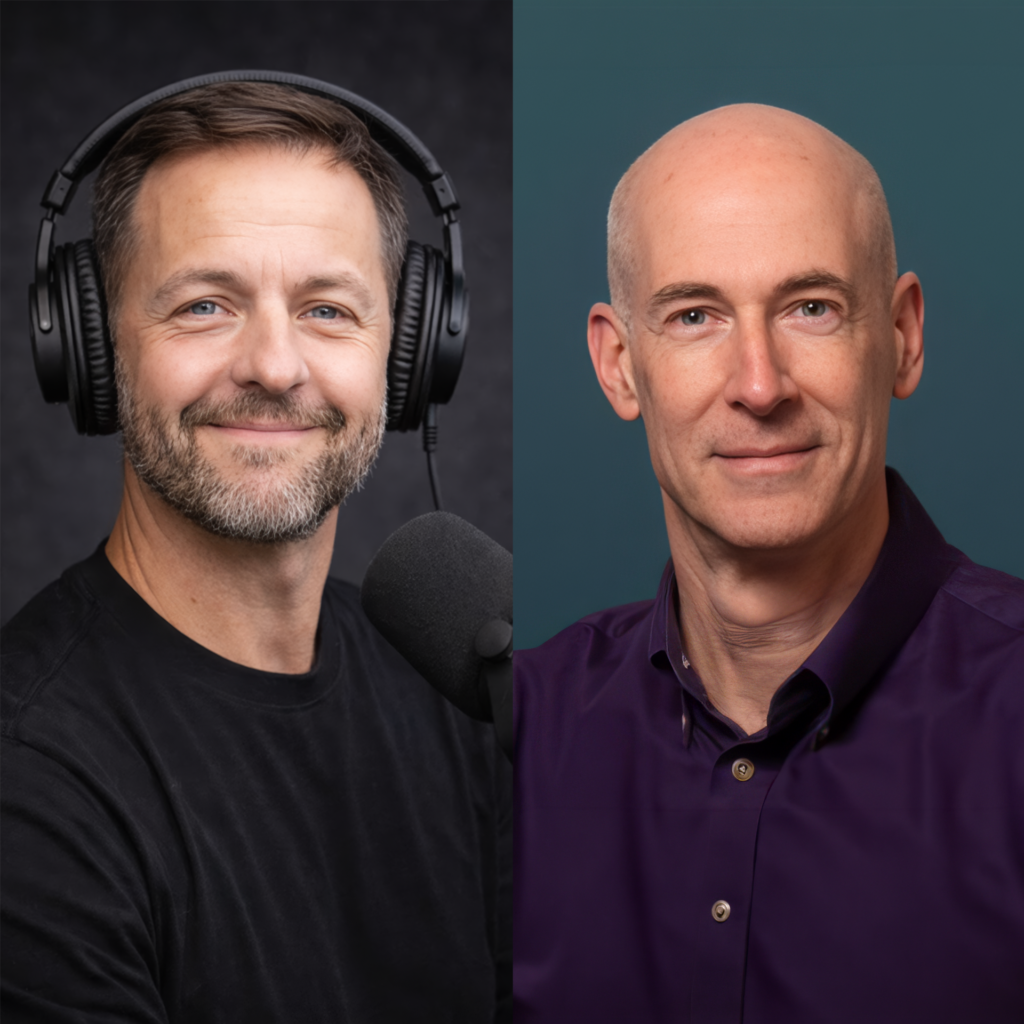
Allen Downey, author of Probably Overthinking It, joins Eric Pratum on The Unfolding Thought Podcast to examine what we miss when we compare today with the good old days. His book in progress, You Would Choose Now, uses survey data to investigate America’s progress toward fairness and tolerance.
Drawing on the General Social Survey, Allen explains why older people can look more conservative even when their own views have become more liberal. The distinction is between people changing their minds, new generations arriving with different beliefs, and a society whose center keeps moving.
We consider why problems fade from memory as we make progress on them, and why that can leave the present looking uniquely terrible. Allen discusses the ozone layer, changing attitudes toward homosexuality, and the uncertainty that disappears when we look backward at history. He also explores whether baby boomers’ unusually favorable economic circumstances make them a misleading benchmark for younger generations, while acknowledging real obstacles around housing, education, and work.
There is a complication: the young adults Allen studies are more tolerant yet report less trust and happiness. We explore how empathy, a constant stream of bad news, and exposure to scams could contribute. Allen also explains why growing acceptance of homosexuality reflects changing views within religious communities, not simply people leaving religion.
The conversation offers concrete ways to think about nostalgia, generational differences, and claims of social decline. Allen argues that recognizing past progress can help us tackle current problems, while emphasizing that further improvement requires work and is never guaranteed.
Topics Discussed and Questions Answered
- Do people become more conservative as they age?
- How much social change comes from people changing their minds?
- Why do we forget problems we have largely solved?
- Are baby boomers a fair economic benchmark?
- Why does the past look inevitable while the present feels uncertain?
- How can greater tolerance coexist with declining trust and happiness?
- What might our media diet be doing to our view of other people?
- How do familiarity and shared goals change attitudes?
- Are religious communities changing from within?
About Allen Downey
Allen Downey is a data scientist, professor emeritus at Olin College, and author of books about programming, statistics, and understanding the world through data.
Episode Links
- You Would Choose Now (early access): Visit leanpub.com
- Probably Overthinking It: Visit probablyoverthinking.it
- Allen’s blog: Visit allendowney.com
- General Social Survey: Visit gss.norc.org
For more episodes: Browse all episodes
Questions or guest ideas: Contact Eric
Read the episode transcript
Allen Downey, thank you for joining me. Where does today's recording find you? I am just outside of Boston in Needham on a beautiful fall day. Would you mind telling me a bit about yourself?
Sure. I was a professor for a long time. I semi-retired a couple of years ago, and now I'm doing some consulting and working on some book projects. So I think I became familiar with you and your work because of a talk at Google that you gave that I then saw on YouTube.
Of course, I maybe I came upon one of your books earlier than that. However, you've written some more developer or analyst friendly, more code friendly books that are a bit over my head and outside of my area of expertise. So it was not those, but rather your book Probably Overthinking It. So it was either the book or the talk at Google. And nonetheless, I read the book and then you're now writing another book. So would you mind, I suppose, first telling me a little bit about your career and how it led up to Probably Overthinking It? And then we'll get to your newest book, of course.
Sure. I think they are more connected than they might sound. ah So as a professor, I was working on those those technical books that you mentioned, including I think I've got Think Bayes on the wall there, which is about Bayesian statistics.
And I was teaching data science. And that led me almost to be an accidental social scientist, because for a lot of the examples, I was using the General Social Survey and other kind of public opinion data sets, partly because they're interesting and partly because you can use them for exercises, you know, to practice finding data stories and and communicating, telling data stories. That led to my blog, which is called Probably Overthinking It, and that led to the book that you found called Probably Overthinking It. The talk was about Berkson's paradox.
And that was that's kind of a recurring theme in a lot of this work, which is we look at these data sets, we see statistical patterns that can be misleading. And often there's a connection to what we see in real life. So Berkson's paradox often comes up when you see that there are correlations that we observe casually. And that gives us ideas about what's happening in the world.
But then when you look, what you see is that we are sampling the world in particular ways. And it's the sampling process very often that creates associations that may not really exist in the general population.
So that that's where the first book, Probably Overthinking It, came from. And then the second one kind of comes right out of chapter 12. I was seeing a lot of patterns in the General Social Survey and decided that there's a whole other book here that's waiting to happen.
Can you give me an example of some of these experiences or the data that we receive that then, I guess, supports associations that might not actually be there in the you know the GSS or something else?
Yes. So the one that came out of of chapter 12 was this idea that we think that older people are more conservative than younger people.
And that is mostly true, but it is mostly because they were born a long time ago and they grew up in a different environment rather than people becoming more conservative as they get older.
So I was trying to tease that apart. Like, if you're young and you have you know relatively liberal ideas about the world, are you going to become more conservative as you get older? And the answer is mostly no.
So on average, the last few cohorts that we can observe, you know people who were born in the 1930s and 1940s generally became a little bit more liberal, particularly on social questions.
As they age, they became a little bit more liberal. But the overall average moves faster than most individuals do. So most people don't keep up with the average. And so they feel like they are becoming more conservative.
But that's because the center of mass is moving a little bit faster. I use the time travel example, which is if you went back to 1970 and you found someone who was a little bit liberal compared to 1970, if you brought them to the year 2000, they would find themselves right in the middle of the spectrum.
And if you now brought them to 2026, they would be quite conservative. Okay, let's stick with this point then for the moment because we have midterm elections that are going on in the United States. We have you know we have cultural change and division and so on.
Are there things that you can take from this specific example or maybe from this book that... that would help us understand and deal with some of the challenges we feel like we face today in culture, politics or anything else?
I think so, because I think part of what I'm finding working on on the current book is you don't have to go back very far to find things that were substantially worse.
than they are now. I think we have we have a feeling that we are in a a difficult time. And I think if you talk to young people right now, a lot of them think that they are in a time that is uniquely bad, that this is just the worst world we've ever had. And so part of the history that I want to put into this book is reminders of stuff from the 60s and the 70s and even the 80s and the 90s that we've partly forgotten about and partly moved on.
Again, looking at these surveys, there are a lot of questions from the 70s that seem strange. Now, there were a lot of questions that were about, you know, do you think that interracial marriage is okay?
Or do you think it should be illegal? And that was a fifty fifty question in the 1970s And now it's you know it's in the you very small percentage of of remaining people who who have a problem with that.
There were questions, you know would you vote for a woman for president? Would you vote for a black person for president? And again, those were a majority of people in the 70s would not vote for a black candidate. You have to go back a little bit farther for women. But those those are now, again, they are in the single digits of people who are still giving the the the you know would not vote response. And I think a lot of those single digits are probably errors where people have filled in the wrong bubble accidentally. So those are you know big changes in public opinion.
And those are not the current issues that we think about now. There's a little bit of a cognitive illusion there, which is if you ask people, you know, what are what are the current problems that that we face?
You know, they'll name the things that are current issues. They won't name problems that have largely been resolved. And this is true, you know, I mentioned sexism and racism.
I think it's also true for environmental problems. You know, if I asked you right now, you know, name an important environmental problem that we face, you would probably say climate change.
You would probably not say the hole in the ozone layer or acid rain. But those were those were the big problems in the, you know, in the 80s and 90s. Those were big topics of conversation.
They have largely disappeared, not because we've completely solved them, but we've mostly solved them. And so they're just not part of what we think of when we think of problems now.
Okay. So the newest book is called You Would Choose Now. And before we dig a little bit further into, I guess, some of these examples, I'm really curious about the name of the book, where that came from.
And then I guess just tell me about the central thesis or what you're focusing on in this book. So You Would Choose Now. It comes from a speech that Barack Obama gave in 2016.
He gave a commencement address at Howard University. And he said, if you could choose any time to be born and you did not know who you were going to be. And he listed, he said, you don't know if you'll be male or female, what race you'll be, what religion, nationality, gay or straight, rich or poor.
He said, you would choose right now. You wouldn't choose the 50s the 60s or the 70s, these times that some people have some nostalgia for those periods. You would not choose to be born decades ago. You would choose right now.
which I thought was you know was a provocative thing to say. 2016, it was provocative. And I think now the question that hangs over it is, okay, if he was right in 2016, if we would have agreed with him, is it still true now?
Or have things really changed? So that was the provocation. And what I wanted to do is take a data-driven approach to the question and say, you know, looking at each of those categories. So I have a you know chapter that's about gender, a chapter that's about race and so on. What are the questions?
And how do we turn it into a data question? So partly it's public opinion and partly it's looking at measures of real progress. What are some of the things that you've found so far?
Mostly, Most things are moving in good directions. And there there are two kinds of change that are happening, which is that people change their minds over time.
And then there's also generational replacement, where you know young people come in who have different ideas from some of the older people who are, at at least so as I say, aging out of the survey, which is that they're not participating in the survey anymore. But of course, older people die and are replaced by younger people with different ideas.
So one of the things I try to do is is statistically estimate those two pieces, and you see both things happening. So for example, on acceptance of homosexuality, that has changed a lot ah in the 1990s to today, big changes in all of the questions.
One of them from the General Social Survey is basically, do you think homosexuality is wrong? And in the 70s, I think it was about 75% of people said said yes to varying degrees. they had They had adverbs that you could choose for how wrong you think.
ah But the percentage at the time who said it's not wrong at all ah was, I think, around 25%. It is now flipped completely. So roughly 75% now say, yeah, it's not a problem. Actually, if I remember right, it's about 80, sorry, it's about 60, 40.
So there's you know still 40% of people who who choose one of the adverbs, but about 60% now who say, that all changed between the 1990s and now.
And it was partly generational replacement, but that's an example where changing minds was actually a substantial contributor. So with some of what you're talking about, I think with maybe all of the examples that we've discussed so far, except climate, you know, climate change, ozone hole, ozone layer hole, et cetera.
It sounds to me like the world on average has become more tolerant, but other things change as well. There's, I don't know economic change, there's technology, there's any number of things.
So far, have you mostly focused on what I guess I might categorize as social issues or tolerance?
So far, yes. And that's partly because the categories as they were laid out are partly about tolerance and fairness. I would say, do we have laws that protect civil rights and provide equal opportunity?
And then the consequences of that, which is if we see groups who were underrepresented in the past, is that improving over time? And have we achieved parity in some of these groups, which in some cases we have. Others, we certainly have lingering differences, differences in outcomes.
So yes, I would say the chapters I've written so far are mostly, as you say, about social issues and social progress and civil and civil rights. The chapter about poverty and wealth, I have plans, I have data, but I haven't got there yet.
And there are definitely some challenges there. Because again, if you ah you know talk to a young person and tell them that you know we are living in the best the world has ever been,
Certainly one of the pushbacks that you're going to hear is climate change. And one of them is certainly the you know economic circumstances right now. I think you know housing is one and the affordability of college is certainly a big one.
And the employment market, both you know the current employment prospects and also the possibility that it becomes more difficult in the future. So those are the challenges. I think let me actually tell you a little bit about what I'm thinking and I would love to hear your reaction, which is when you compare across generations, one of the things that you're comparing is when a particular generation graduated from school and started their career, did they graduate into a good employment market?
Another one is the accessibility of housing. And another is the investment outcomes. If you work over the course of your career and you invest in a house, but also possibly invest in stocks and other assets, what are you what are the returns that you earn over the course of your career?
And I think one of the reasons that things look bleak right now is that a lot of people compare themselves to baby boomers. who happened to hit an economic trifecta.
They graduated into a good market. They had affordable housing and the return on their real estate investment was very good. And their return on other assets was very good. Their working careers overlapped with a 30-year expansion of the stock market.
So they just happened to be very lucky generationally. And other generations have hit different combinations, some you know good market, some bad market, et cetera.
So when I graduate from high school in 1990, let's say, I look to the boomers first and I more or less say, how do how does my situation stack up against where they started when they graduated from high school or at the very least my perception of where they started.
Yes. And I think, you you know, you hear that in some stories that people tell about someone who could you know graduate from high school in the 50s, get a job in manufacturing. They didn't have a college degree, but they would make a good living, be able to buy a house.
And if we follow them over their careers, they probably ended up doing pretty well. And people will point out that that's pretty hard to do right now.
If you graduate from high school, you don't have a college degree. It's not easy to get a good job. Affording a house would be difficult. And so I think you know that comparison is true, that yes, that particular trajectory is probably not as easy now as it was then.
But what I would try to do with this chapter is is maybe a ah bigger picture that I think there are other economic advantages that we have now that people did not have in the 50s. I think a broader group of people have access to those advantages now. And we may be comparing ourselves to a particular point in time that was unusually lucky.
Okay, so this is interesting because it feels to me like we can, oh, I suppose, let me give you an example. Steven Pinker's book, I think it's called Enlightenment Now or something like that. He more or less says,
today is the best time ever. and And now I don't want to be ungenerous to the depth of thinking in the book and all that, but in essence, I feel like that's what he's saying. And then the criticisms of what he says will be things like, okay, so Pinker, you're claiming that there's less war.
But we have these terrible things that are going on. and that And even if you're right, that doesn't make it any less terrible for the people who do deal with war or pick one issue or another that he takes up.
Yeah, and I think that's a ah danger of trying to tell this story, which is it can be misunderstood to say, you know, we are living in the best of all possible worlds. All the problems have been solved or the problems will just magically solve themselves and that we don't have to do anything.
So I do try to make it clear when I'm telling this this story that Yes, things have gotten better, but yes, we still have big problems. And I'm certainly not trying to dismiss any of the current problems.
Or as you said, if you know someone is currently suffering from some of the problems that we currently have, I would certainly not dismiss that suffering. But just the opposite, I would say, yes, we still need to work on all of these problems. But if we have a good understanding of how we got to where we are,
That will give us, first of all, some hope that we can continue to solve problems and possibly some recipes that we can look at what has worked in the past and and hope that that will also apply to problems in the future, which of course is not a guarantee.
It may be that there are problems that don't yield to the same methods that we've used in the past, but We are ingenious people, and I think we can continue to innovate our way toward solutions. You know, the ozone hole may have been a relatively easy problem to solve, but it required international cooperation to you know recognize what are the things that we're putting into the atmosphere that are causing this problem? And can we at least reduce, if not eliminate them, which we have mostly done?
I think the approach to climate change is similar. I think we've we have certainly not done as much as we could as fast as we could have.
And as a result, we're going to face consequences that could have been avoided. So this is certainly not an optimal outcome. But we are not doomed.
We certainly have paths from where we are now to the the end of the 21st century. where we end up with a stable climate and a good quality of life for the people on on Earth. So we're not doomed, we but we do need to do the work to get from here to there.
And again, to repeat myself, if we understand how we have solved problems in the past, like that will, I think, help us solve the current problems that we face.
In the research and writing that you've done so far, have you, have there been things that have surprised you? Mostly I had, I had done enough early investigations that there haven't been too many surprises Some things are faster than I thought.
Some things are slower. So I get to tell some good news, but there are you plenty of other examples where it's like, yeah, you know, we have made some progress. But, um you know, in the chapter on women's rights, there are examples where know women are still greatly underrepresented at ah higher levels of corporate structure, CEOs, senior managers and so on. Currently overrepresented in education, though.
There are some examples where you know women women are now doing substantially better in high school and college and graduate school than men are, both in terms of outcomes and representation at those levels.
So that bodes well for the future pipeline. Similarly, you know, looking at racial differences, the directions are all good. All of the gaps in outcome are mostly getting smaller, um but some of them are kind of excruciatingly slow.
So there's, you know, there's good news and there's, you know, tempered not so good news. I'm thinking about things like you know, someone will say, well a reason that I would choose to be born today rather than 150 years ago is antibiotics.
And then somebody else might say, yeah, but what about pandemics or the fact that you could engineer and deploy some sort of disease or, you know, bioweapons or whatever else?
So I suppose we do have to take some of things like that into account where we can say, yeah, but. But I'm wondering if there are places like pollution, perhaps, or the economy or something else where you feel that it's more clear cut that things are better or worse than at some point in the past.
Some of them, as you mentioned, um you know access to your general nutrition and health is certainly better now than it has been at any time in the past.
um And you can look at things like um ah maternal mortality. as an example, where that has come down. The your rates of maternal death have have come down. Neonatal death have have come down.
um And so yeah those are big contributors to life expectancy as well. ah Infectious disease, as you mentioned, and violence. You mentioned Steven Pinker's book. I think that was one of the themes that he talked about quite a lot, is that you know your your chance of suffering from violence over the course of your life is probably lower now.
It is certainly lower now than it probably has been at any point in history by orders of magnitude. So I think, yeah, there are a lot of numbers like that that are you know very clear cut.
But then I think you also mentioned some risks. And I think, you know, yes, we probably have existential risks now that we have not had in the past. We've had them for a while, which is, know, we've had enough nuclear weapons to pretty much wipe out human existence for a while. And that, you know, that's new. It was 150 years ago.
We just didn't have anything that could cause harm at that scale. There was, I suppose, the possibility of a plague, and there had been plagues that had killed a substantial fraction of the world population.
But I think we now have risks that are of of a different kind than we used to have. So I think, yeah, if you're putting things on balance and deciding whether to be born now, I think those risks are legitimate cons for being born now.
But I do think there's a lot on the other side of that scale. It feels like a truism to say or even think about the fact that, you know, you solve one problem and then there's either just a next problem waiting behind it or new problems are created. And if I was to just dismiss some arguments about improvement with well, you just created a new problem. I feel like that ignores the fact that you mentioned the maternal death rate, I think it was, and or or and you know the the death of young infants, for example.
The, if there's a new problem after that, such as, you know, someone can get sick from a pandemic, the fact that the child lived or the mother lived, you know, after giving birth for five, 10, 20 years, and then had the chance to get sick is probably all things being equal.
A good thing. Now, of course you could live in a war zone or something else in some part of the world, but We get into, as I suppose you actually, I think you talked about this in maybe a different way in your talk at Google about how we wouldn't be able to even measure that second problem if not for the fact that the first problem changed our our denominator.
Yeah, and there are lots of examples of that. and you know One of the reasons that cancer rates are going up is that most cancers are diseases of aging. And so as you have an aging population, people are living long enough to die of cancer because they're not dying of other things.
and that's also true for yeah heart heart disease and other diseases of aging, they are in some sense good problems to have because they are evidence of a healthy population. Of course, they are also problems that we should work on and try to solve.
But they are the example that you mentioned where, yes, every time you solve a problem, you will now have something else to solve. And sometimes it's because you've you've knocked off the highest priority, and so you're moving down to the second highest.
Or sometimes the solution does create a residual problem, which can feel like a treadmill. And I do hear that from people who feel like we are not making progress, where it seems like every solution just creates the next problem.
To which my answer is, well, yes, but the new problem is smaller. And that's progress. So you said something earlier about each generation more or less thinks that the problems that they're facing are the biggest problems ever. And forgive me if I didn't get your wording exactly correct, but that in essence, I think that's what you were saying. So do you have a ah perspective or a theory as to why it is that we tend to think that this is the worst time ever, more or less?
Yeah, it's a hard question. We do seem to have a built-in nostalgia engine. I think it's you know it's a cognitive bias that we have. Part of it, of course, is you know we we study history exactly in order to learn about these things. I don't mean to dismiss it as ignorance other than to say, you know I feel like I'm learning a lot and being reminded of a lot while I I write this book, just you know thinking about My experience from the 1980s, and, you know, simultaneously having that feeling of, yes, it seems like we are facing a unique set of problems, but I also look back and remember things from the 80s that I find kind of shocking in retrospect.
You know, among other things, you know, I went to an all-boys school in the 1980s, and the amount of casual homophobia in our conversation would be so unacceptable today.
and and that's And that's good. ah you know I'm I'm glad to see that you know young people right now are less racist, sexist, homophobic, xenophobic than any previous generation, at least that I have data for, um which is great.
They're just there kind, tolerant people. They're empathetic. It's so common you know when people talk about kids these days. It almost always comes with a complaint. That is not what the data show. The data are telling us this generation is just a really good group of people.
And you only have to remember your youth in order to see that. For some of these issues, Are some of them cyclical?
And when I say cyclical, I don't mean so much that, you know, there we might backslide in terms of casual homophobia or whatever it is, that there's a little bit of backsliding, but rather do you see with at least some of these issues in the data that we ever really return to the point that we were at in the past?
I have not seen any examples yet where, you know, attitudes changed and then they changed back. um And this is, you know, ah I think a good example. I think it's unlikely that, you know, we have come to accept homosexuality.
Not everybody, but a majority. I think it's very unlikely that we will, 50 years from now, say, oh, no, that was a mistake. Actually, homosexuality was wrong all the time, and and we should ah you know return to you know making it illegal and punishing people.
One of the examples I give in the chapter about homosexuality is Alan Turing's story. He was a you know foundation of computer science genius.
He was gay. He was born in 1912 in the United Kingdom, where homosexuality was illegal. In the 1950s, he was convicted, and he was given the choice of going to prison or accepting chemical castration. he was given hormonal treatment that was supposed to reduce homosexual homosexual urges, which he took and that had terrible side effects. He died probably by suicide in 1954. It's a little bit unclear, but it was clear that he was tormented by the society he grew up in for no good reason and subjected to a barbaric punishment.
I don't think we are ever going to look back on that and say that that was right. So couple of days ago, I talked to Yuval Levin, who is with the American Enterprise Institute. And one thing that he said was that we tend to look to the past and assume either explicitly or implicitly that the people in the past knew what they were doing.
So when, you know, the United States, UK, et cetera, won World War two that we knew, our leaders knew, first we do A, then we do B, then we do C, and the war is won.
But the reality is that most of us most of the time are just doing the best that we can. And we're, you know, in the case of a war, we are making the best possible decisions that we can.
But when it doesn't work out, Then now I'm I'm adding to what he said. I'm wondering if there's a bit of, I think it's called survivor bias or survivorship bias, maybe where Allen, you and I look back to the past and we see the survivors, we see the winners for the most part, we see the things that worked out.
That's interesting. Yeah, because you you look back at what happened, it can seem inevitable. So it might now seem inevitable that the Allies won World War II.
At the time, it sure did not seem inevitable. if If you were in England in the early 40s, they thought they were going to be invaded at any time. They were subjected to bombing, you know the the bombing of London and so on.
It was not at all clear that the Allies were going to win World War II. So, yeah, if you if you're looking at it backward from the present, it might seem, oh, it was well in hand. It was not.
And similarly, if you're in the present, you certainly feel that contingency more immediately. It is not at all clear. Taking the Ukraine-Russia war right now, it is not clear how that ends.
And it certainly there is no outcome right now that feels inevitable. But maybe 50 years from now, it will seem obvious in retrospect. So, yeah, I think that the contingency of the present might be a bias of this kind.
It seems to me like while you might find some exceptions, that that's probably going to apply in most cases, whether we're talking about perspectives on social issues or maybe even I wonder about some market dynamics sort of things where we might not be able to point to a lot of specific decisions that influenced how the stock market moved.
But When you're living the stock market changing and you're wondering, am I still going to have a 401k or where do I put that money? Should I invest in AI stocks or whatever else? It feels so uncertain.
But if somebody was to look back 20, 30, 40 years, we either just devalue it because there's nothing of interest there really. If human beings weren't making decisions, if, if I can't point to a hero and say, you know, FDR did something great. We either just completely devalue it. It's, you know, we write it off or unconscious of it. We're not conscious of it.
Or if when we are conscious of it, we still look mostly at the fact that it seems like it was inevitable.
Your stock market example is a good one because it's almost a metaphor for the bigger picture that we're talking about. Because, you know, I forget what the phrase is, but, you know your past returns are no guarantee of future returns or whatever it is they warn you if you're an investor in the stock market, which is you could lose your money.
But you can also look back and say, you know in general, the investments that have had the highest return in the last 50 to 100 years have generally been stocks and you know equities. And so if you're trying to decide where to invest your current dollar, that is your best bet, even though it is not guaranteed.
and you do you know You have options. You can choose riskier or less riskier. portfolios. And I think it's the kind of the same with progress in general. Again, if you look at past progress, you're not, there's no guarantee that that will continue.
um But if you're making bets, I would say the bet is that they, it probably will continue provided that we continue to do the things that we did that led to that progress in the past.
If on average, younger generations are more tolerant, then I think that whether it's the GSS or other surveys, I think that there's data showing that Today, people are, or at least younger generations, are less trusting and less happy.
but I'm trying to tease out how some of these work together and yet also how some things seem to go in opposing directions. There is a cloud hanging over this whole feel-good story.
And it is exactly what you said, which is that ah some of the questions about both interpersonal trust, the current generation of young adults has reports lower interpersonal trust, lower trust in institutions, and lower happiness. just you know There's a straightforward question that says, how happy are you?
And the young young adults right now are less happy than any previous generation at any age. At least this yeah I have data that goes back to the 1950s And I you know I'm not the first person to notice this. Lots of people have proposed explanations.
I do think that part of it is related to what we're seeing about tolerance and fairness, which is if you are simultaneously very empathetic toward suffering and very aware of all forms of suffering and unfairness anywhere in the world,
I do think that those two things contribute to unhappiness. And we have a media you a media diet right now that I think amplifies the natural human negativity bias multiplied by the negativity bias in the media.
We are bombarded by bad news all day, every day. And again, combine that with empathy, which is, you know not only do we know about all the bad things, but we care very deeply about them.
That is tough to take day after day. So I don't think that that will fix itself. I think we are going to have to recognize that pattern and figure out ways out of it.
I do think, you as individuals, I think we can start to think about our media diet and think about the effect that it has. you know if If you find yourself doom scrolling and you perceive that it makes you feel awful,
That's a habit you should probably break. And we're already seeing that actually between Gen Z and Gen Alpha. We're seeing some of the early signs of you're recognizing, among other things, that social media is probably not doing much good for our mental health.
But there's a lot. There's a lot there to try to unpack. It's, you know, the causes are going to be complicated. The solutions are going to be complicated. I think we are early at both the diagnosis and the prescription.
In the past, there has been a talk that I've given on culture and culture change and the The use case is really for people in organizations that are wondering about, you know, what is it with kids today? And why is it that it's so hard to hire people that won't that will actually stick around and so on? And I'm wondering in light of some of our conversation here, how much of my focus and diagnosis
needs to be re-examined because there are things that I talk about that are things like if you were a let's say, teenager in the 1990s, you had CNN and 24-hour news it was really starting to become a big thing you know sometime between 1990 and 1995, perhaps.
And I think CNN was founded in the 80s, if I recall correctly. And so it was one of the first times where frequently you could get exposed to if it bleeds, it leads type, you know, media that, which is a very much a TV news thing. You could get exposed to that frequently you you you know, in order to fill a 24-hour news cycle with things, you know, that that are bleeding, you had to look internationally.
So we didn't have, at least as a percentage of media that we were exposed to, we didn't have nearly as much stuff that was local as we did in the past when you only watched the news at five or eight or whatever it was. Same thing with the newspaper in some respects.
And So suddenly, every night when my parents are watching the news or we're discussing it over the dinner table or whatever else, I'm seeing all of these things that are good for the media.
But for me, they have no impact necessarily. And I can't really do anything about, you know, when I'm a 15 year old, about the genocide in Rwanda.
or any number of other examples. It's been a while since I've given this talk, so I don't recall all of them. But soon after this, we start to get digital media and then eventually social media. And I have such a high percentage of what I'm exposed to feels like things that are really terrible and somebody should do something about them.
But actually, I can't have any impact on these things. Of course, I can go and I can volunteer with some group in Sudan or I can make a donation. But making a donation has so much less of an impact on me than if in, let's go back to the 70s or the 80s,
The thing that I'm exposed to was probably a local campus protest, maybe. And if I'm going to do anything, I really kind of have to go out there and be physically present. And so as you're talking, I'm thinking back on this. And part of my argument was that you have this generation or you have the beginning of some changes with each subsequent generation that relate to exposure to a high percentage of things that are bad.
and a high percentage of things that I actually can't do anything about. and Yet, as we're talking and I'm thinking about the survivor bias aspect and I'm thinking about tolerance, I'm wondering how much of my diagnosis or my area of focus was off the mark. And this might be you know less trust, less happiness, for example, that there might be more factors to consider.
Yeah, I think that's right. um And you mentioned you know things like cable news. We've had a succession of new communication tools and communication patterns.
And yes, I think in retrospect, we can look at each one of them and say, well, You know, suddenly we became exposed to all the problems in the world, but it was still only, you know, the news hour.
and But then it became 24 hours. But then it became, you know, a thing that we would see on the web all the time. And then it became the thing that we'd see on our phones all the time.
um So I think that's that's one pattern in media consumption. I think there's a related pattern in communication, which is just, you know, how how big is your communication world? One of the questions in the survey is, do you think that people would try to be fair or do you think they would take advantage of you?
Well, if you think about the availability heuristic, when you answer a question like that, you might think, well, when was the last time I remember somebody being fair? And when was the last time I remember somebody trying to take advantage of me?
Well, people are trying to take advantage of me constantly. All I have to do is open my spam folder and I can see 100 people a day you know or more.
And that you know that was just not the case. you know In the 1980s, if somebody wanted to so to scam you, they would send you a chain letter. ah yeah know Speaking of problems that don't exist anymore, chain letters.
Look it up, kids. of But yes, I think that's you know our exposure to that communication pattern and the ah media consumption have got to be a part of it.
um But then you said yes, but it's also more complicated than that. So.
Minds have changed over time. We've become more tolerant. There's been social change. Have you learned anything about what contributes to people changing their minds? So whether I'm leading a political movement, whether I want to see social change, are there things that I can do so that moving forward, I can see change that I want to see rather than looking backwards and just seeing what has happened in the trajectory we've been on?
Well, know, figuring out causes and effects is always hard. um But for the things that are about tolerance, there is a clear signal. ah Taking acceptance of homosexuality as an example, one of the questions that Pew asked is, ah do you have a friend or a family member who is gay?
and that you know is gay. And that was the by far the most predictive thing of answers, ah you know acceptance of homosexuality. if If you know someone who's gay, much more likely.
And that is a big part of what was happening in the 90s, which was that you know coming out became a big thing. The visibility of homosexuality was much higher, both in in real life, it was much more likely that the people in your life would be out, and depiction in the media, that you would much much more often see gay characters who were what's called incidentally gay. That is to say, it was not the defining characteristic, it was not a major plot point, it was just that there were people in the story who were gay.
that kind of exposure changes people's attitudes. um So I do think a big part of tolerance is familiarity. And I think fairness is probably a similar thing. The more you are aware of things that are unfair, ah the more likely you are to, at the very least, express you know a preference for fairness and and vote for it and and be active for it.
think that there's been a fair amount of data that has shown that just being exposed to something does not necessarily make you agree with the point or make you like those people who are different from you, but that you have to feel like if, okay, so I have a neighbor who is in every way different from me, perhaps.
skin color, sex, age, accent, whatever it is. And just because we're neighbors and we live in the same neighborhood and we see each other every morning when we go out to get the mail or the newspaper or whatever, does not necessarily mean that I'm accepting or understanding or whatever of who they are, the way that they are. but I might be familiar, maybe even we have talked at neighborhood barbecues, but feeling like we are a part of the neighborhood, that this neighborhood and whatever it's doing or the standards that we uphold if we have an HOA, something of that nature, feeling like we're a part of something together gives us a greater likelihood
of putting more importance on the things that we share and much less importance on the things that we don't, as in my neighbor could be gay.
And before we really feel like we're part of the same team, that seems like something that's very important, perhaps. And then when we feel like we're part of the same team because we're purry trying to protect the neighborhood from being bought up and turned into condos or whatever it is,
Before that, it feels important. But once we start fighting this condo builders group that I've made up in my cartoon reality here, then suddenly I realize, oh, that's an aspect of my neighbor.
It's not anything that is important. I mean, it's important to their identity or who they are, but it's not importance at important as a distinction. And so when it comes to changing minds,
I'm also wondering about if I want to, if I'm a political leader, if I'm a if I run a nonprofit, perhaps, whatever it is where I want to make some change, that I probably need to keep in mind, not just trying to create some familiarity, but also to get, I guess, the group that I want to change or have a new perspective.
together with the thing that they're less tolerant of in a way that helps them realize that that thing that you're not currently accepting of, you're not tolerant of, is not important to our shared goal, perhaps.
Yeah, I think that not important is a key to this whole thing, which is that, you know, at some point you go from tolerating to accepting to not caring.
I think that's the know the root the real end point. Because you know tolerate when you say we tolerate something, you still think it's bad. You're just putting up with it. And acceptance is okay. I think acceptance is better, but you don't you don't accept good things, right? you You still accept things that you are making a judgment about.
So I think, yeah, then the next step is yeah the step in your example from having a gay neighbor to having a neighbor who is incidentally gay. And I think we are, we're at the beginning of this process with trans people.
I think trans rights will follow a very similar trajectory over the next, let's say, 10, 20 years. It's hard to say how fast things will move, but I would be very surprised if it did not follow exactly the trajectory that you just described, where trans people In the same way that you know a majority of Americans basically do not care if you're gay.
And I think we will get soon again, hard to say how soon, but we will get to a point where people just do not care whether you're trans.
What do you have coming up in your book? And you don't have to give it all away, but I'm curious about future chapters that you already have planned or things that you maybe would like to research that you haven't gotten to yet.
I've got ah the religion chapter is drafted. I think that one is interesting just because the religious landscape has changed so much over the last 30 years.
ah The number of people with no religious affiliation has gone from negligible to being the largest religious group, depending on exactly how you split things up.
And at the same time, we've seen a lot of changes in beliefs about autonomy. Sexual behavior, for example, we already talked about homosexuality, but you know acceptance of premarital sex is another example where that has changed.
Now, there's an interesting story that I'm working on There's one take on that that says we have become a less religious group. country, and therefore we have moved away from traditional values.
And that's why acceptance of homosexuality and premarital sex and other related things has increased, because we've moved away from the religious proscriptions on those things.
That turns out not to be most of the story. It's not so much that people became less religious and therefore gave up on those traditional values, those changes are happening within every religious group.
So you know Catholics had become more accepting of homosexuality. Evangelical Christians had become more accepting of homosexuality over time. So now you've got two trends happening.
What are the changes within religious groups? And then what are the changes because people move between groups? And it's actually the first one that is bigger.
it's It's both. But the bigger effect is what's happening inside religion, not what happens when people leave religion. One thing that occurs to me is also ah question of what do we mean when we say religion?
Because, know, one thing that I think about, and I'm blanking on whether or not there's data on this necessarily, but it this is intuitive to me, is that as people have become less religious, that their need for some kind of belief system, our need to have some belief, some some faith to fall back on when we don't have an explanation for things, that that need has not disappeared.
And so we've replaced it with other things. And I'm of the camp that we've replaced it with things like politics, that you know, my team, they say that this is why the world is the way that it is. And so I'm just going to believe what they say. So as people have become less committed to their church, that they've replaced that need for faith or whatever with politics. And again, I don't know if that should play in at all to what you're writing, but that's one of the things that occurs to me is
Oh, okay. So the religious groups, if I can put it this way, have changed. you know the the The average of beliefs or average of beliefs on social issues have changed.
But has the meaning of the religion or religious group affiliation changed at the same time? Yeah, I think those are good questions. And it's certainly part of the move away from religion is it leaves um people looking for spiritual meaning and social connection. And I think you talked about both parts of that.
I think you're right that political polarization has become one of the ways that people find social connection by aligning themselves with a team. Unfortunately, that's probably not not good for politics and probably not particularly good for social connection either.
So yes, if we if we have traded having a church community that you're connected with and we've traded that in for red team versus blue team, that's probably probably not a gain, probably not progress.
If somebody is listening to this conversation and they take away only one thing, they remember only one thing, is there one thing you would want them to walk away with? I think I'd like them to know that we really are making progress on a lot of things.
And so there's a reasonable expectation that we can continue to do that if we keep doing the things that we've done. And particularly thinking about you know yeah younger people who might feel like they have inherited a broken world.
In some ways, yes, we have problems to solve, but we have always had problems to solve. And I think we can continue making progress on them. Is there somewhere you would like people to go to follow you to buy your books or anything else?
Sure. Well, the the work in progress right now is You Would Choose Now. The subtitle is Measuring America's Progress Toward Tolerance and Fairness. It is, as I said, a work in progress. There's an early release that people can start reading now.
And I'm doing that in part to start getting feedback. You know, tell me what parts of this work connect, engage you. And if you find yourself...
fighting against it and you think that there's a, you know, uh, something I'm missing. I really want to hear that because I want to try to put the best case out there that I can based on the data and maybe change some minds.
And when you say early release, I just want to make sure that I understand correctly. So I have, I don't know if the verb is bought, but I I've bought the book. I purchased the book. And so more or less, every time you release a chapter, I get that chapter. So I don't necessarily have to read the book all at once. And so that's what you mean by early release, correct?
Yes, it's a platform that's called Leanpub, and this is their model that you post a work in progress. And right now you can read the first chapter as a free sample.
And actually you can get the second chapter if you signed up for the mailing list. And then, as you said, if you if you buy the early version at a discounted price, you get all of the future updates, including the final version of the book when it's done.
Well, I will link to your book and your website and anywhere else that's appropriate. Allen, I've been looking forward to this conversation, so I really appreciate you joining me today.
Thank you. It's been a pleasure.