Is AI Slop at Work Inevitable?
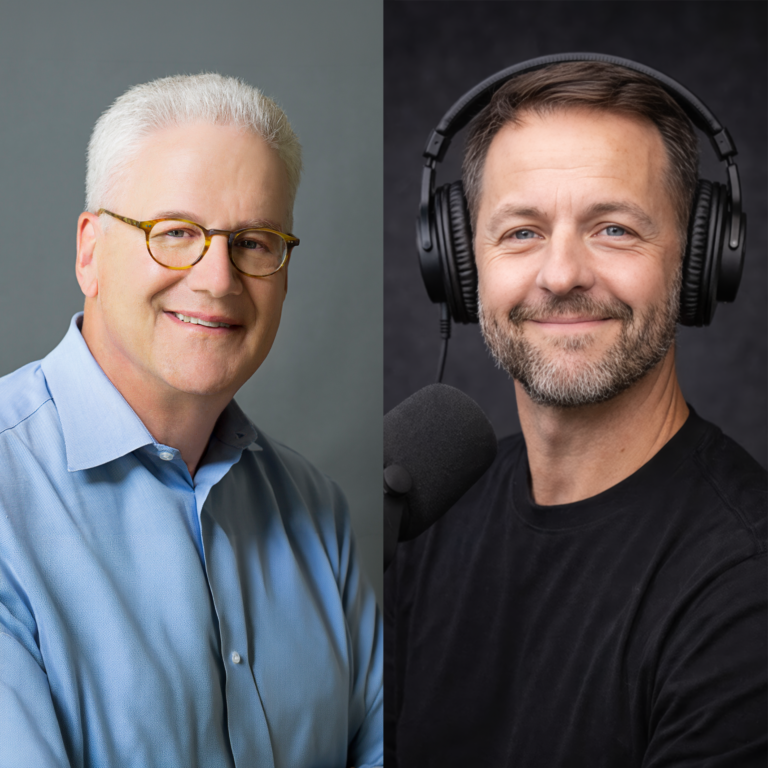
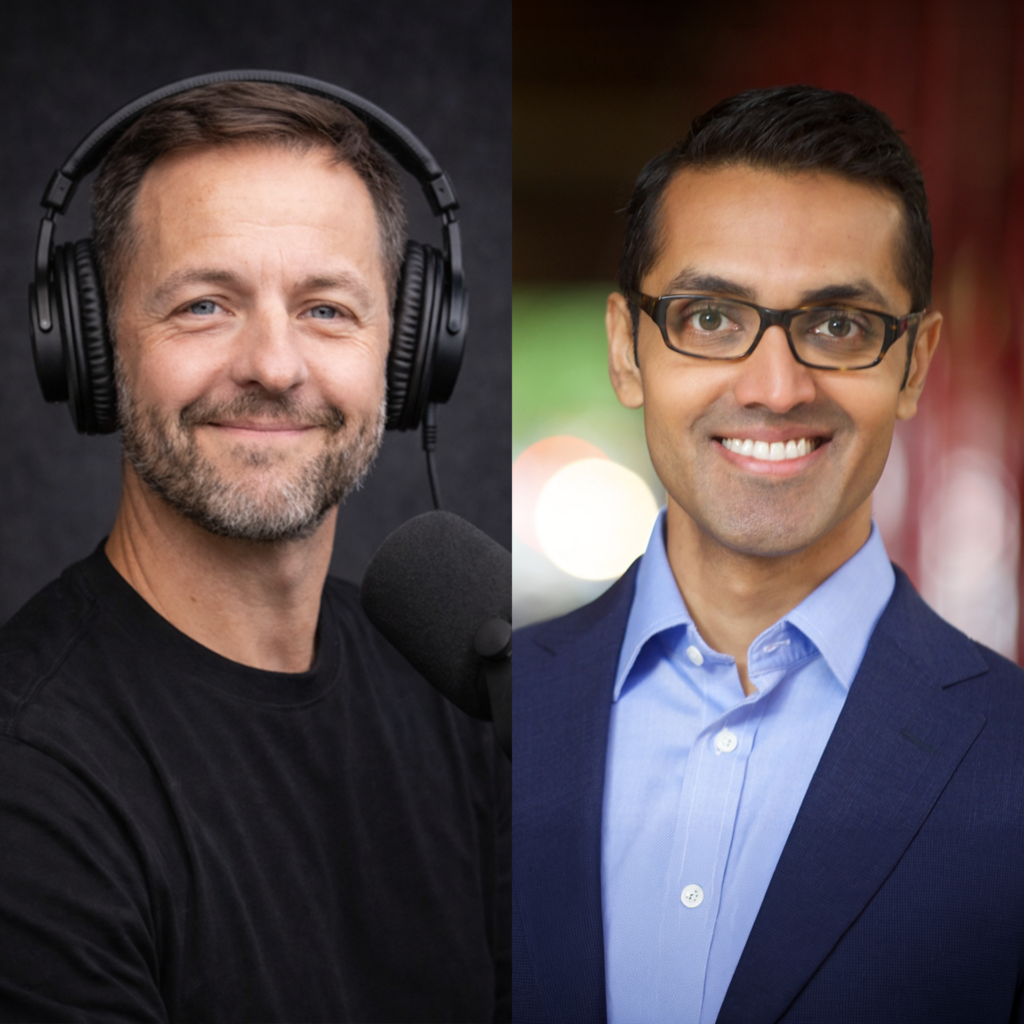
In this episode, Eric talks with organizational researcher, entrepreneur, and Primed to Perform co-author Neel Doshi about a question most discussions about artificial intelligence never ask: What if AI doesn’t replace meaningful work, but…
Get the next conversation via email
Fresh conversations to help you see the world more clearly
In this episode, Eric talks with organizational researcher, entrepreneur, and Primed to Perform co-author Neel Doshi about a question most discussions about artificial intelligence never ask:
What if AI doesn’t replace meaningful work, but makes it possible to redesign work for the better?
Neel argues that organizations are approaching AI from the wrong direction. Rather than treating it primarily as a tool for automation, he believes its greatest potential lies in helping people solve problems, collaborate more effectively, continuously improve their work, and contribute in ways that were previously impossible.
The conversation explores why so many AI initiatives fail, why transformational change almost always gets worse before it gets better, why organizations remain trapped in command-and-control management, and why motivation is becoming a greater competitive advantage than technology itself.
Eric and Neel also discuss organizational culture, burnout, AI augmentation versus automation, leadership, Six Sigma, continuous improvement, collaboration, intrinsic motivation, knowledge work, experimentation, and the future of management.
Rather than asking whether AI will eliminate jobs, Neel asks a different question:
Can AI help create the most empowering workplaces we’ve ever seen?
At its core, this conversation is about designing organizations where technology strengthens human capability instead of replacing it.
Go deeper
Read the accompanying Inbound & Agile essay: AI Doesn’t Transform Work. Management Systems Do.
Questions Answered
- Why are so many AI initiatives failing?
- Why do transformational changes usually get worse before they get better?
- What is the difference between AI automation and AI augmentation?
- Why are employees feeling less empowered at work?
- How should leaders introduce AI without damaging culture?
- Why do command-and-control organizations struggle with AI?
- What motivates people to do their best work?
- How can AI improve collaboration instead of replacing it?
- What can leaders learn from Six Sigma about AI adoption?
- Why do most organizations misunderstand productivity?
- What is “AI native, people first” leadership?
- Could AI create a new golden age of work?
Episode Links
- Factor AI: Visit Factor.AI
- Primed to Perform: Browse on Amazon
- Lindsay McGregor’s previous appearance: View the related episode
For more episodes: Browse all episodes
Questions or guest ideas: Contact Eric
Read the episode transcript
00:00:02.58
Eric Pratum
Neil, thank you for joining me. i have spoken to your co-author, your business partner, and your wife, Lindsay. So I appreciate you being here. Would you mind telling me a little bit about yourself?
00:00:17.69
Neel
I appreciate it, Eric. Thank you very much. So my name is Neil Doshi. I'm one of the authors of Prime to Perform. I'm one of the founders of factor.ai. And my life's work is on creating high-performing workplaces where people can really thrive.
00:00:36.09
Neel
And my research is on the science of that. How does that work? How does that work at scale? And over the last five years, we've been focused on building a world where humans not just survive through AI, but actually thrive through it, like can be empowered at the next level, can solve issues at work that we've been struggling to solve for a century.
00:00:59.42
Neel
And so I've been working on that quite a bit in the last five years.
00:01:03.48
Eric Pratum
When you say survive through ai versus thrive, what do you mean by that?
00:01:09.69
Neel
Well, I think as a society, we're at a crossroads. Like there is... one path where we allow ai to decimate what is good about human endeavor human work human creativity that's one path there's another path where for reasons we can talk through we've been on a steady and long decline on how people feel empowered at work And I've spent 20 years, maybe 25 years trying to tackle that problem with various tools like how organizations are structured, how performance systems work, how we set strategy, how we train leaders.
00:01:56.47
Neel
I have never found a tool more capable of solving the human empowerment problem than AI. So there is another path where the very same technologies that could have been used to decimate work are the ones that actually fix work.
00:02:12.25
Neel
And what we're trying to do is help society choose that second path.
00:02:22.20
Eric Pratum
What is it that you see, or actually, let me rephrase this When you talk about being on a long, slow decline, I believe it was towards people feeling less empowered at work, I guess, what is it that you see?
00:02:39.48
Eric Pratum
Where did that start?
00:02:41.18
Neel
Yeah.
00:02:44.38
Neel
So there's a variety of things that have been happening that have been shaping workplaces for a while now, like secular trends that have been ongoing maybe accelerating over the last five, six years.
00:02:55.26
Neel
But for example, one is the the ability for a business to do something new has gotten easier.
00:03:07.35
Neel
Like the the barriers to entry have decreased. So for example, My very first startup, which was circa 1999, 2000, we had to raise some money to buy servers, licenses, rack space.
00:03:25.78
Neel
We had to have somebody in the data centers setting all that up. I remember I was spending time on late nights, weekends in data centers, hooking up machines. And today you can do that for $0.
00:03:41.54
Neel
essentially free credits to the cloud service provider of your choice, free licenses to a variety of other technologies, a lot of open source tech. So if you think about it, in just the span of about 25 years, the cost to start up that sort of technical thing went from quite a lot to nothing.
00:04:00.44
Neel
This is not just true of technical things, like the cost of manufacturing something has gone through a steady change, where once upon a time, it was quite costly. you had to set up manufacturing lines, build tools, build dies, all before you can make your first thing.
00:04:17.02
Neel
Now, whether it is low batch manufacturing techniques, 3D printing, or simply working with a a manufacturer overseas, you can start you can start a manufactured product at significantly cheaper than it used to be.
00:04:35.13
Neel
Now that's one driver. The implication that driver is quite simple. When it used to cost millions of dollars to start something, well, companies would say, let's start a new thing, but we have to really think quite deliberately about it.
00:04:47.89
Neel
Maybe we hire an external consultant. Maybe we do strategy project. Like if we're going to spend $10 million dollars on a new thing, it's certainly worth spending a million to a half a million to make sure the rest is spent correctly.
00:05:02.01
Neel
So you end up in a world once upon a time where
00:05:06.55
Neel
you you had very small percentages of the company that were responsible for changing the business. very Only a handful people were driving change the business.
00:05:17.14
Neel
The most were actually driving run the business. Today, the proportion of people that are expected to change the business is significantly higher, all the way down to frontline staff.
00:05:27.96
Neel
So the the expectation of work has actually increased. I'd say this is happening for some time. Like you could argue that the agile movement was an effort to further decentralize, change the business.
00:05:41.72
Neel
um Other movements that work similar, like like Six Sigma was a similar kind of concept. Design thinking was a similar concept. And what AI is doing is it's even further accelerating that.
00:05:53.56
Neel
we're We're getting quickly to a world where we're going to expect 100% of employees to not just run the business, but also change the business. Now, you would argue, shouldn't that be massively empowering?
00:06:04.57
Neel
Like, shouldn't that be great? um Yes, if you manage it correctly, but most organizations still have really legacy command and control managerial structures where their basic model of driving performance is command and control, lots of bureaucracy, and lots of pressure.
00:06:22.30
Neel
And so if you combine, hey, you're gonna own more now. What you're gonna own is way more complicated. It requires way more collaboration than it used to. And by the way, we haven't changed anything about our management systems. It's still pretty command and control, it's still pretty high pressure.
00:06:36.38
Neel
The combination of a higher scope of ownership with without the appropriate supports around it is a pressure cooker for burnout. And so that's what we're seeing. We're essentially seeing burnout at an incredibly heightened scale.
00:06:51.45
Neel
um even though people should feel greater empowerment, they're actually feeling less motivation because of that. And so we've been on this arc for quite some time. we Professionally, I've been trying to fix this problem in organizations for a long time, but it's really hard to do. We're talking about the systems of organizations, the expectations of executives, their mental models, the way they And and That's ah quite a lot of change to throw into an organization.
00:07:23.60
Neel
There's a second problem, which is the skill gaps. Driving change is actually a much higher degree of skill than running the business. And so you have a set of skill gaps now that you're trying to close at the same time.
00:07:36.12
Neel
What we're finding was it was really difficult for organizations to tackle all that. And what we're seeing now is we have this interesting new tool, this AI concept, where it can solve it can solve this problem.
00:07:48.95
Neel
It can also dramatically worsen this problem. And so what we're trying to do is really help organizations pick the path that doesn't make things worse, but really fixes something that has been brewing for quite some time.
00:08:03.26
Eric Pratum
Yeah.
00:08:05.94
Eric Pratum
I would love for you to tell me, Neil, that it's not as complicated as I'm imagining at the moment, but as you're talking, I'm thinking about, okay, so we have individual personality or behavioral traits.
00:08:24.95
Eric Pratum
We have as of today. you know We have personality or behavioral traits that develop over time. Then we have organizational culture. We have tech debt where we you know have legacy systems or we're committed to certain contracts. We have and organizational We have organizational standards, processes, s SOPs, whatever else.
00:08:50.68
Eric Pratum
And so as you're talking, I'm thinking about how difficult it would be to change over time, you know not necessarily on a dime, but over a six-month period or a three-year period.
00:09:07.13
Eric Pratum
how difficult it might be to change a 50-person organization, how difficult it might be to change a 10,000-person organization, and then as a result, you know, what opportunities exist for organizations that don't even exist right now, that have no standards,
00:09:19.04
Neel
Thank you.
00:09:26.36
Eric Pratum
And so they can hop right on some, you know taking advantage of artificial intelligence. And I'm sure if I sat down and, you know, just sort of wrote this out on a piece of paper, i could clarify some of this for myself. But initially, as you're speaking, I'm thinking if I run an organization with a decent number of people, to take advantage of the opportunity that you're putting forth seems so incredibly difficult.
00:10:00.73
Neel
So I think it actually is difficult, unfortunately. Like I wish that it wasn't, but the challenge is this is what we would define as transformational change.
00:10:04.80
Eric Pratum
Mm-hmm.
00:10:12.90
Neel
There's incremental change, there's transformational change. And the word transformational change, I think it's used a lot without definition. And the definition that we find is the most useful for transformational change is any change where performance will get worse before it gets better again.
00:10:34.42
Neel
An incremental change, it just gets better. Like you tweak a process, it gets better. A transformational change, actually, you have to go through learning curve issues and performance drops before it gets better again.
00:10:46.39
Neel
The reason why that's very difficult is Well, there's two reasons why it's really difficult. One is the management systems of most organizations abhor a dip in performance of any kind.
00:11:01.88
Neel
There's a dip in performance, getting calls from your boss and they're to justify that dip. You know what i mean? And so problem one is organizations are allergic to dips in performance.
00:11:07.47
Eric Pratum
Yep.
00:11:12.18
Neel
And so that makes transformational change really hard. The second is
00:11:17.94
Neel
The motivation of working through something where your performance gets worse before it gets better again is actually way harder. Like it's one thing where you just pick up something and you're better and now you're better again and now you're better again. And you're feeling a bit of that endorphin hit every single time now because you're feeling like it's always a one-way path towards betterness.
00:11:41.14
Neel
But when you're getting worse before you get better, you go through that valley of despair, you get frustrated. it's harder it's much harder to manage the human motivation of that transformational change.
00:11:52.50
Neel
And the reason why this is transformational versus incremental is because the mental models of integrating people and AI in a way that is still people first, but also AI native, those mental models, those skills require development and often when you're using AI professionally, it feels like performance is getting worse before it gets better again.
00:12:22.55
Neel
It feels like you're going through this window of a like ai slop, slop proliferation your organization, or you're just you're just hacking at AI for like an hour, not getting anything useful out of it and you're thinking to yourself, I could just done it faster.
00:12:36.92
Neel
And so All of that is this problem of performance is going to get worse before it gets better. And very, very few organizations manage that effectively.
00:12:49.30
Neel
That's really why it's harder. And that's true, by the way, of large and small. Like with small, you can start, if you were starting from scratch, it will be easier. There's no doubt about it. There's no legacy. There's no debt, as you put it.
00:13:02.84
Neel
But the challenge is still, unless your people are on the other side of that learning curve, they also are going to go through a worse before it gets better. And there's a second or maybe third, if i'm if I'm counting, there's a third issue that's important here, which is
00:13:22.52
Neel
The best of human work is collaborative. It's people who have different perspectives, different skills, different knowledge, different vantage points coming together to actually solve a problem that likely neither of them individually could have solved as well.
00:13:37.88
Neel
So great work is often collaborative. And where most organizations are in their own thinking around AI is individual, not collaborative. Like I was talking to an engineer at an organization where we're leading and helping them through an AI transformation.
00:13:56.12
Neel
And this engineer said to me, Neil, I haven't talked to a human in like four days. And that's not, and she was really describing how much that that's taking the joy out of her job.
00:14:07.32
Neel
Like there was a, There was fun in the collaboration. There was a powerful experience in that. And she's saying that the way our company was was rolling out AI, it was it was going from we we are collaborative as teams to now we're just a bunch of individual silos where our our information is siloed, our knowledge is siloed, our learning is siloed.
00:14:34.90
Neel
And That is a very difficult, that's another difficult part of a transformational change where things get worse before they get better. Like imagine this, imagine you were the one of the world's best tango dancers and I'm one of the world's best at West Coast Swing, but we're working on a team together and we got to pick because even though we're both the best at our disciplines, you put us together, it looks like a total mess.
00:15:01.40
Neel
And so we got to find a common way of of collaborating. Well, unless we pick one of ours, well, the other is going to be worse before they get better again.
00:15:15.16
Neel
And so now you're back to that core problem of transformational change. And so organizations really struggle with this.
00:15:24.18
Eric Pratum
If I'm a leader then in any organization beyond immediate startup, you know, so we have some history, we have some employees.
00:15:36.49
Eric Pratum
There's, there are a lot of challenges as we acknowledged cultural technology, training, any number of things. Are there certain questions that I need to be asking myself or things that I should be thinking about to give myself the best possible chance to get on the right path here?
00:15:55.06
Neel
Yeah, there's a few things. One, i would first make sure that you're asking yourself, how are you describing and positioning your vision of the future for your people and their work?
00:16:12.09
Neel
So for example, I see a lot of companies that are that are positioning to their employees that they are now secondary to the AI. And that's not an ideal way to start a transformational change.
00:16:28.18
Neel
Like, then why would i work through it?
00:16:28.81
Eric Pratum
Neil, when you say that, you how much are you seeing that that's explicitly stated versus just that's the sense that people get? And what I mean by this is if I'm a leader, I'm saying people are important, and now you have this great tool, but maybe my people are feeling, no, actually, I'm just interested in the technology.
00:16:53.94
Eric Pratum
How much are you seeing that it's it's an explicit statement that, no, actually, people come second?
00:16:54.81
Neel
totally
00:16:59.80
Neel
I give you three. It's actually rarely explicit to your point.
00:17:03.29
Eric Pratum
OK.
00:17:03.90
Neel
Like I don't see companies saying, hey, you all are now second. um they
00:17:07.21
Eric Pratum
Yeah.
00:17:08.66
Neel
It's implicit in one of a few ways. Way number one is when companies keep saying that we should be AI first. And i know what they mean.
00:17:20.22
Neel
Like what what the typical executive means when they're saying that is they mean the way by which we should encounter work or work on something to be AI as the primary mechanism of working on something.
00:17:32.50
Neel
But that's a very, most, if you ask the average rank and file of an organization, when your executive says AI first, what do you think they mean? They're not internalizing the way I just played it back to you.
00:17:44.12
Neel
like they're internalizing it as like AI is their first most important thing and therefore customer second and we're therefore third. um And so they think about it as a rank.
00:17:55.35
Neel
And so that's kind of implicit or accidental signal number one, like you start to use words like AI first. That's why what we recommend is say AI native and people first. And that way you just make it plainly obvious without any real any real chance of confusion.
00:18:14.33
Neel
So the second implicit is
00:18:20.44
Neel
the the leaders themselves aren't really learning alongside. like they're staying at this buzzword level.
00:18:31.77
Neel
Like I'm working with an organization now and they're they're very much at this buzzword level where leaders will walk around and say, you need to build an agent for that. You need to build an agent for that. you need to build an agent for that.
00:18:42.26
Neel
But if you start to just ask the next level questions around, well, what do you mean by that? How are you defining those terms? There is no next level answer. And so, when leaders themselves are not actually saying, I want to learn, I want to get to that next level.
00:18:59.42
Neel
Like I'm excited about this. Like this is going to be fun. This is going to be great. When leaders are not themselves role modeling that they're going through a transformation just the same, that's the second implicit signal that they're not really thinking about elevating people the right way.
00:19:17.40
Neel
And so to me, the These are not hard to solve, by the way. like Those are unforced errors. They're relatively simple ones to actually make sure you're doing well.
00:19:31.88
Eric Pratum
You're reminding me of, I forget the name of the book, but it's one of Andy Grove's books and it was published in 1990 or something like that. And he talked about that maybe now that I'm thinking about it, because he was talking about email, it might've been 1995 or something, but he talked about how before email in his opinion,
00:19:58.97
Eric Pratum
a leader could only effectively manage something like five people. But as soon as his organization was using email, then he could have a direct report that was across the country that could email him some talking points or an agenda or something else.
00:20:15.90
Eric Pratum
And he could be prepared for a meeting and they could even do some of their management or interaction over email. Whereas before email, somebody wanted to talk about something, they either had to get his time.
00:20:28.66
Eric Pratum
So he, you know, it's a one-on-one by one interaction on the phone, or they had to inter-office memo something to him.
00:20:32.24
Neel
Yeah.
00:20:38.65
Eric Pratum
And that took time. But once there was email, then i forget his numbers, but he said something like 20 to maybe 35 people could be effectively managed by one manager.
00:20:51.77
Eric Pratum
And yet, I'm not sure if this was in his book or not, but I remember at least thinking this myself, that it's it's difficult to for a lot of people to break out of their existing you know modes of behavior and to try the new thing.
00:21:14.36
Eric Pratum
and so First and foremost, you remind me of that. but then Secondly, here, I'm also thinking about You talked about how the barriers to entry, you know, if we want to open up a new line of business, experiment or do something else, then we don't have to buy servers and racks and so on.
00:21:36.09
Eric Pratum
We can just go to AWS or who knows what and we can spin things up cheaper, faster and so on. And I'm seeing a parallel as you're talking with managers as well.
00:21:48.07
Neel
Sure.
00:21:48.54
Eric Pratum
That before, you used to have to rely upon someone to create a PowerPoint or a plan or whatever.
00:21:48.82
Neel
Totally. 100%.
00:21:57.24
Eric Pratum
And I'm not saying that me as a manager that I do not need all of those people to do work. But If the barrier to to entry, to getting some of this work done is so much lower for the manager, then as you're saying, I have to be willing to try some of these things before maybe I go to my people and say, hey, I tried.
00:22:23.13
Eric Pratum
Can you, can we collectively then carry this idea across the finish line?
00:22:29.14
Neel
I think your analogy is really great because let's take that email analogy and this but this kind of belief like, okay, in the pre-email, five direct reports, like post-email should be way more than that.
00:22:43.26
Neel
Yet you still see companies today. So 30 years later, you still see managers who still primarily interact via meetings.
00:22:57.26
Neel
They're chock-a-block, they're calendars, so they don't actually have time to read their emails. So they're actually quite behind on their written communication. And that's a race to the bottom. Like if you think about, well, then why would I write you an email? I'm just gonna have to have the meeting anyway.
00:23:14.30
Neel
And so all of a sudden we've now descended to the lowest common denominator, the slowest form of interaction, which is the meetings. And so in that example, to get the value of this new technology, as an organization, you kind of to reconfigure yourself a bit.
00:23:31.48
Neel
Like, for example, people have to have time to read their emails now. Like, there has to have a there has to be an expectation of like, okay, we're going to take an hour of meetings out of everyone's day so that we can use this faster channel for most of our communications.
00:23:48.76
Neel
Some companies have done that. um I kind of seen three categories, by the way. Some companies have done exactly that. Like there's an expectation of you need to have like a couple of hours free every single day to process your your emails and any other written communication.
00:24:02.92
Neel
There's some companies who have done that by essentially saying, yeah, that's what your nights and weekends are for. And there's some companies that have done that or they've not done it at all. And so the not done at all is brutal. Like,
00:24:16.89
Neel
especially now where you have these globalized organizations, where you even like startups, like 10 person startups will have employees all around the world. And so they're across time zones.
00:24:29.46
Neel
And if your approach is meeting centric, we're meetings like nine to nine, maybe worse. And so to get the value of a technology, just like email,
00:24:42.17
Neel
leaders and their colleagues had to find a way to reconfigure how they work. And this is one ah one of the biggest barriers I see to change. Leaders are unwilling to reconfigure how they work.
00:24:55.77
Neel
And so that descends organizations to low common denominators. i think that the we're gonna I think the beauty of where we are with AI, why I think it's, you know, there's a lot of reasons to be annoyed by AI. i'm gonna I'll own that. There's a lot of reasons to be skeptical. There's a lot of there's a lot of um hyperbole and exaggeration in the market.
00:25:16.23
Neel
There's more snake oil in this market than any market I think i've ever seen in my life. But at the same time, i am full full user of AI to accelerate my work.
00:25:29.34
Neel
And it has helped me unlock things that I have not been able to unlock easily or cheaply before. To use it well, well, there's two things I think are really cool about this. One, there's no technology that really hit everyone in the world at the same exact time like AI has.
00:25:49.98
Neel
So the beauty of that is everyone was at the same starting line of the race. So if you ever felt like your company was behind, you were behind. When AI hit, no one was behind. We're all in the exact same starting line.
00:26:02.30
Neel
And so it's now entirely up to you and your organization as to how fast you're going to run. That's amazing. like there's That's an incredible business level playing field. And the second incredible thing is the organizations that are race further ahead are the ones that require leaders to change.
00:26:18.84
Neel
The ones that are like leaders, you should do whatever you want to do, which will descend them back to the lowest common denominator, are going to get the least value and benefit out of AI.
00:26:31.26
Eric Pratum
Do you see then that leaders need to use AI? I suppose, actually, let me clarify. For the most part, we're thinking about, and we're talking about generative AI as opposed to, I don't know, digital twinning or some sort of analysis tools or something like that. Is that correct, Neil?
00:26:53.69
Neel
um I would, i would in the at least the scope of this conversation, define it as any experience that was unlocked by the concept of large language models and transformers.
00:27:09.50
Neel
So digital twinning would actually be in that category um because they they have similar characteristics.
00:27:09.53
Eric Pratum
Okay.
00:27:11.97
Eric Pratum
Okay.
00:27:16.06
Neel
um like They have similar strengths and weaknesses because the underlying the underlying thing was the same.
00:27:22.24
Eric Pratum
Okay. Okay, that's helpful.
00:27:23.16
Neel
If that makes sense.
00:27:24.25
Eric Pratum
Yes, for sure. So... that That helps a bit, I suppose, not just for the listener, but also to clarify, what are we talking about? you know So with a bit of that as guardrails, then do you see generally that leaders need to think about and or use AI differently from workers?
00:27:50.51
Neel
Yeah. Yes and yes. like When we look at the world of AI augmentation, so not AI automation, AI automation is just no people.
00:28:03.22
Neel
And there's a variety of use cases for AI automation, but AI automation doesn't require to doesn't require change management because it doesn't require people to change. AI augmentation, however, is the combination of humans and AI that requires ah it requires change management.
00:28:21.11
Neel
What you'd also find in the average organization, if you picked a typical organization and you really fleshed out the business cases for AI automation and AI augmentation, at the very least, they'd be about the same dollar amount business case, but more likely AI augmentation would be a much larger one in terms of like bottom line impact.
00:28:41.88
Neel
Now, when you double click on AI augmentation, you can think of four stages of AI augmentation. Think about two dimensions here. Dimension one is, are you using AI in ah in an unstructured or structured way?
00:28:57.81
Neel
Essentially chatting in ChatGPT is like unstructured, for example, but AI workflows are structured. So that's dimension one. Dimension two is, do you use it individually or do you use it as team or organization collaboratively?
00:29:12.38
Neel
um So you alone with ChatGPT or Copilot, that would be unstructured and individual. But an AI chief of staff would be unstructured and collective.
00:29:25.05
Neel
A AI factory would be structured and collective. Now, point number one is every leader is right now making choices on AI, how to use it, where it shows up.
00:29:39.38
Neel
They have to learn all of these use cases. Like they're they're the they' are the colors on the palette. And leaders are now painting with those colors. If they don't know what the colors are, how are going to make a painting?
00:29:50.42
Neel
And so step number one is they have to understand all of the use cases that I just described. Because there's a bunch of them in all four of those quadrants of whether or not you are structured or unstructured or individual or team.
00:30:04.86
Neel
Now, that's kind of point number one. So what I'm finding most... organizations, leaders are only really aware of a subset of use cases in individual and unstructured.
00:30:18.86
Neel
They've gone through co-pilot training, for example, and they think that, well, AI is just, I write a prompt and I get something. that is the That is one use case. It's kind of the most basic use case.
00:30:32.86
Neel
And the ones that leaders really need to learn is what AI can do for knowledge work is what mechanized factories did for manufacturing.
00:30:46.65
Neel
Like knowledge work, think about the and ah the parallel for a moment. Manufacturing pre-mechanization was a craft. Craftspeople made things. Mechanization turned it from craft per se to process.
00:31:02.26
Neel
And knowledge work has historically been craft. What AI can do is it can turn knowledge work from craft to process as well.
00:31:13.59
Neel
Now, there's a lot of interesting things to say if you think about it that way. So one, there's a huge misconception that leaders have of process. They think of process as something that is deterministic, but it wasn't actually even in manufacturing.
00:31:30.78
Neel
Like for example, Manufacturing has lots of slight variation. And to manage that variation, whole management systems were built around that, like the Toyota production system or Six Sigma.
00:31:47.51
Neel
These were systems to manage the slight variations in manufacturing processes that were inherently not deterministic. And I still see a lot of leaders don't quite understand that.
00:32:00.54
Neel
They see manufacturing as deterministic and they don't quite get what Toyota production system is, for example. it's It's a managerial socio-technological system of managing the non-deterministic nature of manufacturing.
00:32:15.29
Neel
Now, when you apply that same thinking to AI for a moment, like AI can turn craft to process, but it is a highly non-deterministic process. And if you think of Six Sigma or Toyota Production as the managerial system built to manage that variation for manufacturing, companies need to do the same for AI and what it's going to do to knowledge work.
00:32:41.02
Neel
But the average leader is not there yet. They haven't kind of wrapped their head around that's the mental model for the highest use case. Now, there's a second problem. If you don't really understand the non-deterministic nature of processes, then you will create jobs that are extraordinarily demotivating.
00:33:04.06
Neel
So you can imagine like on one end of the spectrum, a factory worker that feels like they're in sweatshop. Imagine the other end of the spectrum that a a factory worker that's feeling highly engaged in in owning the factory line, improving it, coming up with ideas. I know Lindsay talked about the Toyota production system in that podcast that you had, but like that sort of model was around, let's create great jobs, like jobs that are motivating, inspiring. You feel a sense of play and purpose and potential in the work that you do, even though that you're on a process-based work.
00:33:40.70
Neel
That is the same journey organizations are going to have to take to to manage the AI transition. And very few have got their heads wrapped around this right now. The ones that do are going to race so far ahead.
00:33:54.79
Neel
It's just not even funny. The ones that don't are going to languish and probably not make it and not make it the decade.
00:34:04.02
Eric Pratum
I agree with you. And what I'm wondering is How much do you see or imagine that the perspective, the different perspectives that managers or leaders have, you know, and and we're putting it somewhat simplistically here, but still, you know, somebody is seeing this as sort of a closed system or a single loop versus a double loop or a spiral or however we want to talk about it.
00:34:34.20
Eric Pratum
How much do you see that that difference in perspective comes from a personality or behavioral trait or disposition and that's just the way that that person is going they're the perhaps the wrong leader now versus it's a matter of development and you know it's like dunning kruger right that i may have so little knowledge of and exposure to artificial intelligence that i just need to get
00:34:53.23
Neel
Yeah.
00:35:01.56
Eric Pratum
more exposure. And then I can break out of that first way of seeing things and start to see that there is much more potential.
00:35:09.37
Neel
Totally.
00:35:09.46
Eric Pratum
So how much do you see that it comes from, i guess, disposition versus it's a matter of development for the leader?
00:35:13.42
Neel
Yeah. What a great question. What an interesting question. So. the way we think about both of those both of those dimensions is the one that you were describing as disposition. what we The way we think about that is, can you get yourself motivated by it?
00:35:34.31
Neel
That's how we think about that disposition question. Can you get yourself motivated by it? and And going back to, it's important to understand what motivation really means. So when a person is motivated,
00:35:48.21
Neel
They are driven by motives, motivations, like reasons why they do things. There's fundamentally six human motives, reasons why we do things. The first is play.
00:35:59.70
Neel
You do something because you enjoy doing it. It's just fun to do. A hobby could be play. But by the way, play happens at work. like I bet that one of the reasons why you do this is because you just like having conversations.
00:36:11.51
Neel
like It's fun. um The second motive is purpose. Purpose is you feel like you matter, you you're valued, your contribution matters, your your contribution is valued.
00:36:24.28
Neel
The next is potential. Like this action that you're doing is helping you get to long-term goals. That would be potential. The next is emotional pressure. Emotional pressure is you'd feel shame or guilt, FOMO, peer pressure.
00:36:40.54
Neel
um All of these reasons are forms of emotional pressure to compel action. The next is economic pressure, reward or punishment. Like essentially I'm doing something to not lose my job.
00:36:51.90
Neel
And the last motive is inertia. I don't even know why I'm doing this. I'm i'm just i'm just on the rails. Now, the way we think about disposition is if you have this body of work in front of you,
00:37:04.86
Neel
will you be able to find play purpose and potential in it? And if the answer is yes, you have the right disposition. If the answer is no, then you won't. Now, so for example,
00:37:23.58
Neel
my so you talked to you talked to my co-founder, Lindsay. She has a much greater sense of play understanding tackling the fine details of work.
00:37:36.50
Neel
I have less of that. i have much more sense of play in just exploratory exploratory work, even if that work is highly wasteful. Like when you do exploratory work, there's a lot of waste in that work.
00:37:50.19
Neel
Lindsay, on the other hand, really doesn't like waste in her work. And so we are both completely aware of our, what we call these are play profiles. Like we're aware of what we most enjoy.
00:38:02.71
Neel
And by the way, that really divides that defines a lot of our divide and conquer. So we divide and conquer to what will most motivate us. So anyway, I share that because this dimension of disposition, I find it as much more freeing and predictive.
00:38:17.69
Neel
If you define it as, can you get self-motivated via play purpose of potential for this thing? Now, the second part of what you said, we we define as a skill.
00:38:29.56
Neel
Skills can be learned. Like you can grow your skill. You grow it with practice essentially. And unfortunately, these two aren't independent dimensions. Like you can feel a greater sense of motivation towards something as your skill grows in that thing.
00:38:44.73
Neel
Like you see that, for example, what back in the day when ah when I was a kid, probably when you were a kid, The way we taught children was we made them do a lot of really demotivating rote stuff before they got skilled enough to do it well, like playing an instrument, for example.
00:39:03.45
Neel
um Teachers today have learned so much in the last 50 years that they start with motivating activities. um to grow that skill. But that to me is still a microcosm of skill and motivation are connected.
00:39:15.99
Neel
Like you can be, you you we might look like you don't have the disposition, but it actually is you didn't have the skill.
00:39:26.30
Neel
And if you grew the skill, you would actually find play in that thing. Like I'll give you another example. So I remember when I was in college, this was like circa 1993, four. So if you remember like 1993, the big news was Doom came the big news was doom came out And so like, this was like a pretty big meteoric meteoric event in like video gaming, which I wasn't really into by the way, I wasn't like a give video gamer.
00:39:51.45
Neel
And so my buddies were all like super into Doom. They practically, their college majors might have as well have been Doom. And so they've been playing for like maybe a solid eight months, like every night and I never did.
00:40:05.72
Neel
And then one night they're like, Neil, you gotta play Doom with us. And so I jumped on. They're all master class experts. I am like a complete neophyte.
00:40:16.28
Neel
My character is alive for like less than a nanosecond before it is dead. I don't even know what happened. This obviously is not fun for me. Now, this is really fun for them, but you can see the relationship there between skill and motivation.
00:40:31.38
Neel
um Game designers understand this. So that's why games have to start off a bit easier. Because if it was too hard, you're unskilled, you'll try it. And as you go up your skill curve, the game has to increase in difficulty.
00:40:44.31
Neel
Because if it doesn't, it'll get boring. If it gets too difficult, it also gets hard again, so you would try it. Now, I share this because the problem is you've got these two dimensions.
00:40:55.19
Neel
Your motivation for it and your skill for it, and those two dimensions overlap a bit. They do affect each other. And so what we're trying to what we help organizations do is we help them, one, get all their leaders through the skill curve.
00:41:11.54
Neel
Two, as that is happening, help them identify, okay, who really is going to struggle because now of that behavioral tendency, which is even with the skill being developed, they're just not going to find play in this work.
00:41:30.04
Neel
Does that make sense?
00:41:31.38
Eric Pratum
Yeah, that's really interesting.
00:41:33.46
Neel
Like one last thought on this, the play in this kind of work is a real challenge because what AI is doing for a lot of people's work is it's turning their work from i do the work to I'm doing meta work.
00:41:51.22
Neel
Like I'm creating processes, I'm managing those processes. Engineers are now saying like I'm creating loops. And Meta work, an equivalent is, oh I'm hand building this car versus I'm building machines and production lines that build the car.
00:42:07.00
Neel
So you've gone you've gone one step up. You've gone to like the first derivative of work. You're now at meta work. And doing that sort of meta work, that first derivative work, it's just, it's a different muscle to wrap your head around.
00:42:22.74
Neel
And if you can wrap your head around it, it's a creative discipline. It's an engineering discipline like any other. But you have to shift that thinking to that meta work level.
00:42:36.82
Neel
And that I'm finding is one of the hardest disposition problems.
00:42:42.97
Eric Pratum
are you
00:42:45.94
Eric Pratum
do you find that there are common ways to unlock that... yeah to to help employees or leaders perhaps begin to to take steps toward integrating artificial intelligence and actually using it and doing that meta level work?
00:43:09.17
Eric Pratum
Are finding that there are common ways to introduce people or does it feel like
00:43:11.57
Neel
100%. Yeah. yeah
00:43:16.69
Eric Pratum
You know, it these common ways work for 60% of people and then there are 40% of people that it's just a ah mystery how we're going to get those people involved.
00:43:27.96
Neel
There are what's really interesting. um So let's start with acknowledging what hasn't been working because we're a few years in now to this journey for many organizations.
00:43:40.69
Neel
And many are reporting that they're not seeing value from their AI efforts. I'd say the majority are actually saying some form of that. um We're starting to see the some of the earlier organizations say they're pulling back on some of this.
00:43:56.89
Neel
and But what have they done so far? They've essentially done some form of really basic prompt training, more or less, like here's how to use Copilot.
00:44:09.18
Neel
And in some cases, maybe hackathons and stuff like that.
00:44:15.45
Neel
What we're finding is that's not working for a variety of reasons. It's one, too theoretical. Like you're not getting you're not getting people through the valley of despair. You're not getting them through that whole get worse before you get better paradigm.
00:44:31.22
Neel
um Two, it's not exposing leaders to all of the AI augmentation use cases. They're not getting the full color set of their palette. And so they don't know how to paint with it anymore.
00:44:44.34
Neel
So the approach that we're finding is working extremely well is some organizations realize that the closest analogy to this change was actually what had to happen with Six Sigma.
00:45:00.73
Neel
So Six Sigma in many ways was about help organizations learning how to manage the variability of manufacturing processes. And what they need now is a similar approach that's about managing the variability of these weirdly stochastic AI processes, where it's very much human in the middle.
00:45:22.04
Neel
So it's like this very cybernetic technology plus human working together, loads of variability, but still the high watermark is processes that compound in their improvement.
00:45:35.48
Neel
So these organizations are realizing actually the right change management mental model is like Six Sigma. And what that looks like is we're doing this right now with a handful of organizations. We're taking their people through a so essentially a set of workshops, like 12 of them.
00:45:52.89
Neel
These are not theoretical, like in all of them, in each one, they practice and master a new AI use case. they simultaneous They're doing that not by learning a tool, they're learning a first principle.
00:46:10.26
Neel
So like a first principle, for example, is how do you give feedback properly, human or AI? Another first principle is how do you delegate properly, human or AI? A third first principle is how do you break down a problem properly, human or AI?
00:46:25.14
Neel
So what we're realizing is it wasn't about the ai It was actually about these underlying first principles of driving change, driving improvement, solving problems.
00:46:35.96
Neel
Those were the actual gaps. And so what we're doing is a Six Sigma-like thing that in 12 sessions, you're learning 12 first principles, which align to 12 AI use cases.
00:46:46.69
Neel
You're doing them in real work. So you're living through that pain, like you're living through the dip. You're learning what's driving the dip. You're learning how to now iterate based on what's driving the dip.
00:47:02.65
Neel
And by the time you're done, you get real work product, just like Six Sigma. You get certified on that real work product, just like Six Sigma. And the whole thing is meant is meant and designed to be fun.
00:47:16.12
Neel
like It's not like a veiled threat. like You don't do this, you get fired. like It's really meant to be, let's enjoy this. like This is so interesting and cool. we're going to learn some really deep and profound concepts around work itself. We're not just learning how to operate a tool.
00:47:33.21
Neel
That's what we found is actually working.
00:47:36.45
Eric Pratum
Yeah. If I can underscore some of what I think you're saying as well, there's this idea that I come back to pretty frequently and it comes out of the performance coaching space. And the fundamental idea is rather than telling someone how they should think about something or telling them exactly what to do,
00:47:56.95
Eric Pratum
you more or less say, what did you notice? How did you experience it? And, you know, so the the simple example that I tend to give people is I might stand up in front of a room and I'm six feet tall.
00:48:11.70
Eric Pratum
and I'll find the shortest person in the room and they're five feet tall you know and I'll say okay come up here and stand next to me now we're both going to hold a tennis racket and my hand happens to be bigger than theirs and I'll say I want you to swing the tennis racket exactly like this and the reason I use a tennis racket is because of Timothy Galway and the I'm blanking on the term at the moment, but because of performance coaching coming largely out of tennis initially and the hidden game. There we go. That's what I was thinking of.
00:48:45.27
Eric Pratum
And so if I tell somebody who probably weighs 50 pounds less than me and has a much smaller hand, shorter arms, all that, that they need to swing the tennis racket exactly like this.
00:48:56.98
Eric Pratum
Well, especially if I have more experience than them and they have almost no experience, when I try to put onto them or put into their head something from the outside, very likely they just have a sense of the outer surface of what I'm talking about, but they don't have a sense of what it's supposed to feel like.
00:49:17.53
Eric Pratum
And some of what I think I hear you saying is that we want this to be fun. And part of the way that we're going to make it fun is we're going to allow you to surface your own insights and your own description of the experience rather than us putting forward a problem and then saying, OK, Neil, now do it like this.
00:49:47.82
Neel
What's really interesting too, using your your tennis racket analogy, there's two reasons why it has to be that way. other than just Other than just the reasons of this is great learning and pedagogy and motivation.
00:50:00.79
Neel
Other than that, one is you can't really detect AI slop outside of your own expertise.
00:50:11.77
Neel
So for example, if I had AI... um summarize for me ah how quantum physics works.
00:50:24.60
Neel
I can't really detect in that the slop. But when I have it help me write articles about my research, I'm like, okay, dude, this is like slop. It's not good.
00:50:35.74
Neel
Now, what's really interesting is the same exact AI. So like in one area... I'm asking you something in my expertise and one area I'm not, which tells you that in the area that I couldn't detect the slop, the slop was there.
00:50:47.61
Neel
I just couldn't detect it cause i didn't have the expertise. If I can see it all over the thing that is my expertise, well, that tells you something. um Now, that doesn't suggest don't use it actually, because the way I think about this is if I had a summer intern help me with an article or some body of research,
00:51:08.15
Neel
Yes, if I just asked them to one-shot that article, the whole thing would slop. So i don't I don't do that. That's not how I would leverage that that person working with me. That's not how I'd set them up for success.
00:51:20.54
Neel
And so so one, they have to feel that. They have to understand and feel that if your mental model was, I need to set this up for success the same way i would a really, really smart intern,
00:51:31.72
Neel
You're less likely to get slop. But if your exercise was theoretical, like if if a program said, hey, why don't you have it write an article about um the demise of dinosaurs?
00:51:43.22
Neel
You can't detect what's wrong with it. And so it has to be in your own work. It has to be something where you have the expertise to detect. But there's a second thing that your tennis racket analogy I think is really really a good analogy for. There was a There was a real problem going back to like people feeling increasingly disempowered and demotivated.
00:52:06.36
Neel
One of the trends that was causing that, that we hadn't talked about was actually information technology. Like the very nature of like your email story. Well, actually these technologies could become very good at micromanaging people.
00:52:20.47
Neel
And so as an example, imagine you're implementing, you have a 10,000 person Salesforce. You're implementing a CRM technology. Well, what if one person is five feet and the other six feet, they're holding the same tennis racket, it shouldn't be the exact same swing.
00:52:39.19
Neel
Maybe it even shouldn't be the exact same racket. These technologies before forced everyone into the exact same swing, the exact same racket. like I work with organizations where unless they want to spend millions of dollars in customizing CRM,
00:52:55.58
Neel
they're All their salespeople across segments even had the same workflows and processes. Well, does that make sense? Like the guy that's selling to pharma, small business, versus the guy that's selling to manufacturing enterprise, why should they have the same workflows, the same processes?
00:53:11.06
Neel
Well, the reason why was we needed that to be normalized for two reasons. That normalization was required for financial reporting. So the CFO needed it. And that normalization in theory, but not really in practice, made it easier to manage them.
00:53:30.52
Neel
But I'd argue it really didn't. um But that's a different, it it gave you the illusion of easier management. Now, the beauty of stage four AI is
00:53:39.01
Eric Pratum
Yeah, for sure.
00:53:43.29
Neel
is Every buddy can customize a flow for what suits them. Every team can customize a flow for what suits them. All your normalization issues go away because AI just does the normalization behind the scenes.
00:53:58.77
Neel
That's a completely different way of thinking about this technology. it's what It's what starts to look like AI factories. but it allows for scale and customization at the same exact time.
00:54:12.34
Neel
Like before those two dimensions used to be completely at odds for each other. Like either everyone has the same tennis racket and we have scale, like we can buy bulk tennis rackets or I'm giving everyone like a hyper custom tennis racket for their own body type and swing type.
00:54:28.22
Neel
And now that's really expensive. Like everyone's got their own thing. AI is the first technology that really completely divorces that relationship between scalability and customization.
00:54:41.69
Neel
And that's what you have to learn to get to stage four.
00:54:46.59
Eric Pratum
I think as I have understood your technology, your business's technology, which I'm fascinated by, by the way, it sounds like a spectacular solution. I've recommended it to some of my clients. i It seems to me like your AI a solution.
00:55:07.16
Eric Pratum
addresses quite a lot of these challenges that organizations face. Is that fair for me to assume?
00:55:14.52
Neel
I think, Eric, that's really fair. like the There is a couple of problems that we've seen since the beginning of time. Problem one is, if your people aren't motivated, your company isn't really going to work very well.
00:55:29.18
Neel
I mean, that's such a simple statement, right? like I kind of am embarrassed to say it out loud because it just seems so simple. um It's like saying, if your company doesn't make money, your company's not going to survive. like This feels like obvious truisms, but rarely do companies actually manage motivation very well.
00:55:46.49
Neel
And as they're rolling out AI technologies, they're actually worsening in many ways the things that motivate people at work. And so what we found was problem one, companies were accidentally worsening their performance cultures as they augment their people with AI.
00:56:05.25
Neel
They were destroying teamwork. They're destroying collaboration. They were resulting in slop factories. um And that's not effective. Problem two is
00:56:18.58
Neel
if you think of where What you see a lot of organizations and technology companies realizing is you need to build what what the industry is now calling these agentic harnesses around large language models.
00:56:30.62
Neel
So Claude Code, the product, is an agentic harness around Claude, the model. Now, if Claude Code is an agentic harness, like optimizes for coding,
00:56:42.84
Neel
Our platform factor AI is an agentic harness that not ah that optimizes for all other knowledge work. And in all of that other knowledge work, it's it's way messier than coding.
00:56:54.41
Neel
In coding, there's an obvious single source of truth. It's your code base. In coding, there's an obvious right and wrong loop. Did the code compile? Did it work? Does it look right on screen? Does it hit your acceptance criteria?
00:57:07.00
Neel
So in coding, there's there's a much more obvious right and wrong loop that you can build. In most knowledge work, like let's say um you's say you're building a marketing campaign, you're delegating that to your team.
00:57:20.50
Neel
There isn't an obvious loop. that That loop is actually brought by expertise. It's brought by people with the right skill and understanding. And so that loop is actually built by collaboration.
00:57:33.94
Neel
And so for an agentic harness to work for all of the other knowledge work, where loops don't have obvious rights and wrongs, where the loops are people have to be that loop.
00:57:45.18
Neel
and that And that's usually like this Russian nesting doll of concentric circles of people. Like at the first, it's just the person doing the work. At the second, it's their team. At the third, it's their team and their leaders.
00:57:56.57
Neel
At the fourth, maybe it's like a steering committee, executives. Those are loops are how messy knowledge work advances in organizations. And those loops can absolutely be mediated by an AI that makes it go better, faster, easier.
00:58:12.66
Neel
And so Factor ai it's a agentic harness for all the other knowledge work that gives you all of the AI augmentation use cases in one package.
00:58:25.26
Eric Pratum
And how is, for Factor ai if I run a business, you can choose what size or what type, Neil, what what sort of position would I be in? What challenge would I be facing that I would want to consider your technology?
00:58:47.96
Neel
You essentially are saying to yourself, I want to see the lift from my people being AI native, but I want to see that lift i don't want to i want to see at lyft while simultaneously building a stronger, more motivating performance culture.
00:58:55.48
Eric Pratum
Mm-hmm.
00:59:04.41
Neel
I don't want to destroy teamwork as I see that lift. I don't want to start to feel like my company has turned on the AI slot fire hose as I see that lift.
00:59:16.57
Neel
But you're saying to yourself, I i want to make my organization ai native and people first at the same time by enabling my organization to augment every knowledge work process we have in the right way with AI.
00:59:34.17
Eric Pratum
Mm-hmm.
00:59:34.23
Neel
So like companies have gajillions of micro knowledge work processes, like everything from preparing a QBR for a client, if you're an enterprise seller, to your your quarterly QBRs or your quarterly OKR process.
00:59:51.64
Neel
Like if you look at the processes that exist or should exist, there are thousands of them. And these are where bureaucracies form. This is where work becomes demotivating. This is where organizations flatline in growth. They just can't break past these.
01:00:07.06
Neel
And Factor lets your people put all of those on AI rails. And AI rails that are meant to be collaborative, meant to be continuously improving, continuously improving by the very people who are in the process themselves.
01:00:21.69
Neel
Like imagine if you had sellers in a CRM where anytime any seller had the had an idea to improve their process, that seller can make that idea happen instantly and all of the other sellers benefit from it.
01:00:35.51
Neel
That compounding continuous improvement, that's what factor enables.
01:00:41.50
Eric Pratum
One thing that I have wondered as we've gone through this conversation, Neil, is you mentioned early talking to this engineer that you know hadn't talked to a coworker or another person in a couple of days.
01:00:56.73
Eric Pratum
And the, you know, the, implication, I guess, of some organizations, whether it's that organization or another, the the implication being often that the implied statement being often that individuals can get more work done.
01:01:21.27
Eric Pratum
They don't have to, they go further, faster alone. versus you know the old statement of if you want to go fast, go alone. If you want to go far, go together. It's it's far and fast for the individual now is the the implied statement.
01:01:36.73
Eric Pratum
And I was thinking about the potential, I guess, for the individual to really get a lot done and maybe in certain respects to find play or motivation.
01:01:53.43
Eric Pratum
while doing that, but then also potentially as an organization for us to run the risk of, I don't know, you know, ah being penny wise and pound foolish or short sighted or however we want to state it that maybe some of our people really excel over the next six or 12 months and they're excited because they're doing new things and we're getting more work done.
01:02:18.39
Eric Pratum
But how do we avoid maybe ah tearing down the collaboration and group work opportunities, the opportunity to release oxytocin because we collectively did something.
01:02:27.39
Neel
Yeah.
01:02:32.07
Neel
A hundred percent. Well, there's a few things to think about there. Like one is, yeah, absolutely. Individuals can accelerate themselves. Like I feel it myself. Like there's a lot of the work that I do that I'm able to do faster and better when I'm driving it with, with factors, AI helping me do it.
01:02:53.98
Neel
Now,
01:02:57.05
Neel
If you think about work in the average company though, like when you're an individual and like you just work alone, there is no company, it's just you. In a company, that work has to go through cycles of surfacing and diving.
01:03:11.10
Neel
And surfacing is you're getting other people's opinions. You're making sure that it connects to the greater vision. You're making sure that it fits this the strategy of whatever function you're in.
01:03:24.50
Neel
You're testing it with your stakeholders, with the beneficiaries of it.
01:03:30.90
Neel
When we look at the average large organization, I'll ah to you i'll go give you a specific example. So one big tech company I'm working with where we're driving a lot of this kind of transformation, They told me that when they were analyzing the calendars of their own engineers, their own engineers spent to only about 20% of the time in code.
01:03:49.46
Neel
The other 80 was in the old of the surfacing activities that had to happen. Now, those surfacing activities are where things are just extraordinarily slow and painful.
01:04:02.01
Neel
And if organizations are saying to themselves, we don't need that, like everyone should just work individually. What they're going with is what I'm seeing in a variety of companies. Like one other company I'm working with right now, this is like a Fortune 50 company.
01:04:17.53
Neel
Their CTO said, we've really been accelerating our coding, but none of it showed up in our bottom line. And I said to him, doesn't that suggest engineering is not the bottleneck?
01:04:31.78
Neel
doesn't that suggest something else is the bottleneck? Like if I had a pipe with a bunch of connections, and water's going through it, and I opened this part of it, but it didn't get any faster at the end, doesn't that mean I opened something that isn't the bottleneck?
01:04:45.43
Neel
And that's what organizations are not fully wrapping their heads around. Like was engineering actually the bottleneck? Unclear. If you open up engineering, is everything gonna go faster?
01:05:00.02
Neel
That's unclear too. And so what ah where companies that are at the forefront of this are realizing is actually the bottle there were plenty of bottlenecks. And many of those were collaborative in nature.
01:05:12.60
Neel
They were not in the individual work, I go off and do things of my own. They were in that collective work where leaders, teams, executives are kind of doing this iterative process of figuring out our our path that can be AI augmented as well.
01:05:30.87
Neel
And if you do, you can get to insane levels of acceleration.
01:05:39.03
Eric Pratum
Neil, if you could plant a belief in a group's head, leaders, workers, politicians, doesn't matter who, you can tell me who, if you could polite plant a belief in a group's head such that they wake up tomorrow and they would act differently, they would lead differently, they do their work differently, whatever it is, but you know it's sort of like waving your magic wand or snapping your fingers, and the world is different tomorrow morning.
01:06:06.26
Eric Pratum
What group and what would you have them believe?
01:06:09.75
Neel
um Yeah, i would I think this is a message for all of those groups actually. the So I think, just hear that noise? So I'll do that again. this is a message for This is a message for all of those groups where
01:06:28.63
Neel
you we need to ah chart a deliberate course to the future of work. Now, there's I see three narratives. Narrative one is,
01:06:43.70
Neel
who cares? Let's automate everything as fast as possible and fire as many people. It's a bizarre narrative because our economy is circular. People need to have incomes to buy things. So like it just doesn't work in the model that I often am hearing.
01:06:59.16
Neel
There's a second model, which is it's okay. We'll live in a world where no one has to work. And everyone will have essentially government provided universal income.
01:07:16.83
Neel
So that's the second narrative I hear. The third narrative is we can really build a golden age of work. Now,
01:07:30.60
Neel
there's a lot of reasons why people need to think clearly about that third narrative. Reason one is
01:07:39.74
Neel
When you contribute to something, you take a great deal more ownership over that thing. You contribute to a meal, you take more ownership over that meal.
01:07:50.20
Neel
You contribute to your child's well-being, you take a great deal of ownership over that child's well-being. You give your friend advice, you feel much more ownership over their outcomes now because they're using your advice.
01:08:00.54
Neel
So when you contribute to something, you own that thing. The same is true with society as a whole. Like when you can contribute to, you feel ownership over. And so this world that is world one and two is diminishing people's contributions to society.
01:08:17.88
Neel
And so as a result, their feeling of ownership over it will decrease. And that lack of ownership over society erodes citizenship. Without citizenship, pretty much everything that succumbs to the prisoner's dilemma breaks down.
01:08:32.70
Neel
So road three, we can build the golden age of work. A golden age where everyone can be tapped for what's best of them, where they can engage in solving problems, where they can own something material in their companies, even in gigantic companies.
01:08:50.33
Neel
Everyone can actually engage in this way. And everyone can engage in this way because AI is leveling a lot of playing fields. It's leveling ah access to context playing field. It's leveling a coaching playing field.
01:09:01.81
Neel
It's leveling a skill playing field. We can create a golden age of work in a way we never could have before. But I feel like of these three narratives, narrative one, who cares?
01:09:16.09
Neel
Narrative two, and we'll figure it out later with some form of universal income. And narrative three, we can build a golden age of work. Narrative three is the one that is getting the least airtime.
01:09:29.66
Neel
And that really worries me. It worries me for the future for my kids, the future for everybody. So if there's one thing I could tell everybody, there's one message I could plant, it's folks, pay attention to narrative three here. We can build a golden age of work.
01:09:43.51
Neel
we have We have the tools. We have the technology. We have the science. it's It's a positive ah ROI to do it. There's no reason not to. It's just a learning curve. That's it.
01:09:57.05
Eric Pratum
You, what you're talking about reminds me of you mentioning transformation earlier in the conversation and having done a lot of scenario planning with former colleagues of mine and clients of mine now,
01:10:13.18
Eric Pratum
if I put forward a a common framework for scenario planning is Jim Dater's four futures. And, you know, after all of this research that Jim Dater did, he found that the most common images of the future that people have when you ask them, you know, what might politics or your life or whatever be like 10 years from now, the most common images of the future that people have are a growth scenario so things just keep getting better a collapse scenario where things just keep getting worse there's a ah stagnation or discipline scenario where things got better for a while but then
01:10:54.14
Eric Pratum
they just leveled off and we had to fight just to stay where we were and then transformation which is like a pivot sort of or a black swan that something happened and it was hard for a while and we came out better on the other side and very often when you go into scenario planning if you're using if you put forward a transformation arc, very often people will really struggle with that.
01:11:22.84
Eric Pratum
you know you You sit down with the client and you say, let's just imagine that your bank account, your you know client acquisition, your whatever just kept getting better from today forward. What does 10 years from now look like?
01:11:36.28
Eric Pratum
Well, in transformation, very often they'll say, well, what do you mean something transformational happened? ah What happened? And I'll say, you come up with the idea.
01:11:49.70
Eric Pratum
That's what we're doing here. We're throwing out all of these ideas and people will really struggle until there's this moment when somebody says, well, I don't know, maybe this thing happened.
01:12:01.11
Eric Pratum
And typically afterwards, when you debrief on this, someone will say very often, many of the people that are involved will say, I never thought about and it will be one or more of the transformation scenarios.
01:12:18.58
Eric Pratum
But before that situation, before that workshop, they didn't think about that at all. They weren't imagining the unforeseen, but we and which we're not trying to predict the future, right? We're just trying to say what might happen.
01:12:32.54
Eric Pratum
They weren't talking about that at all. They were basically taking how they felt today and projecting it forward into the future. And yet we know that the future is unpredictable and that black swans, as I'm putting it, do occur.
01:12:49.85
Eric Pratum
And at least in my experience, and I think you are you are underscoring this as well, it is actually quite valuable to think about what's the new opportunity, what might happen, because even if it's a bad thing, we can be, there's a famous quote that is, it goes something like, it's better to be surprised by ah simulation than blindsided by reality.
01:13:18.49
Eric Pratum
And I think that when you come around to that scenario three, that we would be much better off thinking about what's the possibility rather than, you know, it's a zero sum game and we just have, to our children are going to have to live within that zero sum scenario.
01:13:39.67
Neel
I love that. I think that's such ah an interesting way of thinking about it. You know, this um this six sigma for AI, that system is called Vega Factor. And it's called Vega Factor because the Vega stands for the financial metric Vega, which essentially is a measure of how much does your organization either thrive in volatility, just survive volatility, or die in volatility.
01:14:06.78
Neel
And so... This world that we're moving into is one of permanent change, permanent volatility. And we have with us now the best capabilities we've ever had to actually make organizations that not just survive volatility, but actually yearn for it because they know that volatility actually makes them better when their competitors will get worse.
01:14:30.46
Neel
And so that's why the Six Sigma of AI is called Vega Factor.
01:14:35.54
Eric Pratum
I and like it. Well, and having mentioned that, Neil, if I want to learn more, follow you, if I want to research you or your business, where should I go after this conversation?
01:14:48.54
Neel
I appreciate that. So three things. One, read the book, Prime to Perform. It goes into the science of motivation and performance so you can get a deep understanding of the foundation that you'd build your organization on.
01:15:00.73
Neel
The second is go to factor.ai. And you'll see our newsletters there, our blog, our research. You'll see the technology. um We'll link to this Six Sigma of ai the Vega Factor system.
01:15:13.18
Neel
So you can understand how do you do that. You can maybe even do it for yourself. So all of these resources are at factor.ai.
01:15:21.61
Eric Pratum
Thank you. I appreciate that. And again, i appreciate you being here today, Neil. I really liked your book and that was why I reached out to Lindsay initially. I was lucky enough to have a conversation with her and she fortunately felt like it was a good idea for you to join me and I've really enjoyed this conversation. So thank you for being here.
01:15:43.64
Neel
Awesome, Eric. Thank you. I've really enjoyed it as well.
01:15:46.11
Eric Pratum
Thank you.